Softenger

Softenger India Pvt. Ltd. Logo

Securing the Future of Utilities: IT/OT Convergence and Cybersecurity for Remote Infrastructure

A Wake-Up Call: Cyber Incidents in U.S. Critical Infrastructure

When the Colonial Pipeline ransomware attack in 2021 forced shutdown of the largest fuel pipeline in the U.S., millions faced fuel shortages and economic disruption. Similarly, the Oldsmar, Florida water facility attack revealed how adversaries can manipulate remote operations with alarming ease.

These incidents highlight a stark reality for energy and utility leaders: IT and OT environments are no longer separate worlds. The digitalization of grids, pipelines, and water systems has created both unprecedented opportunities—and an expanded attack surface.

Why IT/OT Convergence Is Reshaping Utilities

Traditionally, Operational Technology (OT) such as SCADA, grid control, and industrial systems operated in isolation. But today, convergence with Information Technology (IT)—enterprise apps, analytics, and cloud platforms—drives operational efficiency, smarter grids, and predictive maintenance.

McKinsey research confirms utilities embracing convergence achieve cost savings and scale efficiencies. Yet, this integration also means:

  • A breach in IT can cascade into OT.
  • Legacy OT systems face modern cyber threats.
  • Compliance obligations grow exponentially.

For CIOs and infrastructure heads, convergence is no longer optional—it’s an operational mandate.


The New Attack Surface: Key Risks for Utilities

Core Risks Emerging from IT/OT Convergence

Unlike IT networks, OT was rarely designed with zero-trust or encryption-first models. Recent SixMap data found thousands of exposed OT services online—many on non-standard ports. Attackers, including nation-state actors, are exploiting these entry points.

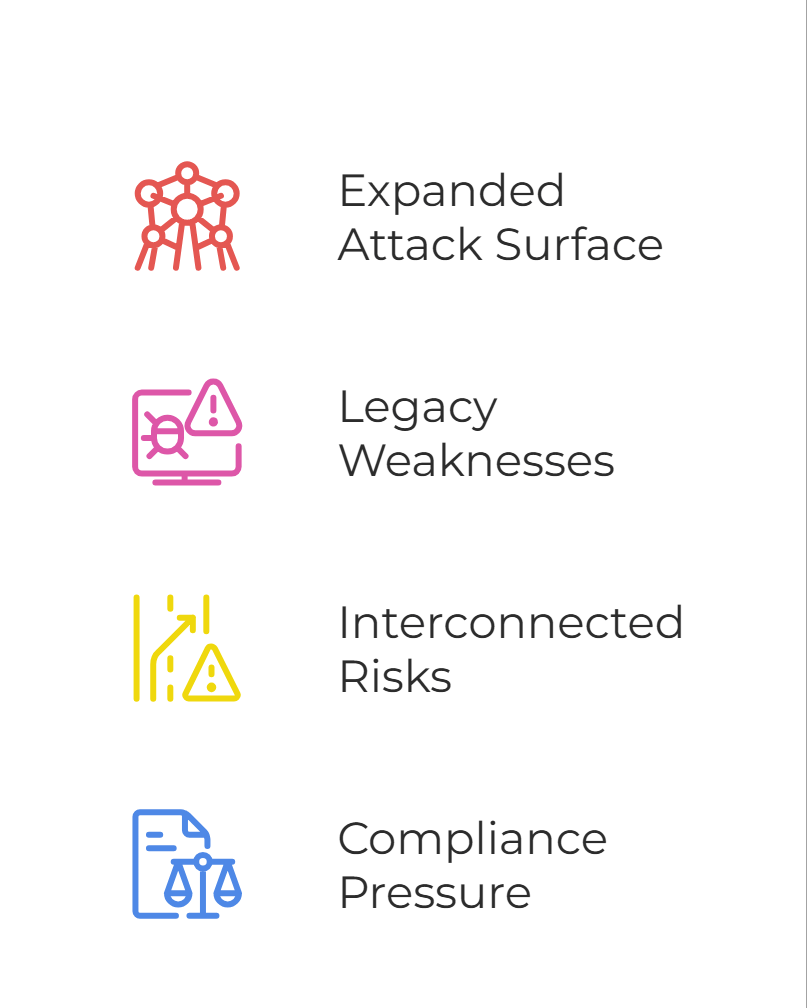
Core Risks Emerging from IT/OT Convergence:

  • Expanded Attack Surface: Remote access opens new vulnerabilities.
  • Legacy Weaknesses: Devices with outdated firmware and no patch cycle.
  • Interconnected Risks: IT breach → OT outage.
  • Compliance Pressure: Growing mandates across jurisdictions.

Compliance Landscape: NERC CIP, FERC, and Global Standards

U.S. utilities face some of the strictest critical infrastructure mandates in the world.

  • NERC CIP (Critical Infrastructure Protection): Requires utilities to segment networks, enforce access controls, and log OT activity.
  • FERC Oversight: Expanding focus on OT cybersecurity as part of grid reliability.
  • State-Level Mandates: Varying rules on resilience and reporting.
  • IEC 62443 (Global Standard): A framework for industrial cybersecurity—covering risk assessments, secure configurations, and supply chain protections.

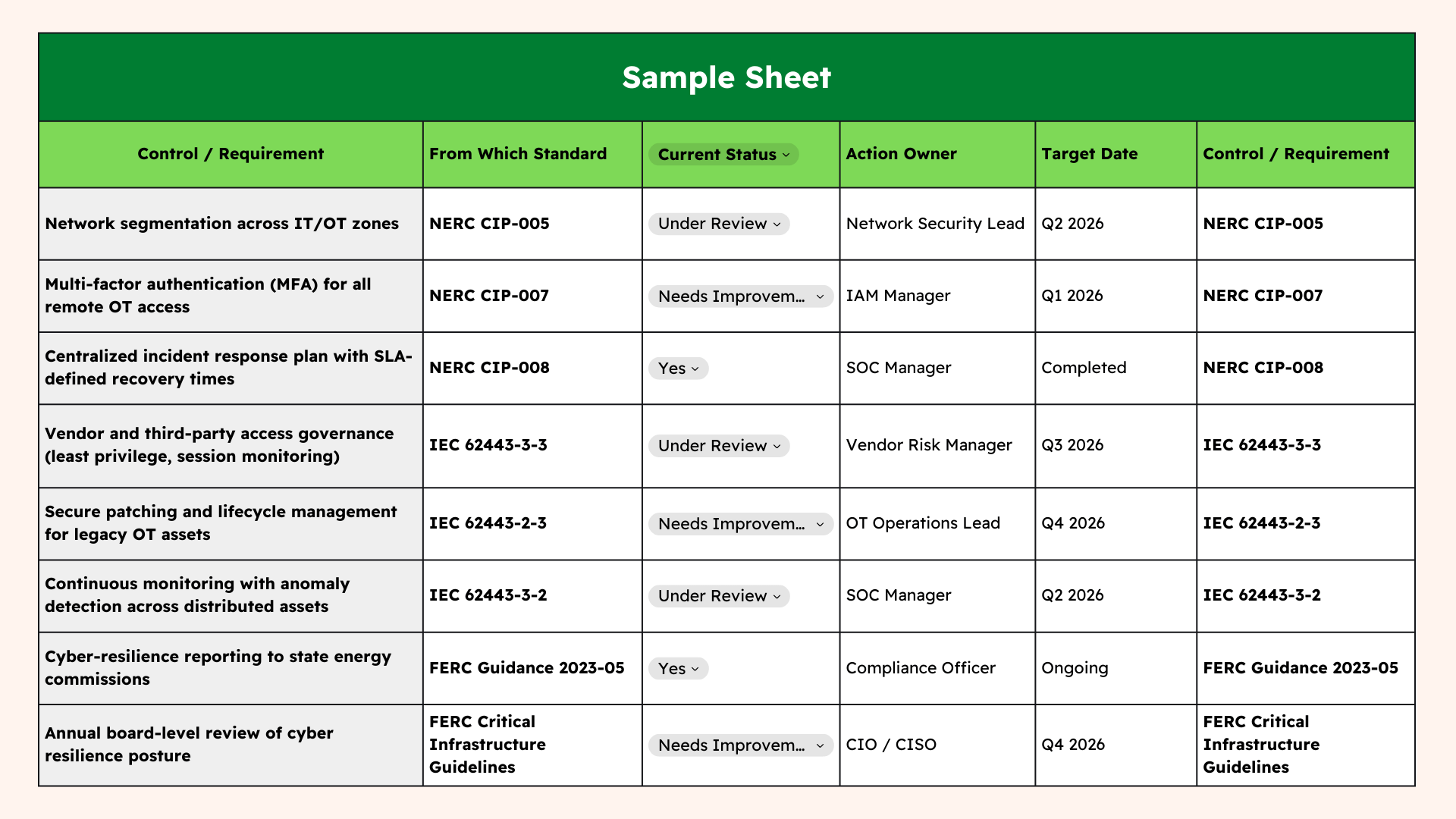
📌 CIO Checklist for IT/OT Convergence Compliance:

  • Validate network segmentation controls across IT and OT zones.
  • Ensure multi-factor authentication for remote OT access.
  • Implement continuous monitoring via SOC integration.
  • Document incident response SLAs tied to OT continuity.
  • Audit vendor and third-party access to control networks.

Why Segmentation and Microsegmentation Are Non-Negotiable

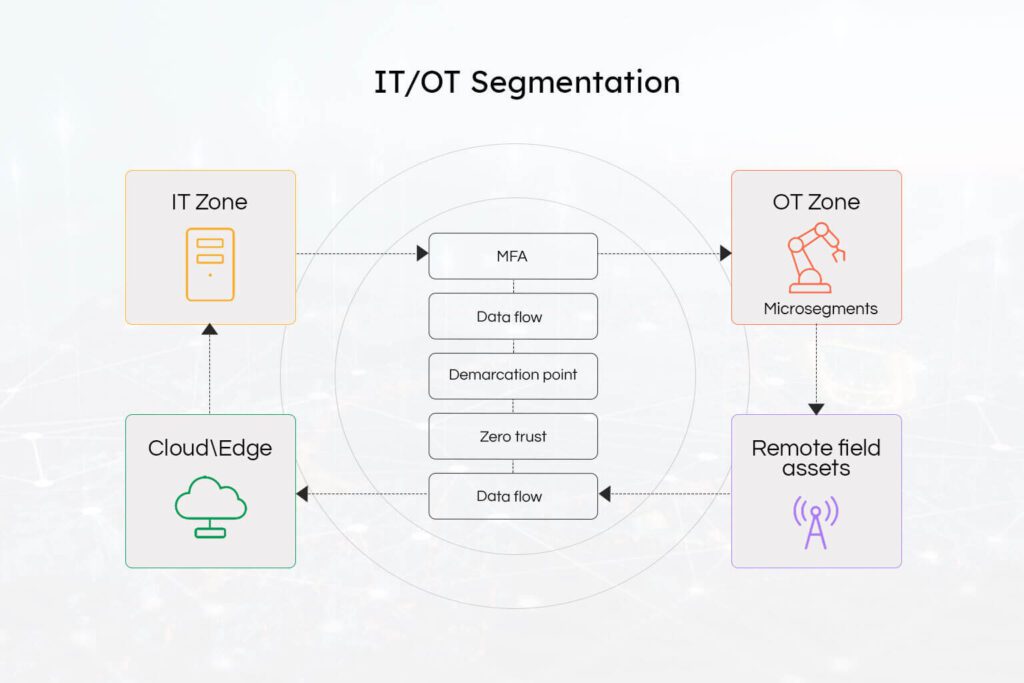
Network Segmentation of IT and OT environments.

Leading frameworks (Fortinet, Zero Networks) agree: segmentation is the most critical safeguard.

  • Network Segmentation: Establishes clear demarcation between IT and OT environments.
  • Microsegmentation: Applies granular security rules—limiting communications at the device or application level.

For utilities with distributed infrastructure—substations, sensors, field assets—segmentation ensures resilience even if one domain is compromised.

Business Outcomes for Utilities:

  • 40% faster MTTR (Mean Time to Recovery).
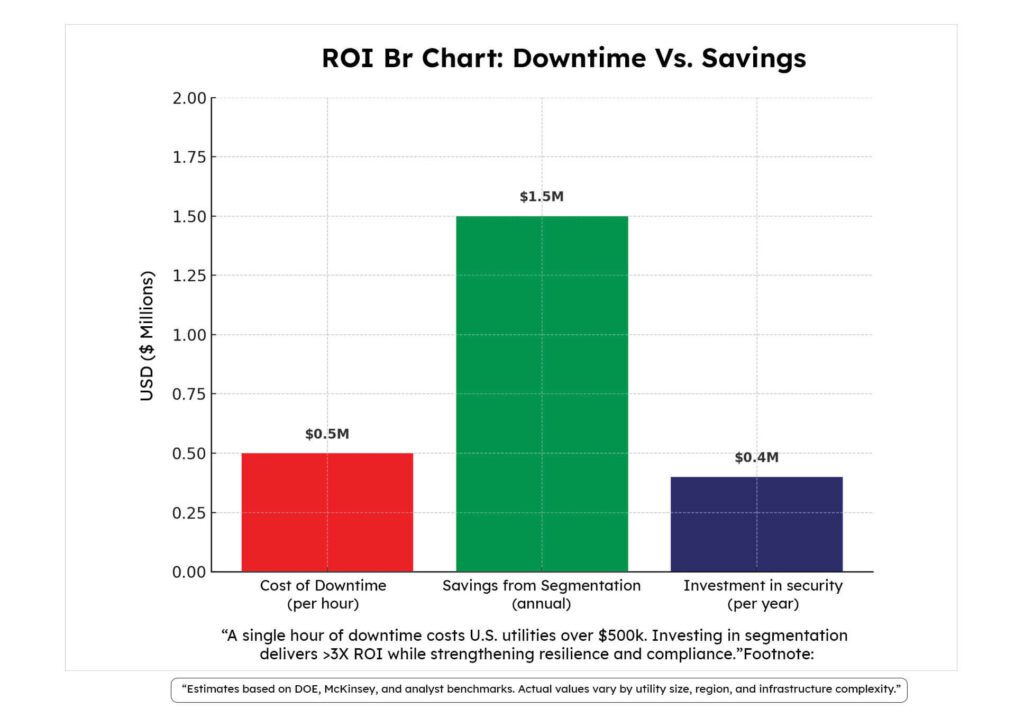
  • $500k+ per hour downtime losses avoided during incidents.
  • Reduced blast radius of attacks.
  • Easier regulatory alignment.
 

ROI Bar Chart (Downtime vs. Savings)

Remote IT Infrastructure ROI Bar Chart

Remote IT Infrastructure: The Backbone of Modern Utilities

Hybrid IT and cloud-driven ecosystems are redefining how utilities operate. Remote IT infrastructure is now mission-critical.

CIO priorities for resilient infrastructure:

  1. Boundary Protection: Guarding IT/OT interfaces.
  2. SOC-Enabled Monitoring: Real-time anomaly detection across distributed sites.
  3. Resilience Engineering: High-availability systems with redundancy and automation.
  4. Hybrid IT Readiness: Seamlessly supporting workloads across data centers, edge, and cloud.

Industry Momentum Driving IT/OT Convergence

Utilities worldwide are accelerating convergence due to:

  • Grid Modernization: AI-driven optimization, predictive analytics.
  • Sustainability Goals: Renewable integration and distributed energy resources.
  • Workforce Trends: Remote field ops and automation.
  • Regulatory Oversight: Mandated cyber resilience programs.

Reports from EY, Microsoft, and Wipro highlight convergence as strategic leverage for competitiveness and compliance.

Building a Secure Path Forward

The future utility will be connected, intelligent, and compliance-driven. But without SLA-backed resilience, SOC-enabled monitoring, and automated compliance controls, the risks are existential.


How Softenger Supports IT/OT Convergence for Utilities

For energy and utilities leaders, IT/OT convergence is not just about connectivity—it’s about ensuring that critical infrastructure remains secure, compliant, and resilient in an era of growing threats.

Softenger’s Remote IT Infrastructure Services are purpose-built to support this transition:

  • Secure Convergence Design: Architecting segmented IT/OT environments aligned with NERC CIP and IEC 62443 standards.
  • SOC-Enabled Monitoring: Delivering real-time visibility across distributed utility operations with 24×7 threat detection.
  • Resilience & SLA Assurance: Ensuring 99.9% uptime through high-availability frameworks, redundancy, and automation.
  • Compliance Automation: Streamlining regulatory reporting and audit-readiness for CIOs and infrastructure leaders.
  • AOTS Model (Advice, Optimize, Transform, Support): Guiding utilities through every stage of digital transformation.

With 25+ years of IT excellence and presence across India, Singapore, Malaysia, and the UAE, Softenger empowers utilities to modernize confidently—without compromising security or compliance.


FAQ

IT/OT convergence is the integration of Information Technology (IT) — enterprise applications, analytics platforms, and cloud ecosystems — with Operational Technology (OT) such as SCADA systems, substations, and grid control equipment. For utilities, this convergence drives smarter grids, predictive maintenance, and operational efficiency. However, it also expands the cyberattack surface, making network segmentation, Zero Trust frameworks, and continuous monitoring essential safeguards.

Unlike IT environments, many OT devices were never designed with modern security controls. Once connected, they are exposed to ransomware, supply chain attacks, and even nation-state adversaries. A layered cybersecurity approach — including segmentation, SOC-enabled monitoring, and incident response playbooks — ensures that an IT breach cannot cascade into OT operations. This protects grid uptime, regulatory compliance, and public safety.

U.S. utilities are subject to some of the world’s strictest compliance mandates:

  • NERC CIP (Critical Infrastructure Protection standards): requires access controls, segmentation, monitoring, and incident response.
  • FERC oversight: enforces reliability and cyber-resilience of the bulk power system.
  • IEC 62443 (global benchmark): guides industrial cybersecurity best practices.

Penalties for non-compliance can reach $1 million per day, per violation. For CIOs, maintaining audit readiness is not optional — it is a board-level accountability.

Resilience in distributed IT/OT environments depends on:

  • Boundary protection at IT/OT interfaces.
  • 24×7 SOC monitoring with AI-powered anomaly detection.
  • Redundancy and automation across data centers, edge sites, and cloud platforms.
  • Compliance automation to stay continuously audit-ready.

Utilities implementing these measures typically achieve 30–40% reduction in downtime costs and deliver SLA-backed continuity even during cyber incidents.

By 2026, utilities will depend heavily on AI and automation to manage converged IT/OT ecosystems:

  • AI-driven SOCs will detect and contain threats in minutes.
  • Predictive maintenance models will reduce downtime and optimize asset lifecycles.
  • Automated compliance reporting will shrink audit prep from weeks to days.

For CIOs and CFOs, this evolution transforms IT/OT convergence from a compliance expense into a strategic ROI driver — improving resilience, cutting costs, and strengthening investor confidence.

Request a Remote Infrastructure Resilience Consultation

Build a roadmap for IT/OT convergence with 99.9% uptime and automated compliance.

Insights, analysis and research

Scroll to Top