


Malaysia enterprises need a managed IT partner who operates inside Malaysia.
Softenger delivers 24/7 remote IT infrastructure management for Malaysia enterprises — from offices in Cyberjaya and Penang, backed by our India-based Global Support Center for round-the-clock continuity. PDPA, BNM RMiT, SC Malaysia, and MSC-status compliance embedded from day one. Local presence. Continuous coverage. One team. One SLA. ISO 27001:2022 certified.
Every quarter Malaysia IT runs on a reactive model, the BNM auditor, the PDPA obligation, and the 3am production alert compound together.
These are not theoretical risks. They are the operational realities of Malaysia enterprises managing infrastructure, compliance, and security with a model that wasn’t built for environments where BNM RMiT technology risk requirements, PDPA data protection obligations, Penang manufacturing continuity, and MSC-status IT commitments are all live simultaneously — and all need attention before the next examination cycle.
BNM RMiT compliance requires continuous technology risk monitoring — not a six-week pre-examination build
Bank Negara Malaysia’s Risk Management in Technology framework demands documented technology risk posture, incident reporting thresholds, and access control evidence as part of every examination cycle. Financial institutions that assemble this evidence in the weeks before an examiner arrives face the same findings year after year — because the posture wasn’t built into operations, it was built around them.
Penang manufacturing and electronics enterprises run 24/7 production but manage IT on business-hours coverage
The Penang technology corridor — semiconductor fabs, EMS companies, automotive component manufacturers — operates around the clock. Assembly lines, automated test equipment, and production scheduling systems cannot tolerate overnight IT monitoring gaps. Yet the engineering and IT teams responsible for production IT are typically business-hours resourced, with overnight incidents detected by operations staff — not by a monitoring system.
PDPA 2010 obligations, Cybersecurity Act 2018 requirements, and MSC-status IT commitments overlap without a coordinated monitoring model
Malaysia enterprises frequently operate under multiple simultaneous regulatory obligations — PDPA for personal data handling across all sectors, the Cybersecurity Act 2018 for designated critical infrastructure, MDeC MSC-status IT requirements for registered companies, and MCMC regulations for licensed operators. Managing these frameworks independently — each requiring separate evidence, separate monitoring, and separate reporting — is an IT governance architecture that compounds workload without improving posture.
Legacy on-premises infrastructure co-existing with cloud creates monitoring gaps at the hybrid boundary
Malaysia’s enterprise IT landscape is deeply hybrid — legacy on-premises systems built during the MSC Malaysia era co-existing with cloud workloads on AWS Malaysia, Azure Malaysia, and GCP. The integration boundaries between legacy systems and cloud platforms — APIs, data pipelines, VPN tunnels — are where incidents originate, compliance evidence gaps appear, and PDPA obligations around data transfers become most complex to monitor.
Malaysia enterprises face cyber threats targeting BFSI, manufacturing, and critical infrastructure specifically
Malaysia’s BFSI sector, O&G infrastructure, and manufacturing corridor are active targets for regional threat actors and ransomware groups. CyberSecurity Malaysia (CSM) threat intelligence identifies Malaysia’s financial and critical infrastructure as primary targets for both financially motivated and state-sponsored actors operating in ASEAN. Generic enterprise security postures built without Malaysia-specific threat intelligence are not calibrated for this environment.
We don’t serve Malaysia from Bangalore and call it regional expertise. We have engineers in Cyberjaya and Penang.
Most managed IT providers serving Malaysia enterprises do so from India or Singapore — managing relationships through account management teams while delivering actual operations from offshore. For enterprise IT in general, that model works. For Malaysia-specific regulatory compliance — BNM RMiT technology risk assessments, MDeC MSC-status requirements, PDPA personal data obligations — the model breaks down at the regulatory detail level that actually matters during a Bank Negara examination or a PDPA complaint investigation.
Softenger’s Cyberjaya office provides direct engagement with Malaysia’s regulatory technology landscape — close to Bank Negara Malaysia, close to MDeC, close to the MSC Malaysia ecosystem that defines digital economy IT requirements for registered companies. Our Penang office operates within the technology corridor itself — with direct familiarity with the manufacturing IT environments, production systems, and electronics sector operational patterns that characterise Penang’s enterprise IT reality.
Combined with the India-based Global Support Center for 24/7 NOC and SOC continuity — continuous MYT monitoring without overnight gaps — this model gives Malaysia enterprises something most managed IT providers cannot offer: local regulatory presence and round-the-clock operational coverage from a single accountable partner.
Local regulatory presence — Cyberjaya team familiar with BNM, MDeC, and PDPA obligations
Softenger’s Cyberjaya office engages directly with Malaysia’s regulatory technology environment. BNM RMiT framework requirements, MDeC MSC-status conditions, and PDPA compliance are understood at the operational detail level that matters during an examination — not interpreted from a generic APAC compliance template.
Malaysia compliance from within Malaysia — not from a regional hub.Penang manufacturing IT expertise — production systems, OT boundaries, and 24/7 continuity
Softenger’s Penang team operates within the technology corridor. Manufacturing IT, OT/IT integration in electronics and semiconductor environments, and the 24/7 operational requirements of Penang’s manufacturing enterprises are understood from proximity — not from generic industrial IT frameworks applied without local context.
Penang manufacturing IT managed by engineers who operate in Penang.24/7 MYT continuity from the GSC — no overnight gaps in monitoring or escalation
The India GSC operates on shift schedules aligned to MYT. A production IT incident at 3am Kuala Lumpur time reaches an engineer within minutes — the same response quality as 3pm KL time. Overnight and weekend coverage gaps are eliminated structurally, not patched with on-call arrangements.
MYT continuity is a staffing architecture — not a policy commitment.Multi-framework Malaysia compliance as one embedded operation — not three separate compliance programmes
PDPA, BNM RMiT, MSC-status requirements, and MCMC obligations run simultaneously from one compliance monitoring layer configured from the Advise phase. Evidence for each framework is a continuous system output — not a separate pre-audit exercise for each regulator.
Multi-framework compliance as one system — not three separate programmes.Three service domains. The full Malaysia enterprise IT stack — managed from Cyberjaya, Penang, and our India GSC.
Softenger consolidates what Malaysia enterprises typically manage across multiple vendors into a single operations model — with local presence in Cyberjaya and Penang, 24/7 continuity from the GSC, and one team that speaks Malaysia’s regulatory language fluently.
Infrastructure, Manufacturing & Security Operations
24/7 NOC and SOC across all Malaysia infrastructure — servers, Penang production IT, cloud workloads, and security monitoring. Incidents detected before they cascade to operations teams or compliance obligations. Malaysia threat intelligence feeds active in all SOC engagements.
Malaysia Compliance & Regulatory Operations
PDPA 2010, BNM RMiT, SC Malaysia, MCMC, Cybersecurity Act 2018, and MSC-status compliance monitoring embedded as continuous system outputs. Monthly regulatory posture reports are standard deliverables. BNM examination readiness is a system state — not an exam-season sprint.
Cloud, Application & End-User Support
AWS Malaysia, Azure, and GCP infrastructure management with PDPA-compliant data residency monitoring, MSC-status application performance monitoring, bilingual L1–L3 helpdesk for Malaysia users, ITSM operations, and patch management — under the same SLA model as infrastructure and security.
What Malaysia enterprises achieve with Softenger’s managed IT model
Outcomes from Malaysia enterprises operating under BNM RMiT, PDPA, and 24/7 operational requirements — documented results from managed engagements, not projected estimates from a generic APAC comparison.
IT Operational Cost Reduction
Consolidating Malaysia in-house IT or multi-vendor arrangements into Softenger’s combined local-plus-GSC delivery model consistently produces 50%+ IT operational cost reduction — while expanding monitoring coverage to 24/7 MYT, adding Malaysia-specific compliance monitoring, and eliminating the attrition risk where a BNM RMiT-knowledgeable engineer leaves at the wrong point in an examination cycle.
BNM RMiT Compliance Posture Transformation
Continuous BNM RMiT technology risk monitoring — configured as system outputs from onboarding — eliminates the compliance gap between examination cycles that creates repeated findings for Malaysia financial institutions. Monthly technology risk reports replace the six-week pre-examination assembly that consumes IT team capacity annually.
Penang Manufacturing IT Continuity
Penang manufacturing enterprises with 24/7 production operations gain genuine around-the-clock IT monitoring — production system anomalies detected before they reach operations managers at shift handover, not reported by line supervisors after the production delay has already occurred and been counted.
PDPA & Multi-Framework Compliance Simplification
Malaysia enterprises managing PDPA, BNM RMiT, MSC-status, and MCMC obligations simultaneously gain a single compliance monitoring layer — replacing three or four separate annual compliance programmes with one continuous monitoring operation that produces evidence for all applicable frameworks from a shared infrastructure layer.
Every Malaysia IT engagement follows the same four-phase discipline.
AOTS — Advise, Optimize, Transform, Support — applied to Malaysia enterprise IT has specific meaning in each phase. Advise is conducted by Softenger’s Cyberjaya team — not from a regional APAC office that interprets Malaysia’s regulatory environment from a distance. Optimize configures BNM RMiT technology risk controls and PDPA monitoring before any system goes live under Softenger management. Transform onboards environments in operational-criticality order with Penang manufacturing systems prioritised. Support operates 24/7 in MYT with Malaysia-specific incident runbooks and regulatory notification paths pre-built.
Advise
Softenger’s Cyberjaya team conducts the topology audit directly with your Malaysia IT environment — mapping infrastructure, compliance obligations (PDPA, BNM RMiT, MSC-status), Penang manufacturing dependencies, and the operational risk patterns specific to your sector and regulatory position in Malaysia.
- Malaysia IT topology audit — five pillars, all sites including Penang
- Regulatory compliance mapping — PDPA, BNM RMiT, SC, MCMC, MSC-status
- PDPA data residency and cross-border transfer requirements documented
- Penang manufacturing IT operational criticality — production system risk tiers
- Onboarding phasing plan — highest-impact and highest-risk environments first
A documented Malaysia IT topology and multi-framework compliance monitoring architecture — built from your operational environment by a team that operates in Malaysia.
Optimize
Monitoring rules are built from the Advise audit findings — not from generic APAC templates. BNM RMiT technology risk controls, PDPA personal data access monitoring, Penang production IT alert thresholds, and Malaysia-specific SOC detection profiles are all configured and validated before go-live.
- Infrastructure monitoring calibrated to Malaysia operational patterns and MYT
- BNM RMiT technology risk monitoring controls activated as system outputs
- PDPA personal data access monitoring configured — processing log baseline set
- Malaysia SOC threat detection — ASEAN threat intelligence feeds integrated
- Malaysia incident runbooks — BNM reporting, MyCERT notification, PDPA breach paths
A tested, Malaysia-calibrated monitoring environment — PDPA and BNM RMiT controls active, Penang production monitoring validated, regulatory notification paths confirmed before first live incident.
Transform
Environments are onboarded in Malaysia-specific criticality order — Penang production IT and BNM-regulated financial systems first, then other infrastructure, then cloud and end-user environments. Each cluster runs in parallel with existing monitoring and is validated for uptime and compliance posture before the next begins.
- Penang manufacturing IT and BNM-regulated systems onboarded first
- Parallel monitoring during transition — no coverage gap for production or compliance
- Malaysia incident simulation — production failure, BNM incident, PDPA breach scenarios tested
- Compliance posture validation per environment cluster — BNM RMiT and PDPA confirmed
- Knowledge transfer — Malaysia IT team briefed on escalation paths and Malaysia runbooks
Full Malaysia IT environment onboarded in operational-criticality order — validated and operating under defined SLAs without disruption to Penang production, BNM-regulated systems, or any live business operation.
Support
Softenger’s combined Malaysia offices and India GSC operate your IT environment continuously — infrastructure monitoring, SOC security operations, Malaysia compliance reporting, and end-user support. Quarterly AOTS reviews ensure the model evolves as your business grows, your cloud footprint expands, and Malaysia’s regulatory requirements develop.
- 24/7/365 NOC and SOC — 3am MYT treated identically to 3pm MYT
- Malaysia incident management — L1–L3 with BNM, PDPA, and MyCERT runbooks
- Monthly PDPA, BNM RMiT, MSC-status, and compliance posture reports
- Penang production IT health reporting — shift-aware incident summaries
- Quarterly AOTS review — new systems, regulatory changes, Penang expansion
A continuously operated, continuously compliant Malaysia IT environment — BNM posture documented monthly, PDPA monitoring continuous, production systems monitored without overnight gaps.
Every new Malaysia site, regulatory change, or cloud expansion re-enters AOTS.
When you open a new Penang facility, gain an additional MSC-status company, or face new BNM RMiT guidance, that change enters at Advise — audited by the Cyberjaya team, monitoring updated, onboarded through Transform, and returned to Support. Malaysia business growth never creates compliance or monitoring gaps.
How a Malaysia financial institution achieved zero BNM technology risk findings and eliminated its annual compliance sprint
A licensed financial institution operating across Kuala Lumpur and six regional branches engaged Softenger after three consecutive BNM examinations produced repeated technology risk findings — each requiring remediation programmes that consumed IT team capacity for months. The full case study documents the compliance transition, technology risk posture transformation, and 18-month operational outcomes.
BNM RMiT technology risk posture transformed from reactive to continuous — zero examination findings in 18 months and first clean audit in four years
The institution managed technology risk compliance with a manual pre-examination build — six to eight weeks of IT team effort before each BNM examination cycle, assembling audit evidence that had not been maintained continuously. Repeated findings in access control monitoring, IT incident reporting, and technology risk documentation resulted in remediation programmes after each examination. The bank’s IT team was alternating between remediation and the next examination build — with no capacity for digital initiatives between cycles.
Three ways to engage. One Malaysia-calibrated standard.
Malaysia enterprises range from Penang manufacturing groups and Cyberjaya MSC-status companies to BNM-regulated financial institutions and multi-state conglomerates. Softenger's delivery models leverage our Malaysia office presence alongside the GSC — matching engagement depth to your operational scale today.
Malaysia On-Site + GSC Hybrid
Softenger's Cyberjaya or Penang team leads engagement management, regulatory liaison, and on-site support — while the India GSC delivers 24/7 NOC and SOC continuity. Local presence and round-the-clock coverage from one accountable partner.
- Malaysia office team for regulatory engagement, on-site support, and client management
- India GSC for 24/7 NOC, SOC, and MYT-continuous monitoring and escalation
- BNM RMiT, PDPA, and Malaysia multi-framework compliance — monitored as one system
- Penang production IT expertise from engineers operating within the corridor
- Single SLA, single escalation path — local presence, GSC continuity, one contract
GSC-Led Managed Service
India GSC delivers full 24/7 NOC, SOC, and compliance monitoring; your Malaysia IT team retains L3 escalation, vendor management, and strategic governance. Softenger extends MYT coverage and compliance depth without displacing local IT expertise.
- GSC-led 24/7 NOC and SOC — MYT-aligned shift operations, no overnight gaps
- Your team retains L3 escalation, BNM relationship, and strategic IT decisions
- PDPA and BNM RMiT compliance monitoring as embedded system outputs
- Structured handover protocols and shared incident management tooling
- Cost-effective coverage extension without expanding Malaysia headcount
On-Demand IT Support
Expert Malaysia IT support for specific initiatives — BNM RMiT gap remediation, PDPA compliance projects, MSC-status IT condition fulfilment, Penang facility IT commissioning, or cloud migration support for Malaysia workloads.
- No long-term commitment — engage for defined projects or specific scopes
- Malaysia-specific expertise: PDPA, BNM RMiT, MSC-status, Penang manufacturing IT
- Ideal for BNM RMiT remediation, PDPA implementation, or facility IT commissioning
- Transparent scope and billing — clear boundaries on coverage and deliverables
- Clear path to a managed engagement as your Malaysia IT complexity grows
What a Malaysia IT Infrastructure Assessment produces
A conversation with Softenger's Cyberjaya team produces a documented topology and Malaysia compliance assessment — not a regional APAC proposal template applied to Malaysia. We review your infrastructure, BNM obligations, PDPA requirements, and operational patterns, then produce specific recommendations. No commitment required.
Six structural reasons Malaysia enterprises choose Softenger over an APAC managed IT provider serving Malaysia from Singapore
These are operational and structural realities — built into Softenger's Malaysia presence, regulatory knowledge, and GSC operations — that determine whether your IT estate meets BNM RMiT, PDPA, and Penang production requirements simultaneously.
Offices in Cyberjaya and Penang — local presence that actually understands Malaysia's regulatory terrain
Softenger's Cyberjaya office operates within Malaysia's digital economy hub — close to Bank Negara Malaysia, MDeC, and the MSC Malaysia ecosystem. Our Penang office is inside the technology corridor that defines manufacturing IT requirements for the region. This isn't proximity by time zone — it's proximity by operational context, regulatory familiarity, and business relationship.
BNM RMiT and PDPA compliance embedded as system outputs — never assembled pre-examination
BNM RMiT technology risk controls, PDPA personal data monitoring, and MSC-status IT commitments are configured as continuous infrastructure monitoring outputs from the first day of operations. Monthly reports are standard. The BNM examiner arrives to documentation that's current within 30 days — not assembled in the preceding six to eight weeks by a team that's been taken offline from everything else.
Penang manufacturing IT expertise — 24/7 production monitoring from engineers who understand the corridor
Softenger's Penang team operates within Malaysia's electronics and semiconductor manufacturing hub. Production IT, OT boundary requirements, and the 24/7 continuity demands of the Penang tech corridor are understood from operational proximity — not from a generic industrial IT framework applied without local context. Overnight production alerts reach an engineer who understands what the system does.
24/7 MYT monitoring — overnight coverage without on-call arrangements or overnight premium costs
Softenger's GSC operates continuous shifts aligned to MYT. A production IT incident at 3am Kuala Lumpur time reaches an engineer in the same timeframe as a 3pm incident — without on-call engineers, without escalation delays through a regional hub in Singapore, and without the burnout risk that permanent on-call arrangements impose on local IT teams.
50% IT cost reduction — offshore delivery without losing Malaysia compliance expertise or local presence
Softenger's combined local-plus-GSC model produces 50%+ IT operational cost reduction versus building equivalent capability in-house in Malaysia — while maintaining the regulatory familiarity and local presence that compliance-intensive Malaysia sectors require. Cost reduction doesn't require trading local knowledge for offshore economics. Softenger provides both.
25 years of enterprise IT delivery — VISA, Kotak Bank, and Reliance Jio among our reference clients
Softenger's 25-year enterprise IT delivery history includes VISA's PCI-DSS environment, Kotak Bank's financial IT operations, and Reliance Jio's network-scale managed IT — engagements where compliance, availability, and security standards are non-negotiable. The governance discipline from those engagements is the baseline for every Malaysia enterprise engagement, not just the largest clients.
Insights for healthcare & pharma IT leaders
Explore all insights →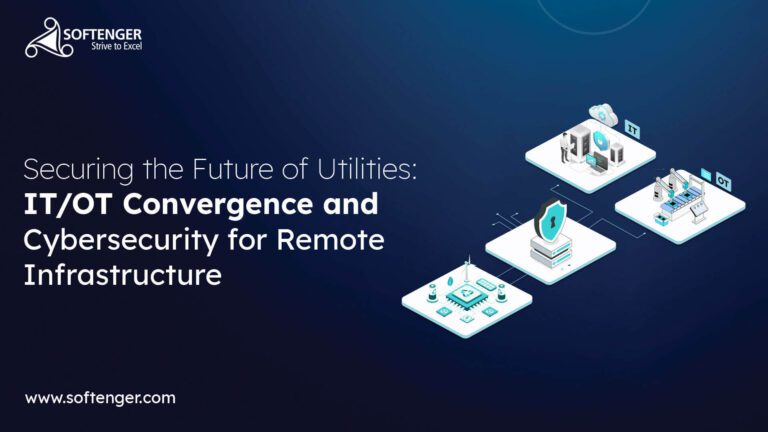
Securing the Future of Utilities: IT/OT Convergence and Cybersecurity for Remote Infrastructure
The security principles from converged IT/OT environments apply directly to healthcare — where clinical systems, IoMT devices, and corporate IT share network infrastructure that sophisticated ransomware groups actively target for PHI theft and operational disruption.
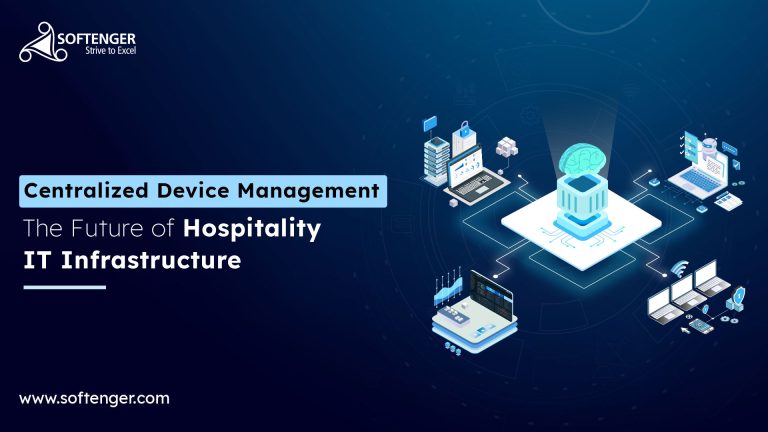
Why Remote and Centralized Device Management Is Transforming IT Operations in the Hospitality Industry
The centralized remote management principles transforming distributed operations management apply equally to healthcare enterprises managing clinical workstations, IoMT devices, and diagnostic equipment across multi-site hospital and clinic networks.
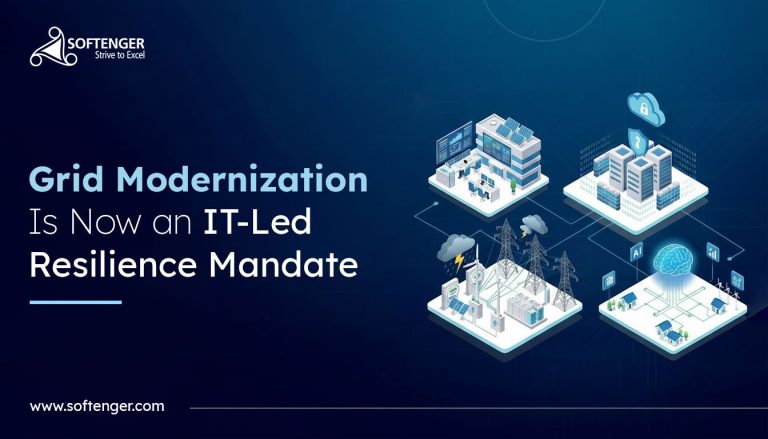
Grid Modernization in the Energy & Utilities Sector: Building a Resilient, Secure, and Intelligent Infrastructure
How managed IT frameworks enable enterprises managing complex, distributed infrastructure to drive modernization without disrupting live operations — with direct application to healthcare organisations modernizing from legacy clinical IT to cloud-native digital health platforms.
Questions Malaysia IT leaders ask before engaging Softenger
Tell us about your Malaysia IT environment. We'll bring a team that already operates here.
A conversation with Softenger's Cyberjaya team produces a documented Malaysia IT topology and compliance assessment — not a regional APAC template. We review your infrastructure, BNM RMiT obligations, PDPA requirements, and operational patterns, then produce specific recommendations. No commitment required.
🇲🇾 Request a Malaysia Enterprise IT Assessment
ISO 27001 certified. Handled securely, never shared with third parties.