


MAS TRM compliance, PDPA breach notifications, and Cybersecurity Act obligations managed from Singapore.
Softenger delivers 24/7 remote IT infrastructure management for Singapore enterprises — from our Singapore office, backed by our India-based Global Support Center for round-the-clock SGT continuity. PDPA, MAS TRM Guidelines, MAS Notice 655/822/834, and Cybersecurity Act 2018 CII compliance embedded from day one. Local regulatory presence. Continuous coverage. One SLA. ISO 27001:2022 certified.
Every quarter Singapore IT runs reactively, the MAS supervisor, the PDPC enforcement window, and the 3am APAC incident compound.
These are not theoretical risks. They are the operational realities of Singapore enterprises managing IT in an environment where MAS TRM examination requirements, PDPA 3-day breach notification obligations, Cybersecurity Act CII responsibilities, and APAC regional IT governance all apply simultaneously — and where Singapore’s position as the Lion City of global finance means regulators set the highest-precision standards in the region.
MAS Technology Risk Management Guidelines demand a continuous technology risk posture — not an examination-season build
MAS TRM Guidelines (January 2021) apply to all MAS-regulated financial institutions in Singapore — banks under Notice 655, insurers under Notice 822, capital markets firms under Notice 834. The framework requires documented IT risk management, resilience testing, access controls, and incident reporting thresholds. Institutions that produce this evidence only in preparation for supervisory engagement face the same findings cycle after cycle — because the posture was never built into operations continuously.
Singapore PDPA mandatory breach notification requires reporting to PDPC within 3 calendar days — and most enterprises’ monitoring isn’t fast enough
Singapore PDPA (amended 2020) mandatory breach notification requires that significant breaches be reported to the PDPC within 3 calendar days of discovery, and that affected individuals be notified where significant harm is likely. Most enterprise monitoring models detect breaches after extended dwell time — meaning the 72-hour notification clock starts when the breach is already days old, and the internal escalation process consumes much of the remaining notification window.
Cybersecurity Act 2018 CII obligations create mandatory incident reporting and cyber risk management requirements for Singapore’s 11 designated sectors
Singapore’s Cybersecurity Act 2018 designates Critical Information Infrastructure (CII) across 11 sectors — Energy, Water, Banking and Finance, Healthcare, Transport, Infocomm, Media, Security and Emergency, Government, Aviation, and Maritime. CII operators face mandatory incident reporting to CSA within defined timeframes, annual cybersecurity risk assessments, and cybersecurity audits. These obligations require embedded monitoring — not periodic point-in-time assessments.
Singapore as APAC regional headquarters creates distributed IT governance obligations across multiple APAC jurisdictions simultaneously
Many of Singapore’s largest enterprises operate as APAC regional headquarters — managing subsidiary IT infrastructure across Australia, Japan, South Korea, Hong Kong, Indonesia, Thailand, Vietnam, and the Philippines from a Singapore anchor. Each APAC market has its own compliance requirements, operational IT patterns, and incident timing patterns — requiring an IT governance model that can extend from Singapore across the region without creating per-market monitoring gaps.
Singapore’s Smart Nation and IMDA digital transformation agenda creates IT complexity faster than in-house teams can build governance models for it
Singapore’s Smart Nation initiative, IMDA’s SME Go Digital programme, and the broader digital economy transformation create IT environments that evolve rapidly — new cloud workloads, new digital service platforms, new API integrations with government digital services. Each new digital initiative adds IT complexity and potentially new compliance obligations under PDPA, MAS, or the Cybersecurity Act, faster than most IT teams can update their governance models to accommodate.
We don’t serve Singapore from India and call it regional coverage. We have a team on the island who understands MAS TRM.
Singapore’s regulatory technology environment is among the most precisely defined and consistently enforced in the world. MAS doesn’t issue guidelines that allow broad interpretation — the Technology Risk Management framework specifies what technology risk governance looks like for a regulated financial institution, and the supervisory engagement process validates whether the institution has actually implemented it. Claiming MAS TRM compliance from a generic APAC managed IT template applied to Singapore is not a posture that survives a supervisory engagement. MAS examiners know the difference.
Softenger’s Singapore office engages directly with the regulatory technology environment that defines Singapore enterprise IT obligations — close to the Monetary Authority of Singapore on Shenton Way, close to the Cyber Security Agency, and familiar with the PDPC enforcement posture that makes Singapore PDPA obligations among the most practically enforced data protection frameworks in ASEAN. Our India-based Global Support Center provides the 24/7 SGT continuity that the Singapore office alone cannot deliver — shift engineers available at 3am Singapore time for both Singapore-based incidents and APAC regional incidents that cascade before the business day begins.
For Singapore enterprises managing APAC regional IT from a Singapore anchor, Softenger provides what no purely offshore managed IT provider can: Singapore regulatory knowledge combined with APAC-scale monitoring capability — one team, one SLA, Singapore jurisdiction expertise, regional operational coverage.
Singapore office — MAS, PDPC, CSA, and IMDA regulatory familiarity from operational proximity
Softenger’s Singapore team engages directly with Singapore’s regulatory technology environment. MAS TRM framework requirements, PDPA mandatory notification obligations, Cybersecurity Act CII responsibilities, and IMDA digital economy requirements are understood at the operational detail level that matters during a supervisory engagement — not interpreted from a generic ASEAN compliance template.
Singapore compliance from within Singapore — not from a regional hub.PDPA 3-day notification readiness built into monitoring — not assembled after a breach is detected
Singapore PDPA’s 3-calendar-day PDPC notification requirement demands that breach detection, internal escalation, assessment, and notification all happen within 72 hours of discovery. Softenger’s continuous personal data breach monitoring minimises discovery delay — and Singapore PDPC notification runbooks are pre-built and activated at detection, not started when the breach is confirmed.
72-hour PDPC clock starts at detection — notification runbooks are pre-built.24/7 SGT continuity from the GSC — APAC regional coverage without APAC-rate overhead
The India GSC operates on shift schedules aligned to Singapore Standard Time and APAC regional operating patterns. A 3am Singapore incident, a 5am Sydney degradation event, or a Tokyo production system alert at 2am SGT all reach an engineer within the same response window — without building APAC-rate shift operations in Singapore or Sydney.
SGT continuity is structural — APAC incidents reach an engineer before the business day.Singapore-anchored APAC IT governance — one operations model for the regional estate
Singapore enterprises managing subsidiary IT across Australia, Japan, Hong Kong, Indonesia, and wider APAC gain a managed IT model anchored in Singapore that extends monitoring governance across the region — all under one SLA, one escalation path, and one operations team with Singapore jurisdiction expertise and regional monitoring capability.
Singapore anchor. APAC capability. One operations model.Five service pillars. One managed operations model for Singapore enterprises.
Singapore enterprise IT spans MAS-regulated financial infrastructure, Cybersecurity Act CII obligations, PDPA personal data protection, APAC regional IT governance, and digital transformation complexity. Softenger manages all five service pillars — calibrated to Singapore’s specific regulatory and operational context — from a Singapore-anchored operations model.
Three service domains. The full Singapore enterprise IT stack — managed from Singapore and our India GSC.
Softenger consolidates what Singapore enterprises typically manage across multiple vendors into a single operations model — with Singapore regulatory presence, 24/7 SGT continuity from the GSC, and one team that speaks Singapore’s compliance language at the precision MAS and the PDPC require.
Infrastructure & Security Operations
24/7 NOC and SOC across Singapore and APAC regional infrastructure. Cybersecurity Act CII reporting paths active. Singapore-specific threat intelligence integrated into SOC operations. 3am SGT incidents reach an engineer before the business day begins.
Singapore Compliance & Regulatory Operations
PDPA (with 72-hour PDPC notification readiness), MAS TRM, Notice 655/822/834, Cybersecurity Act CII, and MAS Cyber Hygiene compliance monitoring embedded as continuous system outputs. Monthly posture reports per applicable framework. MAS supervisory readiness is a system state — not an examination-season sprint.
Cloud, Application & End-User Support
AWS Singapore, Azure Singapore, and GCP infrastructure managed with MAS Cloud Advisory compliance monitoring, PDPA-aligned data residency controls, application performance management for MAS-regulated platforms, L1–L3 helpdesk, and ITSM operations — extending across APAC regional subsidiaries from the Singapore anchor.
What Singapore enterprises achieve with Softenger’s managed IT model
Outcomes from enterprises operating under MAS TRM, PDPA, Cybersecurity Act, and APAC regional IT governance requirements — documented results from managed engagements, not projected estimates from a generic ASEAN comparison.
IT Operational Cost Reduction
Consolidating Singapore in-house IT or multi-vendor arrangements into Softenger’s Singapore-plus-GSC model consistently produces 50%+ IT operational cost reduction — while expanding monitoring coverage to 24/7 SGT, adding MAS TRM-specific compliance monitoring, and eliminating the attrition risk where a Singapore MAS-knowledgeable IT specialist leaves at the wrong point in a supervisory engagement cycle.
MAS TRM Compliance Posture Transformation
Continuous MAS TRM monitoring — configured from onboarding as system outputs — eliminates the supervisory readiness gap that creates recurring findings for Singapore financial institutions. Technology risk posture reports are monthly deliverables that provide current evidence at any point in the supervisory cycle.
PDPA Breach Notification Readiness
Singapore enterprises gain continuous personal data breach detection capability that minimises discovery delay — and pre-built PDPC notification runbooks that activate at detection, not after an internal escalation process that consumes much of the mandatory 72-hour window. The 3-day PDPC notification clock starts when it should: at the moment of detection, not at the moment a team arrives on shift.
APAC Regional IT Governance Consolidation
Singapore enterprises managing APAC regional IT from a Singapore anchor consolidate per-market vendor arrangements into one Softenger operations model — unified monitoring visibility across Singapore, Australia, Japan, Hong Kong, and ASEAN subsidiary offices, under one SLA with one escalation path and one compliance posture that meets Singapore’s standard.
Every Singapore IT engagement follows the same four-phase discipline.
AOTS — Advise, Optimize, Transform, Support — applied to Singapore enterprise IT has specific meaning in each phase. Advise is conducted by our Singapore team — not by a consultant interpreting MAS TRM from a regional policy summary. Optimize configures MAS TRM controls, PDPA breach detection, and Cybersecurity Act CII compliance before any system goes live. Transform onboards in operational-criticality order. Support operates 24/7 in SGT with Singapore-specific regulatory notification runbooks pre-built for MAS, PDPC, and SingCERT.
Advise
Softenger’s Singapore team conducts the topology audit directly — mapping your IT estate against Singapore’s specific compliance stack, APAC regional office dependencies, MAS regulatory position, and Cybersecurity Act CII sector obligations before any monitoring rule is written.
- Singapore IT topology audit — five pillars, all Singapore sites, APAC regional offices
- Compliance mapping — PDPA, MAS TRM, Notices 655/822/834, Cybersecurity Act CII
- PDPA data residency and cross-border transfer requirements documented
- MAS Cloud Advisory material outsourcing assessment — cloud workloads classified
- Onboarding phasing plan — MAS-regulated and CII systems prioritised first
A documented Singapore IT topology and multi-framework compliance monitoring architecture — built from your specific regulatory position by a team that operates in Singapore.
Optimize
Monitoring rules are built from the Advise audit findings — not from generic ASEAN templates. MAS TRM technology risk controls, PDPA breach detection, Cybersecurity Act CII incident thresholds, and Singapore-specific SOC detection profiles are all configured and validated before any system goes live under Softenger management.
- Infrastructure monitoring calibrated to Singapore and APAC operational patterns
- MAS TRM technology risk monitoring activated as continuous system outputs
- PDPA personal data monitoring — breach detection with PDPC 72-hour runbooks configured
- Cybersecurity Act CII thresholds and SingCERT notification paths pre-built
- Singapore incident runbooks — MAS notification, PDPC breach report, SingCERT paths validated
A tested, Singapore-calibrated monitoring environment — MAS TRM controls active, PDPA 72-hour notification readiness confirmed, CII thresholds validated before first live incident.
Transform
Environments are onboarded in Singapore-specific criticality order — MAS-regulated financial platforms and Cybersecurity Act CII systems first, then general infrastructure, then APAC regional offices. Each cluster runs in parallel with existing monitoring and is validated before the next begins.
- MAS-regulated and CII systems onboarded first — Singapore compliance priority
- Parallel monitoring run — no coverage gap for regulated systems during transition
- Singapore incident simulation — MAS event, PDPA breach, CII incident scenarios tested
- Compliance posture validation per cluster — MAS TRM and PDPA confirmed before progression
- APAC regional offices onboarded in subsequent clusters — validated before handover
Full Singapore IT estate onboarded in compliance-criticality order — MAS-regulated and CII systems operational under defined SLAs without disruption to Singapore business operations or APAC regional coverage.
Support
Softenger’s Singapore team and India GSC operate your IT environment continuously — infrastructure monitoring, SOC security operations, Singapore compliance reporting, APAC regional coverage, and end-user support management. Quarterly AOTS reviews evolve the model as MAS guidelines are updated, Singapore PDPA develops, and APAC regional footprint expands.
- 24/7/365 NOC and SOC — 3am SGT treated identically to 3pm SGT
- Singapore incident management — L1–L3 with MAS, PDPC, and SingCERT runbooks
- Monthly PDPA, MAS TRM, Cybersecurity Act, and compliance posture reports
- APAC regional IT health reporting — subsidiary office coverage summaries
- Quarterly AOTS review — MAS guideline updates, PDPA developments, APAC expansion
A continuously operated, continuously compliant Singapore IT environment — MAS posture documented monthly, PDPA monitoring continuous, APAC regional infrastructure monitored without overnight gaps.
Every MAS guideline update, APAC market entry, or new digital initiative re-enters AOTS.
When MAS updates TRM guidance, you enter a new APAC market, launch a digital banking product under a new MAS license, or face new Cybersecurity Act requirements, that change enters at Advise. The Singapore team audits the change, monitoring is updated, Transform onboards the new environment, and it returns to Support. Singapore compliance evolution never creates monitoring gaps.
How a MAS-licensed insurance group achieved zero TRM findings and established PDPA breach notification readiness within 12 months
A MAS-licensed general insurance group operating across Singapore and three APAC subsidiary markets engaged Softenger after consecutive supervisory engagements produced technology risk management observations — and the implementation of amended PDPA created a 3-day breach notification obligation the IT team had not yet built a monitoring model to meet. The full case study documents the compliance transformation and 18-month operational outcomes.
MAS TRM posture transformed to continuous and PDPA 72-hour notification readiness established — zero supervisory findings and first clean MAS engagement in three years
The insurance group managed technology risk compliance with a manual pre-supervisory build — six to eight weeks of IT team effort before each MAS engagement, with recurring TRM observations requiring remediation responses. The amended PDPA mandatory breach notification requirement created a new 72-hour clock the IT team had not yet embedded into monitoring operations. APAC subsidiary IT across Malaysia, Indonesia, and Thailand was managed through separate local vendors with no Singapore-anchored visibility or governance.
Three ways to engage. One Singapore-calibrated standard.
Singapore enterprises range from MAS-licensed financial institutions and Cybersecurity Act CII operators to APAC regional headquarters managing multi-market IT governance and fast-growing technology companies building MAS TRM posture for the first time. Softenger's delivery models match engagement depth to your regulatory obligations and operational scale today.
Singapore On-Site + GSC Hybrid
Softenger's Singapore team leads engagement management, MAS and CSA regulatory liaison, and on-site support — while the India GSC delivers 24/7 NOC and SOC in SGT. Singapore regulatory precision and round-the-clock operational coverage from one accountable partner.
- Singapore team for MAS/PDPC/CSA regulatory engagement, on-site support, client management
- India GSC for 24/7 NOC, SOC, and SGT-continuous monitoring and escalation
- PDPA, MAS TRM, Cybersecurity Act CII, and MAS Cyber Hygiene as one monitoring system
- APAC regional subsidiary IT governance anchored from Singapore engagement
- Single SLA, single escalation path — Singapore presence, GSC continuity, one contract
GSC-Led Managed Service
India GSC delivers full 24/7 NOC, SOC, and compliance monitoring; your Singapore IT team retains L3 escalation, MAS relationship management, and strategic IT governance. Softenger extends SGT coverage and Singapore compliance depth without displacing local expertise.
- GSC-led 24/7 NOC and SOC — SGT-aligned shift operations, no overnight APAC gaps
- Your team retains L3 escalation, MAS relationship, and strategic IT decisions
- PDPA and MAS TRM compliance monitoring as embedded system outputs
- Structured handover protocols and shared incident management tooling
- Cost-effective coverage extension without expanding Singapore IT headcount
On-Demand IT Support
Expert Singapore IT support for specific initiatives — MAS TRM gap remediation, PDPA breach notification readiness, Cybersecurity Act CII compliance implementation, cloud migration with MAS Cloud Advisory compliance, or APAC regional IT consolidation projects.
- No long-term commitment — engage for defined projects or specific scopes
- Singapore-specific expertise: PDPA, MAS TRM, Cybersecurity Act CII, MAS Cloud Advisory
- Ideal for MAS TRM remediation, PDPA notification readiness, or CII compliance build
- Transparent scope and billing — clear boundaries on coverage and deliverables
- Clear path to a managed engagement as Singapore compliance complexity grows
What a Singapore IT Infrastructure Assessment produces
A conversation with Softenger's Singapore team produces a documented topology and compliance assessment — not an ASEAN template with Singapore labels applied. We review your infrastructure, MAS TRM position, PDPA obligations, CII sector status, and APAC regional IT, then produce specific recommendations. No commitment required.
Six structural reasons Singapore enterprises choose Softenger over an ASEAN managed IT provider applying regional templates to MAS TRM
These are operational and structural realities — built into Softenger's Singapore presence, MAS TRM knowledge, and GSC operations — that determine whether your IT estate meets the precision standards that MAS, the PDPC, and the Cyber Security Agency simultaneously demand.
Singapore office — MAS, PDPC, CSA, and IMDA regulatory familiarity from operational proximity
Softenger's Singapore team engages directly with Singapore's regulatory technology environment. MAS TRM framework requirements, PDPA mandatory notification obligations, Cybersecurity Act CII responsibilities, and MAS Cloud Advisory compliance are understood at the operational detail level that matters during a supervisory engagement — not interpreted from an ASEAN compliance guide.
MAS TRM and PDPA embedded as system outputs — never assembled pre-supervisory engagement
MAS TRM framework controls, PDPA personal data monitoring, Cybersecurity Act CII compliance, and MAS Cyber Hygiene requirements are configured as continuous infrastructure monitoring outputs from the first day of operations. Monthly reports per applicable framework are standard deliverables. The MAS supervisor and PDPC enforcement officer both arrive to evidence that's current within 30 days.
PDPA 72-hour notification readiness built into monitoring — discovery delay minimised structurally
Singapore PDPA's mandatory 3-day PDPC notification window is structurally tight. Softenger's continuous personal data breach monitoring minimises discovery delay — the most time-critical variable in the notification timeline. Pre-built PDPC runbooks activate at detection, not after an internal escalation process. Meeting the 72-hour window is an operational discipline, not a crisis response.
Singapore-anchored APAC IT governance — one operations model for the regional estate
Singapore enterprises managing APAC subsidiary IT across Australia, Japan, Hong Kong, Indonesia, and ASEAN gain a managed IT model anchored in Singapore that extends monitoring governance across the region — all under one SLA, one escalation path, and one operations model that meets Singapore's compliance standard at the anchor and scales appropriately to each market's local obligations.
50% IT cost reduction — without trading Singapore regulatory expertise or local presence for offshore economics
Softenger's combined Singapore-plus-GSC model produces 50%+ IT operational cost reduction versus building equivalent Singapore-based in-house capability — while maintaining the MAS TRM expertise and local presence that Singapore's regulated sectors require. Cost reduction and Singapore compliance precision are not trade-offs in Softenger's model.
25 years of enterprise IT delivery — VISA's PCI-DSS environment and financial services track record across APAC
Softenger has delivered managed IT for VISA, Kotak Bank, and Reliance Jio for 25 years — environments where regulatory compliance is examined, not self-certified, and where 24/7 availability and security are contractual obligations with financial consequences. The governance discipline from those engagements is the baseline for every Singapore enterprise engagement: MAS-level rigour applied from the first day of operations.
Insights for healthcare & pharma IT leaders
Explore all insights →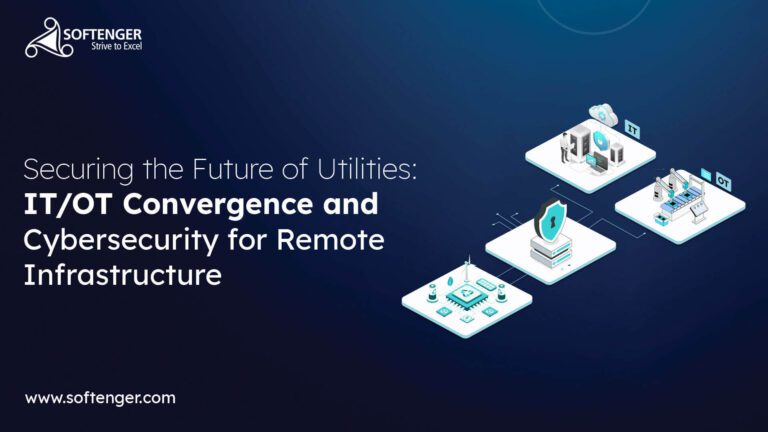
Securing the Future of Utilities: IT/OT Convergence and Cybersecurity for Remote Infrastructure
The security principles from converged IT/OT environments apply directly to healthcare — where clinical systems, IoMT devices, and corporate IT share network infrastructure that sophisticated ransomware groups actively target for PHI theft and operational disruption.
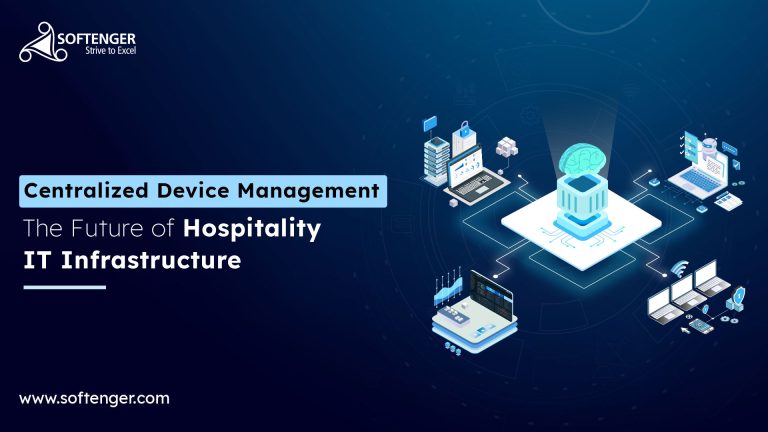
Why Remote and Centralized Device Management Is Transforming IT Operations in the Hospitality Industry
The centralized remote management principles transforming distributed operations management apply equally to healthcare enterprises managing clinical workstations, IoMT devices, and diagnostic equipment across multi-site hospital and clinic networks.
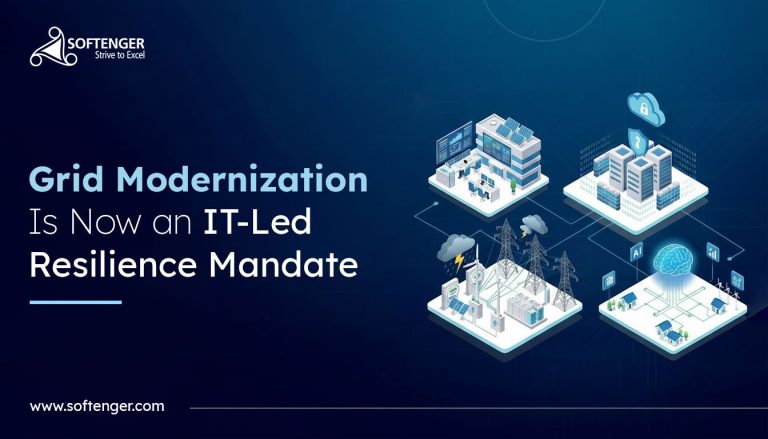
Grid Modernization in the Energy & Utilities Sector: Building a Resilient, Secure, and Intelligent Infrastructure
How managed IT frameworks enable enterprises managing complex, distributed infrastructure to drive modernization without disrupting live operations — with direct application to healthcare organisations modernizing from legacy clinical IT to cloud-native digital health platforms.
Questions Singapore IT leaders ask before engaging Softenger
Tell us about your Singapore IT environment. We'll bring a team that understands MAS TRM at the precision the regulator expects.
A conversation with Softenger's Singapore team produces a documented IT topology and multi-framework compliance assessment — not an ASEAN template with Singapore labels applied. We review your infrastructure, MAS TRM obligations, PDPA notification readiness, CII status, and APAC regional IT, then produce specific recommendations. No commitment required.
🇸🇬 Request a Singapore Enterprise IT Assessment
ISO 27001 certified. Handled securely, never shared with third parties.