


Malaysia’s manufacturing, BFSI, and healthcare sectors need IT that understands each one distinctly.
Softenger delivers remote IT infrastructure services across Malaysia’s five core sectors — from offices in Cyberjaya and Penang, backed by our India-based Global Support Center. 24/7 NOC and SOC in MYT. PDPA, BNM RMiT, and sector-specific compliance embedded from day one. Manufacturing, BFSI, healthcare, technology, and multi-site coverage. One managed service. ISO 27001:2022 certified.
Malaysia’s sectors don’t share IT challenges — and a managed IT provider that treats them the same serves none of them well.
A Penang semiconductor fab’s IT requirements are structurally different from a Kuala Lumpur Islamic bank’s BNM RMiT obligations, which are structurally different from a private hospital group’s clinical continuity requirements. Managing all three with a generic enterprise IT template creates the sector-specific gaps that regulatory auditors, production managers, and clinical directors all identify — from different directions, about the same managed IT failure.
Malaysia manufacturing operates 24/7 but manages production IT on business-hours coverage — every overnight gap is a production risk
Penang’s semiconductor corridor, Selangor’s industrial parks, and Johor’s manufacturing zones run three shifts without pause. Production scheduling systems, MES platforms, automated test equipment, and SCADA networks cannot tolerate overnight IT monitoring gaps — but most Malaysia manufacturing enterprises staff IT on business hours, relying on operations staff to detect and escalate overnight system incidents before they become production delays.
BNM RMiT compliance, Islamic finance IT governance, and PDPA personal data obligations create a layered compliance model that exceeds most BFSI IT team capacity
Malaysia’s BFSI sector operates under simultaneous BNM RMiT technology risk requirements, Securities Commission Malaysia governance obligations for capital markets, Shariah-compliant banking IT controls for Islamic finance institutions, and PDPA personal data protection for all customer-facing operations. Managing these frameworks separately — each requiring distinct evidence, monitoring, and reporting — is an IT governance model that consumes the team’s entire compliance capacity, leaving nothing for digital transformation.
Malaysia’s private healthcare sector requires clinical system availability standards that generic enterprise IT SLA tiers were never designed to meet
KPJ Healthcare, IHH Healthcare, Columbia Asia, and Malaysia’s growing diagnostic centre networks operate HIS, PACS, EMR, and LIS systems where downtime directly impacts patient care. Generic IT support SLA tiers — four-hour response for P2 incidents — are not acceptable when a PACS outage affects active imaging sessions or a HIS failure disrupts patient admissions during peak clinic hours. Clinical IT requires a fundamentally different SLA architecture.
MSC-status companies face rapidly evolving MDeC conditions, MDEC digital economy requirements, and PDPA obligations that strain small-to-mid IT teams
Malaysia’s MSC-status technology cluster in Cyberjaya and wider MSC Malaysia registered enterprises face annual MDeC performance reporting, MSC-status condition compliance, PDPA personal data obligations for their customer data, and increasingly complex cloud infrastructure as they scale. Small-to-mid IT teams cannot build and maintain the monitoring model this requires while simultaneously executing the digital product development that is their core business.
Multi-state Malaysia enterprises lack unified IT visibility across Peninsular Malaysia, Sabah, and Sarawak — creating geographic monitoring gaps that incident reports reveal after the fact
Enterprises operating across West and East Malaysia — with offices, facilities, or retail locations in Kuala Lumpur, Penang, Johor, Kota Kinabalu, and Kuching — typically manage IT through a combination of central IT team and local vendor arrangements. This creates the monitoring fragmentation where IT incidents at a Sarawak facility are detected by operations staff rather than a monitoring system, and reach the central IT team as reports of impact rather than alerts before impact.
Malaysia’s sectors are distinct.
Their IT management models
should be too.
Most managed IT providers serving Malaysia enterprises apply a single operating model regardless of sector — the same SLA tiers, the same compliance monitoring framework, the same alert thresholds — across a Penang semiconductor fab, a Kuala Lumpur Islamic bank, and a Petaling Jaya private hospital. The economics of scale make this approach profitable. The operational results make it inadequate for any of the three.
Softenger’s Malaysia IT model starts with sector classification rather than infrastructure inventory. A BNM RMiT banking IT incident and a production MES outage at a Penang fab are not the same type of IT event, do not require the same SLA response, and do not generate the same compliance documentation. Treating them identically produces the same monitoring model that all three sectors eventually recognise as unsuited to their operational context.
From offices in Cyberjaya and Penang, Softenger’s Malaysia team maps each engagement to the sector’s specific operational patterns — shift schedules for manufacturing, examination cycles for BFSI, clinical workflows for healthcare, MSC-status conditions for technology — before configuring monitoring, SLA tiers, and compliance controls. The monitoring model is built from the sector’s operational reality, not from a generic Malaysia enterprise IT template that ignores the differences that matter most.
Sector classification before monitoring configuration — manufacturing, BFSI, healthcare, and technology receive distinct models
Every Malaysia engagement begins with sector classification that determines SLA tiers, compliance monitoring requirements, alert thresholds, and escalation paths. A manufacturing production SLA is not the same as a clinical healthcare SLA. The Advise phase produces sector-calibrated configurations, not adapted generic defaults.
Sector model first — monitoring configured to the sector’s operational reality.Penang manufacturing expertise — production IT from engineers who operate in the tech corridor
Softenger’s Penang office provides operational familiarity with Malaysia’s semiconductor and electronics manufacturing environment. MES, test equipment IT, OT boundary requirements, and the 24/7 shift patterns of the Penang corridor are understood from proximity — not from a generic industrial IT model applied without local context.
Penang manufacturing IT from engineers operating in Penang.Multi-state Malaysia coverage — unified monitoring from Peninsular Malaysia through Sabah and Sarawak
Softenger’s GSC provides centralised monitoring across all Malaysia locations — from Johor Bahru to Perlis on the peninsula, and across East Malaysia in Sabah and Sarawak — from one operations center, under one SLA, with one escalation path. No per-state vendor arrangements, no monitoring fragmentation between regions.
Malaysia end-to-end — one monitoring model, Peninsular and East Malaysia.PDPA, BNM RMiT, and sector compliance as one continuous layer — not separate annual programmes
PDPA personal data monitoring, BNM RMiT technology risk controls, MSC-status IT conditions, and sector-specific compliance requirements are all configured from one compliance monitoring layer during the Advise phase. Evidence for every applicable framework is a monthly deliverable — not a separate programme per regulator.
Multi-framework Malaysia compliance — one layer, continuous, monthly reports.Five sectors. Five distinct IT operating models. One managed service.
Softenger covers Malaysia’s five core enterprise sectors — each with its own SLA architecture, compliance requirements, and operational IT patterns — under one unified operations model anchored in Cyberjaya and Penang.
Three delivery domains. Five sectors.The full Malaysia enterprise IT stack — managed as one accountable service.
Softenger delivers Malaysia enterprise IT services across three operational domains — infrastructure and security, compliance and regulatory operations, and cloud and end-user support — calibrated to five distinct Malaysia sectors under one operations model anchored in Cyberjaya and Penang.
Infrastructure, Production & Security Operations
24/7 NOC for manufacturing production IT, BFSI core systems, clinical infrastructure, and technology platforms. SOC with Malaysia-specific threat intelligence and Cybersecurity Act 2018 monitoring. MYT-continuous — 3am incidents reach an engineer before they become morning escalations.
Malaysia Compliance & Regulatory Operations
PDPA, BNM RMiT, SC Malaysia, MSC-status MDeC conditions, Cybersecurity Act 2018, and sector-specific compliance monitoring as continuous system outputs. Monthly posture reports per applicable framework. BNM examinations and PDPA enforcement find documentation current — not assembled on request.
Cloud, Application & End-User Support
AWS Malaysia, Azure, and GCP infrastructure with PDPA-compliant data residency monitoring, clinical and banking application performance management, bilingual BM/English L1–L3 helpdesk for Malaysia users, ITSM operations, and multi-state endpoint and patch management across Peninsular and East Malaysia.
What Malaysia enterprises achieve when IT management is calibrated to their sector
Outcomes from Malaysia enterprises across manufacturing, BFSI, and healthcare — where sector-specific IT monitoring models produce measurably different results from generic enterprise IT management.
Manufacturing Production IT Continuity
Penang and Selangor manufacturing enterprises with 24/7 production operations gain genuine around-the-clock production IT monitoring — system anomalies detected before they cascade to shift supervisors, not reported by line staff after a production delay has already been counted and escalated to management.
BFSI BNM RMiT Compliance Transformation
Malaysia financial institutions managing BNM RMiT compliance through Softenger’s continuous monitoring model eliminate the pre-examination sprint that has traditionally consumed six to eight weeks of IT team capacity annually — freeing the team for digital transformation initiatives while maintaining a cleaner compliance posture than the sprint model ever produced.
Healthcare Clinical System Availability
Malaysia private hospital groups gain HIS, PACS, and clinical system monitoring under clinical-critical SLA tiers — where patient care disruption risk is the primary classification criteria, not server technical specifications. Clinical incidents are detected and responded to before clinical staff report them, not after.
Multi-State Malaysia IT Consolidation
Enterprises operating across Peninsular Malaysia, Sabah, and Sarawak through per-state vendor arrangements consolidate into a single Softenger operations model — replacing monitoring fragmentation, compliance inconsistency, and geographic reporting gaps with unified NOC visibility and one SLA that covers every Malaysia location.
Every Malaysia IT engagement
follows the same four-phase discipline with sector-specific calibration.
AOTS — Advise, Optimize, Transform, Support — applied to Malaysia sector IT has one consistent discipline and five distinct calibrations. Advise classifies your Malaysia IT estate by sector before mapping compliance obligations — a manufacturing classification produces a different monitoring model than a BFSI classification, which produces a different model than a healthcare classification. Optimize configures sector-appropriate SLA tiers, compliance monitoring, and operational thresholds. Transform onboards sector-critical systems first. Support operates 24/7 in MYT with sector-calibrated runbooks.
Advise
Every Malaysia engagement begins with sector classification — which operational model, which compliance frameworks, which SLA architecture. Cyberjaya and Penang team members conduct the audit with sector-specific familiarity rather than applying a generic Malaysia enterprise IT inventory template.
- Sector classification audit — manufacturing, BFSI, healthcare, technology, or multi-sector
- Malaysia compliance mapping — PDPA, BNM RMiT, SC Malaysia, MSC-status, Cybersecurity Act
- Sector-specific SLA architecture — production-critical, clinical-critical, or financial-critical tiers
- Multi-state Malaysia coverage mapping — Peninsular and East Malaysia site inventory
- Onboarding phasing — production-critical and highest-risk systems first per sector
A documented Malaysia IT topology with sector-calibrated monitoring architecture — five distinct SLA models available, one or more applied based on your sector mix.
Optimize
Monitoring rules are built from the Advise sector classification — a manufacturing MES alert threshold reflects production shift patterns, a clinical system alert reflects patient care impact, a BFSI core banking alert reflects BNM technology risk priorities. All configured and tested before go-live.
- Sector-calibrated alert thresholds — shift schedules, clinical workflows, examination cycles
- PDPA personal data monitoring activated — sector-appropriate access baselines set
- BNM RMiT, SC Malaysia, or MSC-status compliance controls configured per sector
- Sector-specific runbooks — manufacturing, BFSI, healthcare, technology incident paths
- Multi-state monitoring configured — Peninsular and East Malaysia sites included
A tested, sector-calibrated monitoring environment — compliance controls active, SLA tiers validated, Malaysia-specific runbooks confirmed before first live incident.
Transform
Environments are onboarded in sector-criticality order — Penang production systems and BNM-regulated financial platforms first for their respective sectors, clinical systems first for healthcare engagements. Each cluster runs in parallel with existing monitoring and is validated before the next begins.
- Sector-priority onboarding — highest-criticality systems per sector onboarded first
- Parallel monitoring run — no production, clinical, or financial coverage gap during transition
- Sector-specific incident simulation — manufacturing, BFSI, healthcare scenarios tested
- Compliance posture validation per cluster — PDPA and sector compliance confirmed
- East Malaysia sites included in onboarding clusters — no geographic scope reduction
Full Malaysia IT estate onboarded in sector-criticality order — production, clinical, and financial systems operational under sector-appropriate SLAs without disruption to live operations.
Support
Softenger’s Cyberjaya, Penang, and India GSC operate your Malaysia IT continuously — sector-calibrated monitoring, SOC security operations, compliance reporting, and end-user support. Quarterly AOTS reviews evolve the model as your sector grows, new Malaysia locations open, and regulatory obligations change.
- 24/7/365 NOC and SOC — MYT continuous, sector SLA tiers active at all hours
- Sector-specific incident management — manufacturing, BFSI, healthcare, technology runbooks
- Monthly PDPA, BNM RMiT, MSC-status, and sector compliance posture reports
- Multi-state Malaysia health reporting — Peninsular and East Malaysia coverage summaries
- Quarterly AOTS review — sector changes, new Malaysia locations, regulatory updates
A continuously operated, sector-calibrated Malaysia IT environment — production systems monitored in MYT, compliance current, clinical systems protected, and multi-state visibility maintained every quarter.
Every new sector expansion, Malaysia location, or regulatory change re-enters AOTS.
When a manufacturing conglomerate acquires a healthcare division, a BFSI group opens an East Malaysia branch, or BNM issues new RMiT guidance, that change enters at Advise — sector-classified, monitoring updated, onboarded through Transform, and returned to Support without creating gaps in existing sector coverage.
How a Malaysia multi-specialty hospital group achieved clinical IT continuity and PDPA compliance across six hospitals
A Malaysia private hospital group operating six hospitals across Selangor, KL, and Penang engaged Softenger after managing clinical IT through separate vendors at each hospital — with no centralised monitoring, no PDPA-aligned patient data access monitoring, and reactive incident management that consistently detected HIS and PACS issues after clinical staff reported them. The full case study documents the clinical IT transformation and 18-month operational outcomes.
Clinical IT monitoring consolidated across six Malaysia hospitals — 99.99% HIS and PACS uptime, PDPA patient data monitoring active, and per-hospital vendor model replaced within 12 months
The hospital group operated clinical IT through separate vendors at each of its six hospitals — with no centralised NOC view, no standardised SLA for clinical system incidents, and no PDPA personal data monitoring for patient health information. HIS outages during peak clinic hours, PACS failures affecting active imaging sessions, and overnight clinical system incidents were all detected after clinical staff reported them — by which point the patient care impact had already occurred. PDPA obligations for patient health records were acknowledged but not embedded into IT monitoring operations.
Three ways to engage. One Malaysia sector-calibrated standard.
Malaysia enterprises range from single-facility manufacturers and individual hospital operators to conglomerates with multi-sector operations across Peninsular and East Malaysia. Softenger’s delivery models match engagement depth to your sector, scale, and compliance obligations today.
Malaysia On-Site + GSC Hybrid
Cyberjaya or Penang team leads sector engagement management, regulatory liaison, and on-site support — while the India GSC delivers 24/7 MYT NOC and SOC continuity. Local sector expertise and round-the-clock operational coverage from one accountable partner.
- Malaysia office team for sector engagement, regulatory liaison, and on-site support
- India GSC for 24/7 NOC, SOC, and MYT-continuous monitoring and escalation
- Sector-calibrated SLA architecture — manufacturing, BFSI, healthcare, technology models
- Multi-state Malaysia coverage — Peninsular and East Malaysia under one SLA
- PDPA, BNM RMiT, and sector compliance as one continuous monitoring layer
GSC-Led Managed Service
India GSC delivers full 24/7 NOC, SOC, and compliance monitoring calibrated to your Malaysia sector; your IT team retains L3 escalation, vendor management, and strategic governance. Softenger extends sector coverage depth without displacing local expertise.
- GSC-led 24/7 MYT monitoring — sector SLA tiers active at all hours including overnight
- Your team retains L3 escalation, vendor relations, and strategic IT decisions
- Sector-specific compliance monitoring as embedded system outputs
- Structured handover protocols and shared sector incident management tooling
- Cost-effective sector coverage extension without expanding Malaysia IT headcount
On-Demand IT Support
Expert Malaysia sector IT support for specific initiatives — BNM RMiT gap remediation, clinical IT commissioning for new hospital facilities, PDPA compliance implementation, MSC-status IT condition fulfilment, or new manufacturing facility IT setup.
- No long-term commitment — engage for defined projects or specific sector scopes
- Sector expertise: manufacturing, BFSI, healthcare, technology, or multi-state
- Ideal for BNM RMiT remediation, clinical IT projects, or facility commissioning
- Transparent scope and billing — clear boundaries on sector coverage
- Clear path to a managed engagement as sector IT complexity grows
What a Malaysia Sector IT Assessment produces
A conversation with Softenger’s Cyberjaya or Penang team produces a documented sector assessment — not a generic Malaysia IT inventory. We identify your sector, map applicable compliance obligations, assess operational IT patterns, and produce specific sector-calibrated recommendations. No commitment required.
Six reasons Malaysia enterprises across
manufacturing, BFSI, and healthcare
choose Softenger over a generic APAC MSP
These are structural realities — built into Softenger’s sector-calibrated monitoring model, Malaysia office presence, and GSC operations — that determine whether your IT service meets the operational standards your sector and Malaysia’s regulators simultaneously demand.
Manufacturing sector expertise — Penang tech corridor familiarity from the Penang office
Softenger’s Penang team operates within Malaysia’s premier manufacturing corridor. Production IT patterns, shift schedules, OT boundary requirements, and the operational context of Penang semiconductor and EMS enterprises are understood from proximity — not from a generic industrial IT framework applied without local operational context.
BFSI sector compliance embedded from day one — BNM RMiT as a system state, not an examination sprint
BNM RMiT technology risk controls, SC Malaysia IT governance, and PDPA personal data monitoring are configured as continuous infrastructure outputs from the first day of BFSI operations. The BNM examiner arrives to evidence current within 30 days. Malaysia financial institutions spend examination cycles demonstrating their digital roadmap, not assembling compliance documentation.
Healthcare sector SLA architecture — clinical-critical tiers calibrated to patient care impact, not IT conventions
Softenger’s healthcare SLA model for Malaysia private hospitals classifies incidents by patient care impact, not by technical system specifications. A HIS outage during peak clinic hours is a P1 event requiring immediate response. A non-critical administrative system notification can wait. Clinical IT SLA tiers should reflect clinical operational context — Softenger’s do.
Multi-state Malaysia coverage — Peninsular and East Malaysia under one NOC, one SLA
Softenger’s GSC provides monitoring across all Malaysia locations — from Johor Bahru to Perlis on the peninsula, and across Sabah and Sarawak — from a single operations center with one team, one SLA, and one escalation path. East Malaysia locations are covered in MYT without per-state vendor arrangements or satellite IT team overhead.
50% IT cost reduction with sector expertise — not generic cost reduction at the expense of sector knowledge
Softenger’s combined Cyberjaya/Penang-plus-GSC model produces 50%+ IT operational cost reduction versus sector-appropriate in-house or per-vendor arrangements — while maintaining the BNM TRM knowledge, clinical IT familiarity, and Penang manufacturing context that sector-specific IT management requires. Cost reduction doesn’t require trading sector expertise for offshore economics.
25 years of enterprise IT delivery — sector-grade governance applied across all Malaysia engagements
Softenger’s 25-year delivery history includes VISA’s PCI-DSS environment, Kotak Bank’s financial IT operations, and Reliance Jio’s network-scale managed IT — engagements where sector-specific compliance and 24/7 availability are non-negotiable. The governance discipline from those engagements is the baseline for every Malaysia sector engagement, regardless of which sector or which scale.
Insights for Malaysia enterprise
IT leaders across all sectors
Explore all insights →
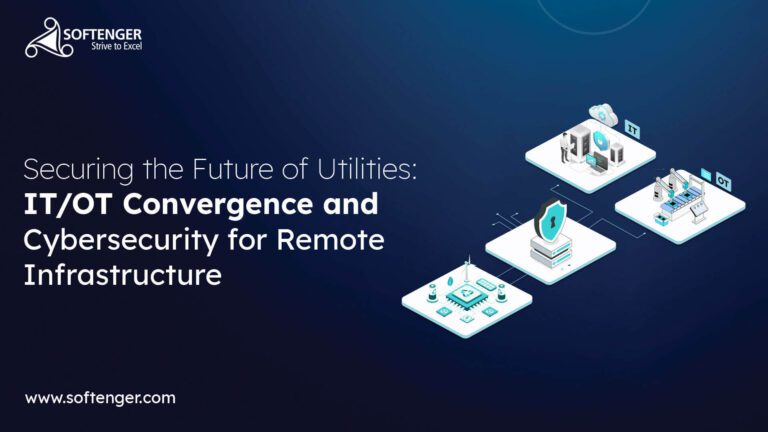
Securing the Future: IT/OT Convergence and Cybersecurity for Remote Infrastructure
The IT/OT convergence security challenge applies directly to Malaysia’s manufacturing corridor — where Penang semiconductor fabs, Selangor electronics manufacturers, and Johor automotive components producers all manage the same OT/IT boundary security problem that this article addresses for industrial enterprises globally.
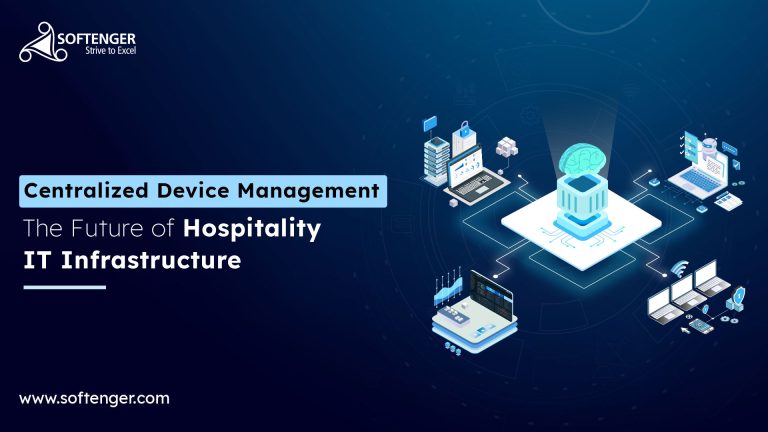
Why Remote and Centralized IT Management Is Transforming Operations Across Distributed Infrastructure
The centralised remote management model that this article explores applies directly to Malaysia enterprises managing IT across Peninsular Malaysia and East Malaysia — where per-state vendor arrangements create the monitoring fragmentation, compliance inconsistency, and geographic reporting gaps that a single centralised NOC eliminates.
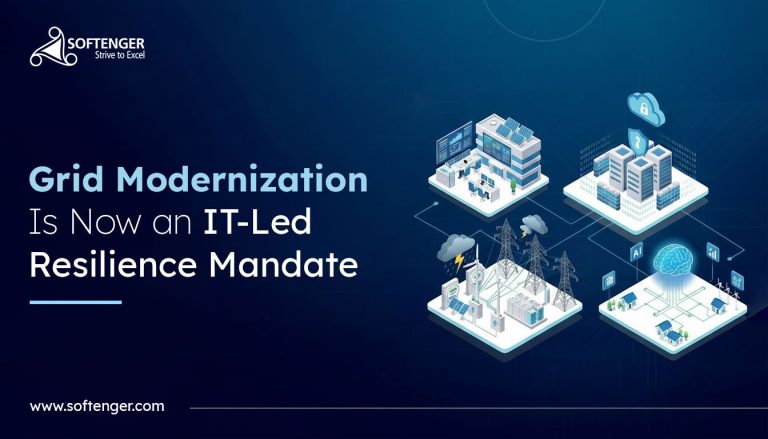
IT-Led Infrastructure Modernization: Building Resilient, Secure Operations at Scale
How Malaysia enterprises driving MyDIGITAL and Smart City digital transformation initiatives use managed IT frameworks to modernize infrastructure — without creating the PDPA data residency gaps and BNM RMiT compliance exposures that unmanaged cloud migrations typically produce across Malaysia’s regulated sectors.
Questions Malaysia sector IT leaders ask
before engaging Softenger
Tell us which Malaysia sector you operate in. We’ll show you what sector-calibrated IT management looks like.
A conversation with Softenger’s Cyberjaya or Penang team produces a documented sector assessment — not a generic Malaysia IT proposal. We identify your sector, map compliance obligations, and produce a specific sector-calibrated recommendation. No commitment required.
🇲🇾 Request a Malaysia Sector IT Assessment
ISO 27001 certified. Handled securely, never shared with third parties.