
Telecom networks run at five nines. Your managed IT operations should too.
Softenger’s Remote Infrastructure Management delivers 24/7 NOC operations, proactive monitoring, and L1–L3 incident management purpose-built for telecom operators and media enterprises — covering OSS/BSS platforms, 5G network infrastructure, OTT streaming environments, and TRAI and GDPR compliance. One SLA. One operations team. No coverage gaps — ever. ISO 27001:2022 certified.
In telecom and media, an IT failure isn’t a service outage — it’s a subscriber event.
The gap between an IT incident and a customer-visible service failure in this sector is measured in seconds, not minutes. A NOC blind spot becomes a dropped call. A BSS platform outage during a billing cycle becomes a churn event. An OTT CDN failure during a live final becomes forty thousand complaints in twenty minutes.
Five-nines commitments leave zero margin for reactive incident management
Telecom operators commit to 99.999% network availability — 5.26 minutes of unplanned downtime per year. Every minute an OSS/BSS fault goes undetected burns through that allocation. Managing network-critical IT with reactive support or fragmented monitoring vendor arrangements is an architecture mismatch the SLA cannot sustain.
Telecom networks face SS7, Diameter, and DDoS threats that generic IT security misses
Telecom infrastructure carries a specific threat profile — signaling network attacks, protocol-layer exploitation, and DDoS campaigns that target network elements directly. A generic enterprise SOC using standard threat intelligence feeds is not calibrated to detect SS7 location interception attempts or Diameter Denial of Service patterns.
Legacy OSS/BSS co-existing with cloud-native 5G creates unmonitored integration seams
Most operators run deeply hybrid IT environments — legacy OSS/BSS platforms co-existing with cloud-native 5G core components, containerized network functions, and SaaS media platforms. The API interfaces and data pipelines connecting legacy and cloud-native layers are where incidents originate and propagate undetected.
TRAI, GDPR, and regional telecom regulations overlap in ways that strain compliance teams
Telecom operators face simultaneously applicable regulatory frameworks — TRAI Quality of Service standards, GDPR subscriber data protection obligations, ITU-T technical requirements, and country-specific licensing conditions. Managing continuous evidence across all frameworks through manual pre-audit assembly produces the same findings year after year.
OTT and live broadcast events demand infrastructure scaled before viewership peaks arrive
A live sports broadcast or news event cannot be rescheduled because your CDN or origin server infrastructure failed to scale. OTT platforms face instantaneous demand spikes — from baseline traffic to peak viewership in seconds. Pre-event capacity validation and real-time QoE monitoring are the operating standard.
Three operational mandates that define managed IT for communications enterprises — and why generic services miss all three.
Managing IT for a telecom operator or media enterprise is not about keeping servers online. It is about three distinct operational mandates that managed IT providers designed for corporate office environments are structurally unable to fulfill at communications scale.
The first is operations continuity: OSS/BSS platforms, network elements, and streaming infrastructure must match the uptime expectations of a network running 24/7 — not corporate application service windows. The second is security calibration: the signaling network attack surface, subscriber data protection obligations, and DDoS exposure of a telecom operator require threat intelligence generic enterprise SOC tools don’t carry. The third is integration visibility: the pipelines connecting OSS, BSS, 5G core, OTT platforms, and cloud infrastructure are the operational nervous system of a communications enterprise and must be monitored as carefully as the systems they connect.
Softenger’s telecom and media RIM addresses all three mandates under one SLA, one operations team, and one escalation path from our India-based Global Support Center.
Operations Continuity
24/7 NOC monitoring of OSS/BSS platforms, network elements, and 5G core infrastructure under operations-critical SLA tiers. Proactive anomaly detection before subscriber impact. Centralized visibility across the full network and media estate from one operations center.
P1 <5 min response on network-critical events — always.Security & Compliance Operations
24/7 SOC with telecom-sector threat intelligence — SS7 and Diameter protocol anomaly detection, DDoS targeting network infrastructure, and BGP routing security. TRAI, GDPR, and ITU-T compliance monitoring embedded as continuous system outputs from day one.
Signaling network security and regulatory compliance as one operation.Platform & Integration Health Management
OSS/BSS platform availability management, OTT and streaming infrastructure monitoring with event-aware capacity planning, cloud and hybrid infrastructure operations, and L1–L3 service delivery — all managed as operations-critical environments.
OSS/BSS, OTT, cloud, and ITSM under one operations model.Five service pillars. One managed operations model.
Telecom and media IT doesn’t fit a single monitoring profile. Softenger manages five distinct service domains — each with its own SLA tier, threat intelligence calibration, and compliance requirement — under one unified operations framework from our Global Support Center.
Six system categories. The full communications IT stack consolidated under one team.
Softenger consolidates what most telecom and media enterprises manage across four or more separate vendors into a single operations model — unified visibility, one SLA, one escalation path, one team that understands how each system connects to the others.
OSS Platform Operations
Fault management, configuration management, performance monitoring, and accounting (FCAPS) platform availability. Network element management systems, topology databases, and service activation platforms managed under network-critical SLA tiers. Ericsson, Nokia, and multi-vendor OSS environments.
BSS & Revenue Platforms
Billing platform availability and billing cycle protection, CRM and customer management systems, order management, revenue assurance, and product catalogue platforms. BSS degradation during active billing is a P1 event — revenue impact begins immediately and subscriber churn risk escalates.
5G & Network Infrastructure
5G core network function availability — AMF, SMF, UPF, PCF monitoring. RAN performance management. MPLS, SD-WAN, and backbone connectivity. Virtualized and containerized network function (VNF/CNF) health across private and public cloud 5G deployments.
Telecom Security Operations
SOC with telecom-sector threat intelligence. SS7 and Diameter protocol anomaly detection. DDoS targeting network infrastructure. BGP routing security monitoring. Subscriber data protection and TRAI/GDPR compliance posture maintained continuously — not assembled pre-audit.
OTT & Streaming Platforms
OTT platform availability and QoE monitoring, CDN performance management, live streaming pipeline health (encoding, packaging, delivery), and media asset management system uptime. Pre-event capacity reviews are mandatory for all known high-viewership broadcast events.
Cloud & Hybrid Infrastructure
Multi-cloud management across AWS, Azure, and GCP for telecom and media workloads. Cloud-hosted OSS/BSS environments, public cloud 5G core, and hybrid data center operations. Backup and DR with broadcast and network operations-aligned RPO/RTO requirements.
What telecom and media enterprises achieve with Softenger’s managed IT model
Client-reported outcomes from managed IT engagements in high-availability, high-compliance communications environments — not projected estimates from a generic managed services comparison.
Network & Platform Availability
OSS/BSS platforms and network infrastructure managed under five-nines SLA tiers consistently deliver uptime improvements over fragmented monitoring arrangements — because anomalies are detected and triaged before they cascade to subscriber impact, not after operations staff receive notification from the field.
TRAI & Compliance Posture
Continuous TRAI QoS and GDPR compliance monitoring eliminates the compliance gap between audit cycles that repeatedly produces the same findings. Monthly regulatory posture reports replace the six-week pre-examination sprint that consumes IT team capacity and prevents forward progress on any other initiative.
IT Operational Cost Reduction
Consolidating multi-vendor NOC, SOC, and IT operations into Softenger’s offshore delivery model consistently produces 50%+ reduction in IT operational costs — while expanding monitoring coverage to 24/7, adding telecom-specific security threat intelligence, and eliminating the attrition risk where a senior OSS engineer leaves at the wrong moment in a TRAI audit cycle.
OTT & Streaming Platform Reliability
Media enterprises gain proactive capacity management and mandatory pre-event infrastructure validation — replacing the reactive model that produced visible subscriber quality degradation during live events with operations that manage peak demand before it arrives.
How every telecom IT management engagement runs — without exception.
AOTS — Advise, Optimize, Transform, Support — applied to telecom and media IT has a specific mandate in each phase. Advise produces a network topology audit and OSS/BSS dependency map before a single monitoring rule is written. Optimize configures telecom-calibrated alert thresholds and compliance monitoring controls before go-live. Transform onboards network domains in validated clusters with no service impact to live operations. Support operates a 24/7 NOC and SOC calibrated to five-nines network availability standards with pre-built telecom incident runbooks and regulatory notification paths.
Advise
Every network domain’s IT environment is mapped in documented detail — OSS/BSS architecture, 5G core topology, OTT platform dependencies, and compliance obligations across all applicable regulatory frameworks. The audit output drives the monitoring model. No monitoring configuration begins before the audit is complete and reviewed.
- Network domain topology audit — OSS, BSS, 5G core, OTT, CDN
- Regulatory compliance mapping — TRAI QoS, GDPR, ITU-T obligations
- Service criticality tiering — subscriber impact ranking per system
- SLA design aligned to five-nines network availability commitments
- Onboarding phasing plan — network-critical systems first, validated clusters
A documented network topology and compliance-aligned monitoring architecture — built from your operational environment, not a generic telecom IT template.
Optimize
Monitoring rules are built from the Advise topology audit — not from vendor defaults. OSS/BSS alert thresholds, 5G NF performance baselines, signaling network anomaly detection profiles, and TRAI compliance monitoring are all configured and tested before the first environment goes live under Softenger management.
- OSS/BSS and network element monitoring rule configuration
- SS7, Diameter, and BGP security detection rules activated and tested
- TRAI QoS and GDPR compliance monitoring configured as system outputs
- Alert noise elimination — subscriber-impacting signals separated from informational
- Telecom incident runbook development — top network failure and security scenarios
A tested, telecom-calibrated monitoring environment — compliance controls active, signaling security detection validated, network SLA tiers confirmed before the first live incident.
Transform
Onboarding proceeds by network domain — OSS/BSS and critical network elements first, then 5G core, then OTT and media platforms, then cloud and end-user environments. Each domain runs in parallel with existing monitoring, is validated for uptime and compliance posture, and is formally handed to Softenger NOC before the next domain cluster begins.
- Network domain cluster onboarding — validation gate between each phase
- Parallel monitoring run — zero service coverage gap during transition
- Network incident simulation — top telecom failure and security scenarios tested
- TRAI compliance validation per domain cluster before progression
- Knowledge transfer — internal NOC and engineering teams briefed on operating model
All network domains onboarded under defined SLAs — without any impact to live network operations, subscriber services, or active compliance monitoring during transition.
Support
Softenger’s GSC operates your communications IT environment continuously — network monitoring, signaling security operations, compliance reporting, pre-event OTT capacity reviews, and proactive infrastructure health management. Quarterly AOTS reviews ensure the operating model evolves as your 5G rollout, OTT portfolio, and regulatory obligations develop.
- 24/7/365 NOC and SOC operations — no business hours, no coverage gaps
- Network incident management — L1–L3 with pre-built telecom runbooks
- Monthly TRAI, GDPR, and compliance posture reports — always current
- Pre-event OTT capacity reviews — mandatory for all known peak viewership events
- Quarterly AOTS review — 5G expansion, new OTT services, regulatory changes
A continuously operated, continuously compliant communications IT environment — regulatory posture documented, network monitored, and infrastructure health reported every quarter.
Every new 5G service, OTT launch, or regulatory obligation re-enters AOTS.
When you launch a new 5G service, commission an OTT platform, or face a new regulatory mandate, that change enters at Advise — the environment is audited, the monitoring model is updated, the change is onboarded through Transform, and it returns to Support. Network growth never creates monitoring or compliance gaps.
How a national telecom operator consolidated multi-vendor NOC operations and eliminated its annual compliance sprint
A licensed telecom operator managing OSS/BSS infrastructure across multiple service circles engaged Softenger after four consecutive TRAI QoS examinations produced repeated IT compliance findings — each triggering remediation programmes that consumed IT team capacity for months. The full case study documents the NOC consolidation process, compliance posture transformation, and 18-month operational outcomes.
Multi-vendor NOC consolidated into one managed operations model — 50% cost reduction and zero TRAI findings in 18 months
The operator ran separate monitoring vendors for OSS operations, BSS platform health, and network element management — with no unified view, no single SLA, and no continuous TRAI QoS compliance monitoring. Incidents were detected by operations staff before the NOC in three of twelve months reviewed. TRAI QoS compliance evidence was assembled manually in the six weeks before each examination, consuming the IT team’s capacity entirely during that period and producing repeated findings in access control and incident documentation.
Three ways to engage. One network-grade standard.
Telecom and media enterprises range from regional ISPs and community broadcasters to national mobile operators and global OTT platforms. Softenger’s delivery models match engagement depth to your operational scale today.
Dedicated Offshore Support Center
End-to-end managed IT from Softenger’s India-based GSC. 24/7 NOC and SOC across all network domains and media platforms — at 50%+ lower cost than equivalent in-house capability, with telecom-specific expertise and compliance knowledge built in from day one.
- 24/7 NOC and SOC monitoring across all network domains and platforms
- Five-nines SLA tiers — OSS/BSS and network-critical systems prioritised
- 50%+ IT operational cost reduction vs. in-house or multi-vendor model
- TRAI, ITU-T, and GDPR compliance monitoring built in from day one
- Scalable as you launch new 5G services, OTT platforms, or expansions
Hybrid Delivery Model
Offshore GSC for 24/7 monitoring and L1/L2 incident triage; your internal NOC and engineering team retains L3 escalation, vendor management, and operational governance. Softenger extends coverage without displacing the network expertise your team carries.
- Offshore NOC/SOC for 24/7 monitoring and first-line incident management
- Your team retains L3 escalation, network change management, vendor governance
- Structured handover protocols and shared network incident management tooling
- Compliance monitoring aligned across onshore-offshore operating model
- Designed to extend — not replace — existing network operations expertise
On-Demand IT Support
Expert telecom and media IT support for specific initiatives — OSS/BSS implementation, 5G rollout IT management, OTT platform commissioning, TRAI compliance gap remediation, or capacity augmentation for major broadcast events.
- No long-term commitment — engage for defined projects or specific scopes
- Full telecom and media IT expertise across all five service pillar domains
- Ideal for OSS/BSS deployments, 5G rollouts, or OTT platform launches
- Transparent scope and billing — clear boundaries on what is covered
- Clear path to a managed service engagement as operational scale grows
India-Based Global Support Center — built for communications enterprises
Softenger’s GSC in India provides 24/7 NOC and SOC operations that cover every time zone without the overhead of building equivalent in-house capability. The same quality of monitoring and incident response is available at 3am on a public holiday as on a Tuesday afternoon — because the GSC operates on continuous shift schedules, not on-call arrangements.
Six structural reasons why telecom and media enterprises choose Softenger over a generic managed IT service applied to a network
These are operational and structural realities — built into how Softenger engages, monitors, and responds — that determine whether your communications IT infrastructure operates at the availability and compliance level your network, your subscribers, and your regulator simultaneously demand.
Telecom-native NOC — OSS/BSS and network elements managed to the five-nines standard
Softenger’s telecom monitoring model classifies network operations systems by their subscriber impact — not their technical architecture. A BSS billing platform outage is never processed in the same queue as a corporate IT service ticket. SLA tiers, alert thresholds, and escalation paths reflect the operational urgency of a communications network.
Signaling network security — SS7, Diameter, and BGP threat detection in every SOC engagement
Softenger’s SOC for telecom operators uses threat intelligence specific to signaling network attack patterns — SS7 location interception, Diameter Denial of Service patterns, and BGP hijacking indicators. Generic enterprise security intelligence does not cover the telecom attack surface. Softenger closes it explicitly.
24/7 GSC coverage — India-based operations across all telecom time zones
Softenger’s Global Support Center operates continuous shifts. A network element failure at 4am, a BSS anomaly during an overnight billing run, or a security event during a live broadcast all reach a telecom-experienced engineer in minutes — not after someone arrives on shift. True 24/7 NOC is a staffing architecture, not a policy commitment.
Event-aware OTT management — streaming infrastructure validated before viewership peaks
Pre-event infrastructure reviews and capacity validation are mandatory for all known high-viewership events. Reactive scaling after subscriber quality complaints is not an acceptable operating model for live sports, news, or entertainment events. Every Softenger OTT engagement includes event-aware capacity planning as a standard operational practice.
50% IT cost reduction — without trading telecom expertise for offshore economics
Consolidating multi-vendor NOC and SOC operations into Softenger’s managed model produces 50%+ IT cost reduction and 40% faster incident resolution. Telecom operators also eliminate the specialist attrition risk — when a senior OSS engineer leaves during a TRAI examination cycle, institutional compliance knowledge leaves with them. Softenger doesn’t carry attrition risk.
25 years of enterprise IT delivery — Reliance Jio, VISA, and Kotak Bank among our reference clients
Softenger’s 25-year enterprise IT delivery history includes Reliance Jio — one of the world’s largest mobile operators by subscriber base. The operational discipline, SLA rigour, and network IT expertise built for that engagement define the baseline for every telecom and media IT management engagement Softenger delivers.
Insights for telecom & media IT leaders
Explore all insights →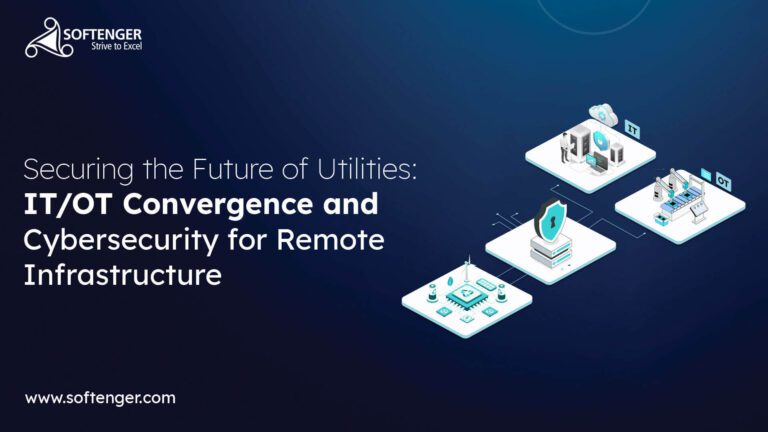
Securing the Future of Utilities: IT/OT Convergence and Cybersecurity for Remote Infrastructure
The security principles from IT/OT convergence in critical infrastructure apply directly to telecom — where operational network systems and corporate IT share boundaries that sophisticated attackers target through the same signaling network seams TRAI auditors examine closely.
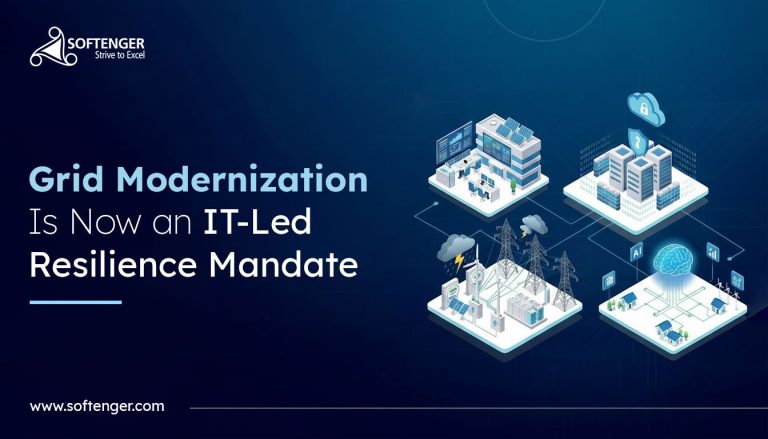
IT-Led Infrastructure Modernization: Building Resilient, Secure Operations at Scale
How enterprises managing complex distributed infrastructure — including telecom operators modernizing from legacy OSS platforms to cloud-native 5G stacks — use managed IT frameworks to drive transformation without disrupting live network operations and subscriber services.
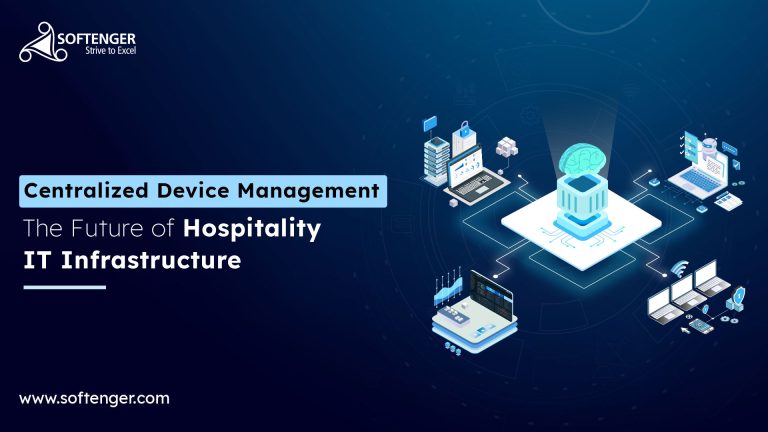
Why Remote and Centralized IT Management Is Transforming Operations Across Distributed Infrastructure
The centralized remote management model transforming distributed infrastructure applies directly to telecom operators managing geographically dispersed network elements, data centers, and OTT platforms — where per-site monitoring creates the visibility fragmentation a single operations center eliminates.
Questions telecom IT leaders ask before engaging Softenger
Tell us about your communications network. We’ll show you what managed looks like at five nines.
A conversation with a Softenger telecom IT specialist produces a documented network topology and compliance assessment — not a vendor pitch. We review your OSS/BSS environment, compliance obligations, and current IT operations model, then produce specific recommendations. No commitment required.
📡 Request a Telecom & Media IT Assessment
ISO 27001 certified. Your information is handled securely and never shared.