
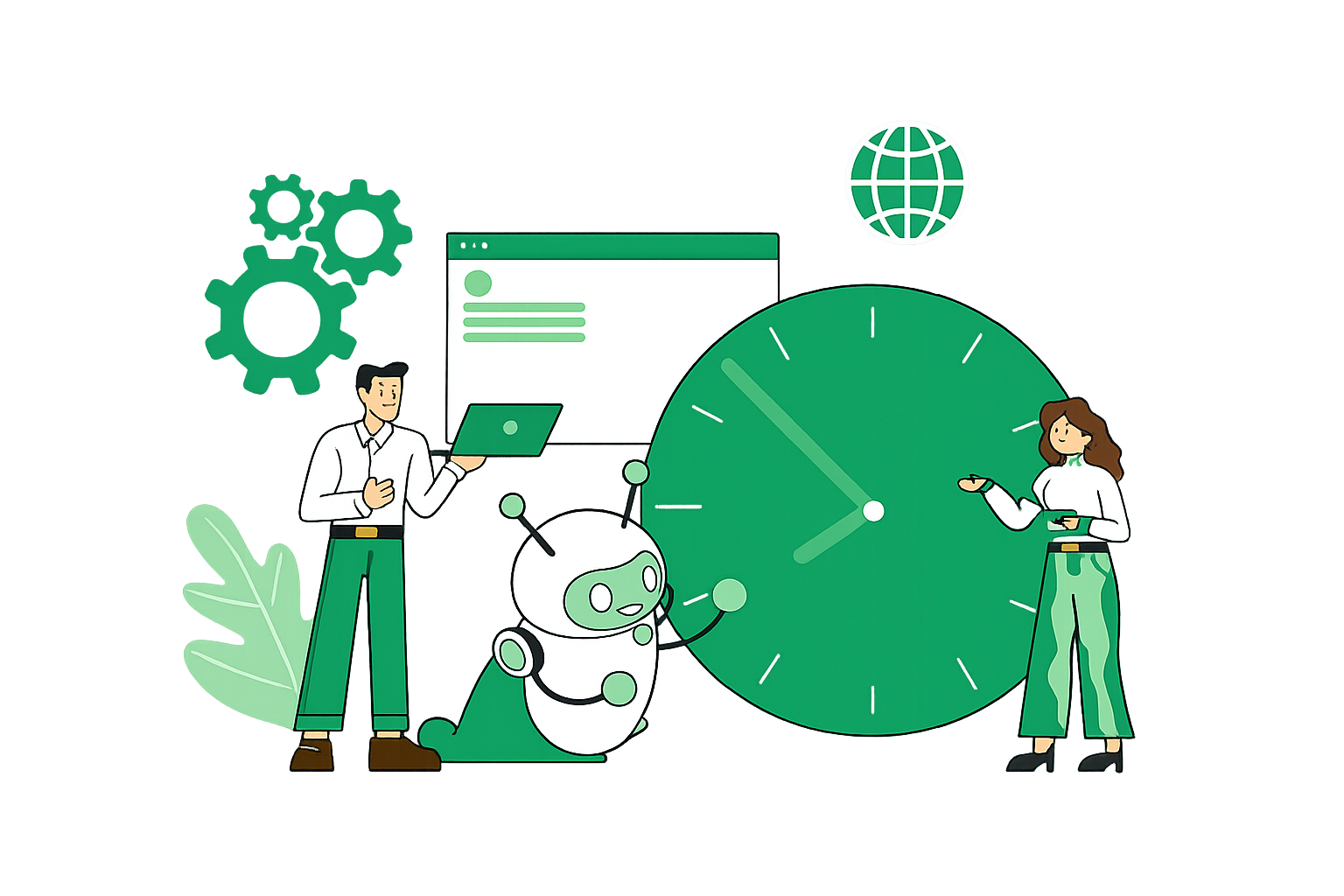
Your business application still runs on MS Access. The developers who can maintain it are getting harder to find.
Softenger’s MS Access and VBA engineers take over the applications your operations depend on. We study how they were built, document what was never written down, and keep them running — with modernisation or migration only where the business case holds.
Your operations stop depending on one person, or on a hire that isn’t coming.
- ISO 27001:2022
- ISO 9001:2015
- Remote delivery
- 24×7 support available
Three situations we hear before most MS Access engagements
Different starting points, the same underlying problem: a business-critical application and no one it can reliably depend on to keep it running.
The job advertisement for an Access and VBA developer has been open for months. The few candidates who apply want more than the role was budgeted for, or leave within the year.
We take over the application with an experienced team, so it is supported — and you stop recruiting for a skill the market has run short of.
A single employee — often not a developer — understands what the application does and why. Nothing is written down. Everyone knows it is a risk, and nobody has planned for the day that person leaves.
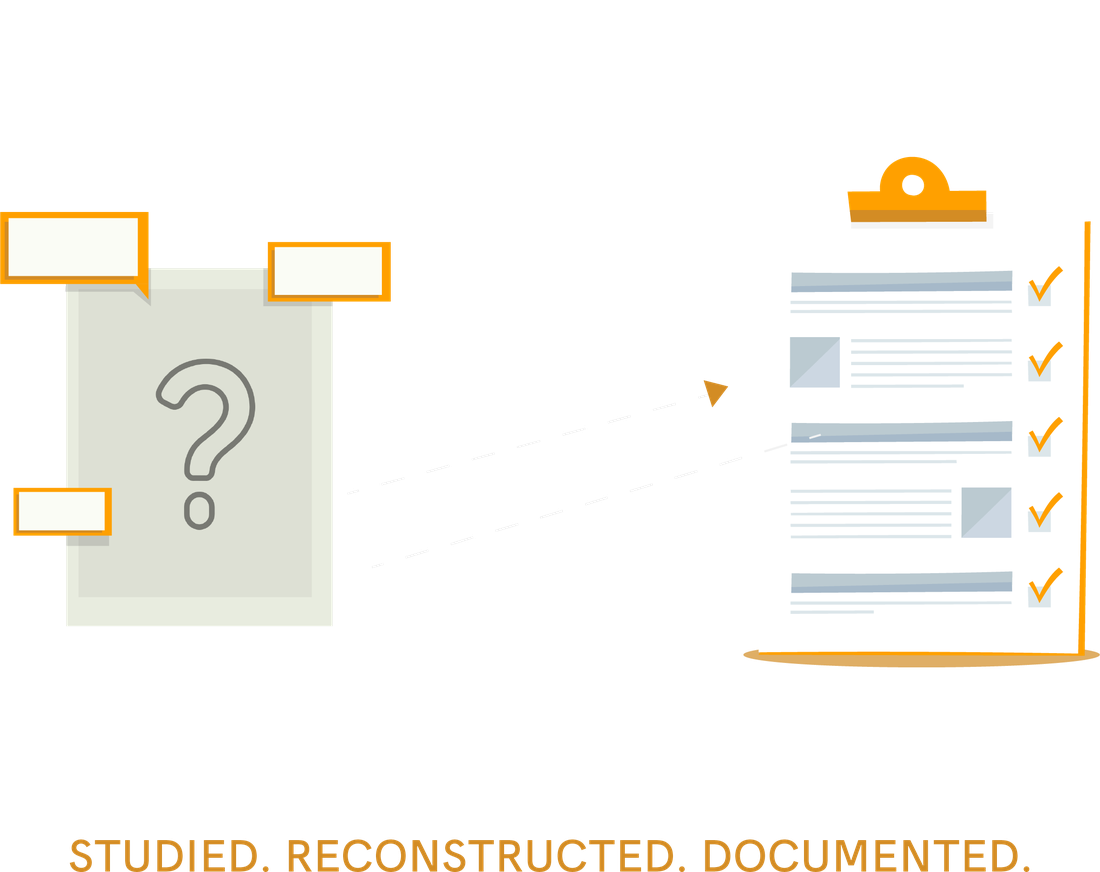
We study the application — tables, forms, reports and code — and document both the technical design and the business workflows behind it. The knowledge stops living in one person’s head.
The business needs changes, but every change risks breaking something that runs daily operations. An Office or Windows update throws errors nobody can explain. So the application stays exactly as it is, and the business works around it.
We stabilise the application first, then make changes against a documented understanding of how it works — and advise whether it should be kept, modernized or migrated.
MS Access was never just a database. That is why it is so hard to replace the people who built on it.
For two decades, MS Access let a business build its own software. Data, forms, reports and business logic lived in a single application shaped exactly to how the company worked — built by someone in-house who knew both the business and VBA.
Those applications became the way the business runs: inventory, orders, production tracking, quality records, reporting. The platform stayed. The people who built it moved on or retired, and the skill to maintain what they left behind has become scarce and expensive to hire in the US.
The developers who built it have gone
Retired, moved roles or left the company. What they knew about the application went with them.
The skill is scarce — and costly when you find it
Experienced Access and VBA developers are a shrinking pool. Recruiting one takes months; keeping one is harder.
Nothing is documented
Not the code, the data structure, nor the business rules. Users know what the application does, but not why it was built that way.
Updates break it
Moving to a newer version of Windows or Office surfaces 32-bit and 64-bit compatibility errors in code nobody left can read.
It is connected to more than anyone has mapped
Shared network files, other applications, external websites. Change one piece and something else stops working.
So the business stops changing it
Every request is weighed against the risk of breaking daily operations. The application quietly becomes the limit on how the business can work.
Reason 1 of 6: The developers who built it have gone
Two things we won’t do
Most providers in this space will sell you one of two things: a rebuild, or a replacement person. Neither is where we start.
We don’t start by recommending a rebuild
A working application that runs your operations is an asset, not a problem to be replaced on principle. We assess it first. Where migration makes business sense, we’ll show you why. Where it doesn’t, we support the application as it is and keep it running.
We don’t replace one person with another
Hiring a freelancer or a single contractor moves the dependency — it doesn’t remove it. When that person moves on, you’re back where you started. Softenger takes ownership with a team, documents what it learns, and the knowledge stays with the engagement rather than with an individual.
Three paths for an MS Access estate. You choose the one that fits.
Every engagement starts with the same question: what does this application need to do for the business over the next three years? The answer decides the path — and it can change as the business does.



For applications that work and should keep working. We take over support, maintenance and enhancement of the existing code base, fix what breaks, resolve compatibility issues, and document the application as we go.
For applications that are straining — slow, fragile, or outgrowing shared network files. We move the data from Access files into SQL Server and restructure the application so it is stable and maintainable, while the business keeps working the way it does today. Confirm · Item 3
For applications the business has outgrown. We refactor the application onto a newer technology stack, such as Java Confirm · Item 4, and move the data into SQL Server — with the documented understanding of the original application as the starting point, so business rules are carried across, not lost.
Not sure which path fits? That is exactly what the first conversation is for.
Every MS Access engagement follows the same four-phase discipline.
AOTS is how Softenger runs every engagement. Applied to an MS Access estate, it means nothing is changed before it is understood, and nothing is rebuilt unless the business case holds.
Phase 01Advise
Discovery and assessment
- Tables, forms, reports and VBA code studied end to end
- Deployment, connected systems and real usage mapped
- Condition assessment with a recommendation you can act on
A clear answer: support, modernize or migrate — and why.
Phase 02Optimize
Stabilise and document
- What is breaking today gets resolved first
- Technical design and business workflows written down
- The right team put in place to own the application
A stable application the business understands again.
Phase 03TransformOptional
Modernize or migrate — only where it makes sense
- Data moved from Access files into SQL Server
- Application modernized or refactored onto a newer stack
- Skipped entirely where the assessment doesn’t support it
A platform the business has a reason to be on.
Phase 04Support
Ongoing ownership
- Continuous support and maintenance, managed or T&M
- Dedicated or shared resources, scaled to the work
- 24×7 cover where the business needs it
An application that stays supported, whoever comes and goes.
Every path on this page is an AOTS route. Keeping an application running as it is simply runs Advise, Optimize and Support — without Transform.
- Advise
- Optimize
- Transform
- Support
A 1997 inventory system running the business, and a talent gap making it harder to maintain every year.
Softenger studied an orphaned MS Access application in full and documented it at both the code and business-workflow level. Download the full case study to see how it was done.
A Los Angeles diamond merchant ran its inventory on an MS Accessapplication built in-house in 1997 and still running on Access 2000.The employees who built and maintained it had left or retired, andthe skill to replace them had become scarce. The application wasthrowing 32-bit and 64-bit operating system errors, there was nodocumentation at either the code or the business-workflow level,and it exchanged data with third-party diamond trading websites.The business could not make a single change to a system its dailyoperations depended on.
Two senior MS Access developers studied the application in full —every table, form and report — and reconstructed how it was built:a multi-user design with the data on a shared network drive and theforms and reports on each user’s machine. They mapped the businessworkflows inside the application, tied them to how the diamond trademoves data between systems, and produced complete application-leveldocumentation.
We take on the method and the knowledge. The application stays yours.
What Softenger owns is the discipline behind the application — understanding how it was built, writing down what was never documented, and keeping it fit for what the business needs next.





Two ways to engage. Clear boundaries on both.
Managed support
Softenger takes ownership of the application under an ongoing engagement — support, maintenance, enhancements and documentation, with continuity of the team guaranteed by us rather than by any one individual.
Time and material
Experienced MS Access resources working to your direction, dedicated or shared depending on the volume of work, for businesses that want to keep ownership in-house but need the skill.
Teams start from one or two people and scale with the work.
Delivered remotely. We do not provide onsite support.
Engagements run for a minimum of six months, or on an ongoing basis.
24x7 support can be set up where the business requires it.
Why businesses hand their MS Access applications to Softenger
Questions businesses ask before handing over an MS Access application
Tell us what your MS Access application does. We'll tell you what it needs.
A 30-minute conversation with someone who has taken over applications like yours. If all it needs is support, that is what we will say.
← Back to Enterprise Application ServicesBook a 30-minute consultation
Handled under ISO 27001 certified processes. Your details are used only to respond to this request.
Thank you. Someone from our Enterprise Application Services team will be in touch to arrange a time.