US enterprises running on business-hours IT are funding their own disruption.
Softenger delivers enterprise-grade remote IT infrastructure management for US organisations — 24/7 NOC, SOC, cloud operations, and compliance monitoring from our India-based Global Support Center. EST, CST, MST, and PST — covered around the clock, without on-call premiums or coverage gaps. ISO 27001:2022 certified.
Every quarter US IT runs on a business-hours model, the operational and compliance exposure compounds.
These are not theoretical risks. They are the operational realities of US enterprises managing infrastructure, compliance obligations, and security posture with a model that wasn’t designed for organisations where a 3am incident, a SOC 2 audit gap, or a ransomware dwell-time of 48 hours all carry financial and regulatory consequences that extend far beyond an IT service desk ticket.
US IT talent shortage drives operational costs to unsustainable levels — and creates attrition-driven coverage gaps
The US IT talent market is structurally tight and salary-inflated. Median IT engineer salaries have escalated faster than IT budgets for five consecutive years. When a senior infrastructure engineer leaves, institutional knowledge walks out with them — and the replacement cost, onboarding period, and coverage gap in the interim are all costs that generic IT expense models never fully capture.
SOC 2, HIPAA, NIST, PCI-DSS, and CCPA compliance overlap in ways that strain IT governance across US operations
US enterprises rarely face a single compliance framework. HIPAA for healthcare data, SOC 2 Type II for customer trust, NIST CSF for cybersecurity governance, PCI-DSS for payment environments, and CCPA for California consumer data are all simultaneously applicable for many mid-to-large enterprises. Each requires continuous IT monitoring and evidence — not an audit-season activity.
24/7 US operations demand round-the-clock IT coverage that in-house teams structurally cannot provide at reasonable cost
US enterprises operating across multiple time zones — or operating business-critical systems that run overnight — cannot accept IT coverage gaps between 5pm and 8am. On-call arrangements reduce engineer effectiveness and carry burnout and retention risk. True 24/7 coverage requires a shift operations model that is only economically viable offshore at enterprise scale.
Legacy on-premises infrastructure co-existing with multi-cloud creates monitoring blind spots at the hybrid boundary
Most US enterprises operate a deeply hybrid environment — on-premises data centers running workloads alongside AWS, Azure, and GCP deployments with varying degrees of integration. The boundary between on-premises and cloud — the VPN tunnels, the API gateways, the data replication pipelines — is precisely where incidents originate and propagate undetected longest.
US enterprises face sophisticated nation-state actors and ransomware groups that specifically target mid-market IT environments
Mid-market US enterprises are the highest-value-to-effort targets in the US threat landscape — large enough to have valuable data and systems, small enough to lack the dedicated security operations that Fortune 500 companies maintain. Ransomware dwell time in US mid-market environments averages 21 days — the duration between initial compromise and detection that a continuous SOC eliminates.
We don’t staff a US office and
call it proximity. We staff a 24/7 operations center
and call it coverage.
Most managed IT providers that serve US enterprises maintain a US-based account management team and deliver actual operations from a cost-reduced offshore location — but market the engagement as if local presence and operational presence are the same thing. They’re not. What US enterprises need is not a US phone number. They need an engineer available at 2:47am Eastern when a production database starts throwing latency spikes — and a compliance posture that doesn’t require six weeks of scrambling every time a SOC 2 auditor arrives.
Softenger’s Global Support Center in India operates continuous shifts timed specifically to US operational patterns. The shift handover between engineers happens in India — not between a Chicago engineer going to sleep and a Phoenix engineer who hasn’t been briefed. There are no coverage gaps from EST to PST. Every incident at any hour receives the same quality of response as peak business hours — without on-call premiums, without engineer burnout, and without the attrition risk that comes with asking experienced engineers to work overnight.
The result is a managed IT model that a US enterprise experiences as genuinely around-the-clock — because it is. Not 24/7 with an asterisk, not “best effort” overnight, not on-call response within two hours. Continuous monitoring, continuous escalation, continuous compliance — calibrated to the operational patterns and regulatory obligations of a US enterprise.
US time zone continuity from the GSC — no coverage gaps from EST through PST
Shift engineering is designed around US operational patterns. EST, CST, MST, and PST are all covered from a single operations center without relying on on-call arrangements or coverage rotations that degrade quality at 3am versus 3pm.
24/7 is a staffing architecture — not a policy statement.US compliance embedded as system outputs — not assembled pre-audit
SOC 2 Type II, HIPAA, NIST CSF, PCI-DSS, and CCPA compliance controls are configured as continuous IT monitoring outputs from the first day of operations. Monthly posture reports are standard. The auditor arrives to a functioning compliance system — not a six-week sprint.
Compliance posture is a system state — not an audit-season activity.India-based cost model — 50%+ savings without quality compromise
Softenger’s delivery model produces 50%+ IT operational cost reduction versus US-equivalent in-house capability — not through service reduction or coverage gaps, but through the structural cost advantage of India-based shift operations calibrated to enterprise-grade SLA standards.
Cost reduction is structural — not a service reduction in disguise.One operations team across all US IT environments — infrastructure, security, compliance, cloud
Every layer of your US IT environment — on-premises infrastructure, cloud workloads, security monitoring, compliance controls, and end-user support — is managed from one operations center, under one SLA, with one escalation path. No coverage gap between your NOC and your SOC.
One team. Full environment. One accountability model.Five service pillars.
One managed operations model for US enterprises.
US enterprise IT isn’t a single problem. Softenger manages five distinct service pillars — each with its own SLA model, compliance alignment, and operational discipline — under one unified operations framework for your entire US IT environment.
Three service domains. The full US enterprise IT stack —managed as one environment.
Softenger’s US RIM consolidates what most enterprises manage across multiple vendors — infrastructure, security, compliance, and cloud — into a single operations model with unified visibility, a single SLA commitment, and one team that understands how each domain connects to the others.
Infrastructure & Security Operations
24/7 NOC and SOC monitoring across all US infrastructure — on-premises servers, cloud workloads, network infrastructure, and endpoints. Incidents are detected before they cascade. Security threats are identified before they establish dwell time.
US Compliance & Risk Management
SOC 2 Type II, HIPAA, NIST CSF, PCI-DSS, and CCPA compliance monitoring embedded as continuous system outputs. Regulatory evidence is always current. Monthly posture reports are standard deliverables — not assembled before each audit cycle on a six-week sprint.
Cloud, Application & End-User Support
Multi-cloud infrastructure management (AWS, Azure, GCP), application performance monitoring, L1–L3 helpdesk for US users, ITSM operations, and patch management — all under the same SLA model as infrastructure and security. No service tier left uncovered.
What US enterprises achieve with Softenger’s managed IT model
Outcomes from enterprises operating in US regulatory environments — documented results from managed IT engagements, not projected estimates from a generic offshore IT comparison.
IT Operational Cost Reduction
Consolidating US in-house or multi-vendor IT into Softenger’s offshore delivery model consistently produces 50%+ IT operational cost reduction — while expanding monitoring coverage, adding genuine 24/7 availability, and eliminating the attrition risk that creates knowledge gaps when a senior engineer leaves at the wrong moment in a SOC 2 audit cycle.
US Compliance Posture Transformation
Continuous SOC 2, HIPAA, and NIST monitoring — configured as system outputs from onboarding — eliminates the compliance gap between audit cycles that represents the highest regulatory risk for US enterprises operating across multiple compliance frameworks simultaneously.
Infrastructure Availability & Uptime
US enterprise infrastructure and production systems managed under Softenger’s NOC deliver measurable uptime improvements over fragmented vendor or in-house arrangements — because degradation is detected before it cascades to user impact, not after the operations manager fields complaints.
Security Posture & Incident Response
US enterprises deploying Softenger’s SOC eliminate the coverage gap that allows ransomware and nation-state actors to establish extended dwell times. Continuous monitoring, 24/7 threat response, and pre-built US incident runbooks replace the reactive model where security events are discovered by users, not by security operations.
Every US IT engagement
follows the same four-phase discipline.
AOTS — Advise, Optimize, Transform, Support — applied to US enterprise IT has specific meaning in each phase. Advise produces a US IT topology audit and compliance obligation map — not a generic infrastructure inventory. Optimize configures US-calibrated monitoring thresholds and compliance controls before go-live. Transform onboards environments in business-criticality order with validation gates. Support operates a 24/7 NOC and SOC that understands the difference between a production database alert at 3am ET and a development environment notification that can wait until morning.
Advise
Every US organisation’s IT environment is mapped — infrastructure architecture, cloud topology, compliance frameworks, data residency requirements, and the operational patterns that define what a critical incident looks like at 3am ET versus 11pm PT.
- Five-pillar US IT topology audit — infrastructure, security, compliance, cloud, ITSM
- US compliance obligation inventory — SOC 2, HIPAA, NIST, PCI-DSS, CCPA
- Data residency requirements documented — US data sovereignty controls identified
- Business criticality tiering — production impact rankings per system
- Onboarding phasing plan — highest-impact environments first
A documented US IT topology and compliance-aligned monitoring architecture — built from your operational environment, not from a generic enterprise IT template.
Optimize
Monitoring rules are built from the Advise topology audit — not from vendor defaults. Production system alert thresholds, SOC detection baselines, HIPAA PHI access monitoring rules, and SOC 2 control outputs are all configured and tested before any environment goes live under Softenger monitoring.
- Infrastructure monitoring configuration — alert thresholds calibrated to US operational patterns
- SOC 2 control monitoring activated — Trust Service Criteria mapped to outputs
- HIPAA and PCI-DSS compliance monitoring configured as system outputs
- SIEM and SOC detection rules tuned to US threat intelligence feeds
- US incident runbooks developed — ransomware, PHI breach, infrastructure failure scenarios
A tested, US-calibrated monitoring environment — compliance controls active, SOC detection validated, SLA tiers confirmed before first live incident.
Transform
Environments are onboarded in business-criticality order — production infrastructure first, then cloud, then compliance controls, then end-user support. Each environment runs in parallel with existing monitoring, is validated for uptime and compliance posture, and is handed to Softenger NOC before the next begins.
- Production-priority environment onboarding — critical infrastructure first
- Parallel monitoring run — no coverage gap during transition
- Incident simulation — top US failure and security scenarios tested pre-handover
- Compliance posture validation per environment cluster before progression
- Knowledge transfer — US IT team briefed on escalation paths and runbooks
Full US IT environment onboarded in criticality order — validated and operating under defined SLAs without disruption to live US business operations.
Support
Softenger’s GSC operates your US IT environment continuously — infrastructure monitoring, security operations, compliance reporting, and end-user support management. Quarterly AOTS reviews ensure the operating model evolves as your US operations, cloud footprint, and regulatory obligations change.
- 24/7/365 NOC and SOC — no business hours, no coverage gaps
- US incident management — L1–L3 with pre-built US scenario runbooks
- Monthly SOC 2, HIPAA, NIST, and compliance posture reports
- Proactive infrastructure health and cloud cost reporting
- Quarterly AOTS review — new systems, new compliance obligations, business changes
A continuously operated, continuously compliant US IT environment — posture documented, systems monitored, and infrastructure health reported every quarter.
Every new system, acquisition, or compliance obligation re-enters AOTS.
When you acquire a company with its own IT estate, launch a new cloud product requiring SOC 2 coverage, or face a new state-level compliance mandate, that change enters at Advise. The new environment is audited, monitoring updated, onboarded through Transform, and returned to Support. US business growth never creates monitoring or compliance gaps.
How a multi-state technology enterprise eliminated its IT coverage gap and achieved SOC 2 Type II in 12 months
A high-growth SaaS company operating across offices in New York, Chicago, Austin, and Seattle engaged Softenger after a SOC 2 Type II audit produced three IT control exceptions and their engineering team was spending 30%+ of their capacity on audit preparation and IT operations rather than product. The full case study documents the transition, compliance posture transformation, and 18-month operational outcomes.
IT operations unified across four US offices — SOC 2 Type II achieved, engineering team refocused on product within 12 months of Softenger engagement
The enterprise ran a small in-house IT team covering business hours only across four time zones — with no overnight coverage, no dedicated SOC, and no continuous compliance monitoring. SOC 2 audit prep consumed six to eight weeks annually. Three IT control exceptions in the prior audit required a 90-day remediation programme. Engineering team members were rotating into IT operations coverage because the IT team was understaffed — directly reducing product velocity.
Three ways to engage. One operational standard.
US enterprises range from Series B technology companies getting their first SOC 2 to multi-state enterprises with complex hybrid infrastructure and overlapping compliance mandates. Softenger's delivery models match the right engagement depth to where you are today.
Dedicated Offshore Support Center
End-to-end managed IT across all five service pillars from Softenger's India-based GSC. 24/7 NOC and SOC with US-sector knowledge, compliance monitoring, and cloud operations — at 50%+ lower cost than equivalent US-based capability.
- 24/7 NOC and SOC across all US infrastructure and cloud environments
- US compliance monitoring — SOC 2, HIPAA, NIST, PCI-DSS, CCPA as system outputs
- 50%+ IT operational cost reduction vs. US in-house or multi-vendor model
- Dedicated team with US enterprise IT and compliance expertise
- Scalable as you grow — new offices, new cloud workloads, new compliance requirements
Hybrid Delivery Model
Offshore GSC for 24/7 monitoring and L1/L2 triage; your US IT team retains L3 escalation, vendor management, and strategic governance. Softenger extends coverage without displacing the institutional knowledge your team carries.
- Offshore NOC/SOC for 24/7 monitoring and first-line incident management
- Your team retains L3 escalation, vendor management, and architectural decisions
- Compliance monitoring aligned across onshore-offshore operating model
- Structured handover protocols and shared incident management tooling
- Designed to augment — not replace — your existing US IT expertise
On-Demand IT Support
Expert US enterprise IT support for specific initiatives — SOC 2 gap remediation, HIPAA compliance projects, cloud migration support, infrastructure buildout, or capacity augmentation during periods of organisational change.
- No long-term commitment — engage for defined projects or specific scopes
- Full US compliance and infrastructure expertise across all five pillars
- Ideal for SOC 2 readiness, HIPAA gap analysis, or cloud migration projects
- Transparent scope and billing — clear boundaries on what is covered
- Clear path to a managed service engagement as your IT complexity grows
What a US IT Infrastructure Assessment produces for your organisation
A conversation with a Softenger US IT specialist produces a documented topology and compliance assessment — not a vendor pitch. We review your infrastructure, compliance obligations, and current IT operations model, then produce a specific recommendation with rationale. No commitment required.
Six structural differences between Softenger and generic managed IT applied to a US enterprise environment
These are operational and structural realities — built into how Softenger engages, monitors, and responds — that determine whether your US IT estate operates at the availability, security, and compliance level the operational context and the regulator simultaneously demand.
True 24/7 US time zone coverage — EST through PST from a single operations center
Softenger's Global Support Center operates continuous shifts timed to US operational patterns. A production incident at 2am Eastern reaches an experienced engineer in minutes — not when the on-call engineer responds after the second page, and not when the Chicago team arrives at 8am. True 24/7 is a staffing architecture, not a policy.
US compliance expertise embedded as continuous system outputs — never assembled pre-audit
SOC 2 Type II, HIPAA, NIST CSF, PCI-DSS, and CCPA controls are configured as infrastructure monitoring outputs from day one — not as a separate compliance engagement or a pre-audit sprint. Monthly compliance posture reports are standard deliverables. The auditor arrives to a functioning compliance system, not six weeks of scrambling.
50% IT cost reduction — India-based delivery model without quality compromise or coverage reduction
Softenger's offshore delivery model produces 50%+ IT operational cost reduction versus US-based equivalents — not through service reduction or coverage gaps, but through the structural cost advantage of India-based engineering at enterprise SLA standards. US enterprises also eliminate the attrition risk: when a senior SOC engineer leaves during a HIPAA audit, Softenger's bench depth covers it.
US-calibrated SOC threat intelligence — ransomware groups and nation-state actors targeting your sector
Softenger's SOC for US enterprises uses threat intelligence feeds calibrated to the US threat landscape — ransomware groups targeting US mid-market healthcare and financial services, nation-state reconnaissance patterns against US technology companies, and supply chain attack vectors that generic enterprise security postures aren't tuned to detect.
US industry depth — BFSI, Healthcare, Technology, Manufacturing, Logistics, and Retail
Softenger manages IT infrastructure for US enterprises across six distinct industry sectors — each with different compliance obligations, operational IT patterns, and SLA expectations. A healthcare group's PHI access requirements are structurally different from a SaaS company's SOC 2 obligations. Softenger's US engagement model accounts for those differences rather than applying a generic template.
25 years of enterprise IT delivery — VISA, Kotak Bank, Oracle, and SAP among our clients
Softenger has operated managed IT for VISA, Kotak Bank, Oracle, SAP, and Reliance Jio for 25 years. The operational discipline, SLA governance, and compliance rigour built for those engagements — VISA's PCI-DSS obligations, financial services availability standards — define the baseline for every US enterprise engagement, not just our largest clients.
Insights for US enterprise
IT leaders
Explore all insights →
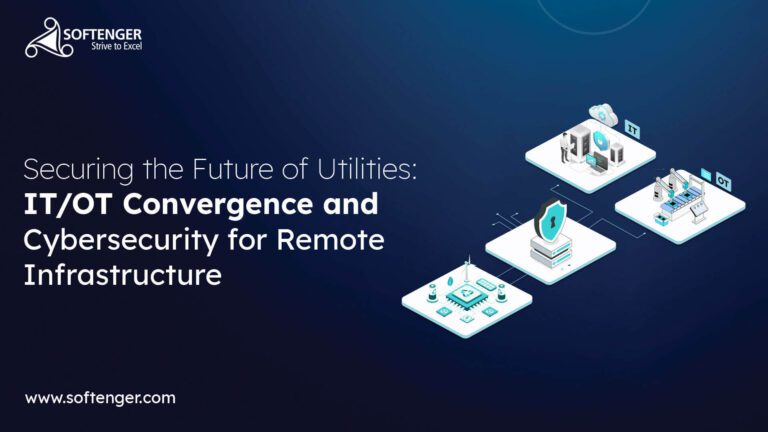
Securing the Future: IT/OT Convergence and Cybersecurity for Remote Infrastructure
The security principles from converged IT/OT environments apply directly to US enterprise security strategy — where corporate IT, cloud infrastructure, and operational systems share boundaries that ransomware groups and nation-state actors actively exploit at the hybrid layer.
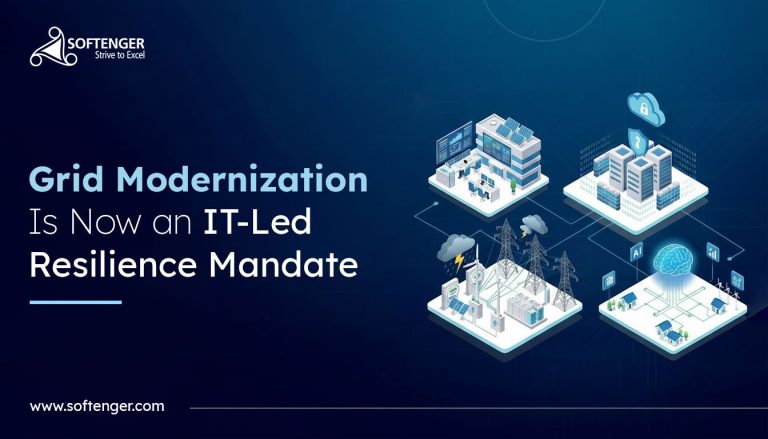
IT-Led Infrastructure Modernization: Building Resilient, Secure Operations at Scale
How US enterprises modernizing from legacy on-premises infrastructure to cloud-native architectures use managed IT frameworks to drive transformation without accepting the monitoring gaps and compliance exposures that typically accompany hybrid migration periods.
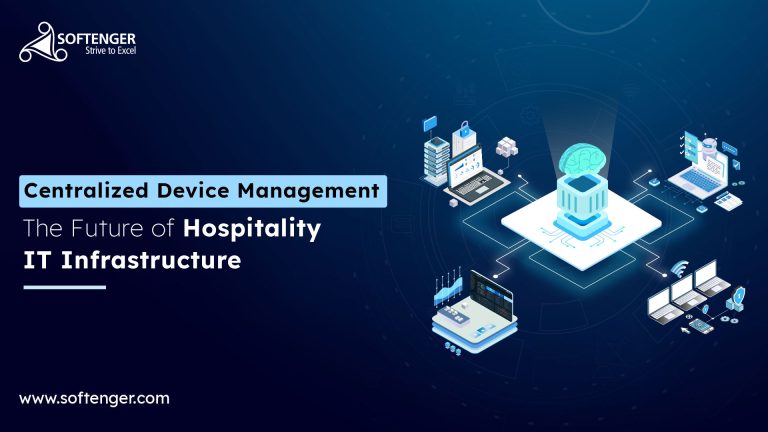
Why Remote and Centralized IT Management Is Transforming Operations Across Distributed Infrastructure
The centralized remote management model applies directly to US enterprises managing IT across multiple states and offices — where per-office IT vendor arrangements create the monitoring fragmentation, compliance inconsistency, and coverage gaps that a single operations center eliminates.
Questions US IT leaders ask
before engaging Softenger
Tell us about your US IT environment.
We'll show you what 24/7 managed
looks like without the 24/7 overhead.
A conversation with a Softenger US IT specialist produces a documented topology and compliance assessment — not a vendor pitch. We review your infrastructure, compliance obligations, and current IT operations model, then produce specific recommendations with evidence. No commitment required.
🇺🇸 Request a US Enterprise IT Assessment
ISO 27001 certified. Handled securely, never shared with third parties.