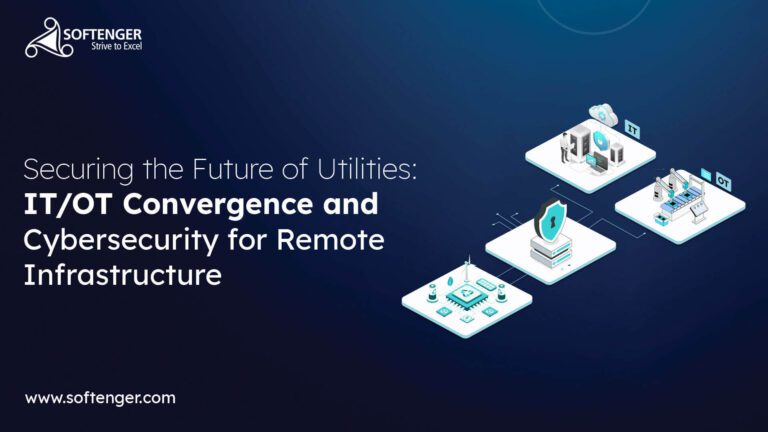
Securing the Future of Utilities: IT/OT Convergence and Cybersecurity for Remote Infrastructure
Cyber Incidents That Redefined Critical Infrastructure Risk
Two incidents changed how the energy and utilities sector thinks about cybersecurity — permanently.
Colonial Pipeline Attack
The largest U.S. fuel pipeline was forced into shutdown, triggering fuel shortages and economic disruption across the eastern seaboard. The breach began in the IT environment and propagated into operations.
Oldsmar, Florida Water Facility
Adversaries manipulated chemical levels remotely through a compromised HMI connection — with alarming ease. The attack exposed how exposed OT systems are once connected to IT networks without proper controls.
These incidents highlight a stark reality: IT and OT environments are no longer separate worlds. The digitalization of grids, pipelines, and water systems has created both unprecedented opportunities — and an expanded attack surface.
- Why IT/OT convergence is now an operational mandate — not a choice
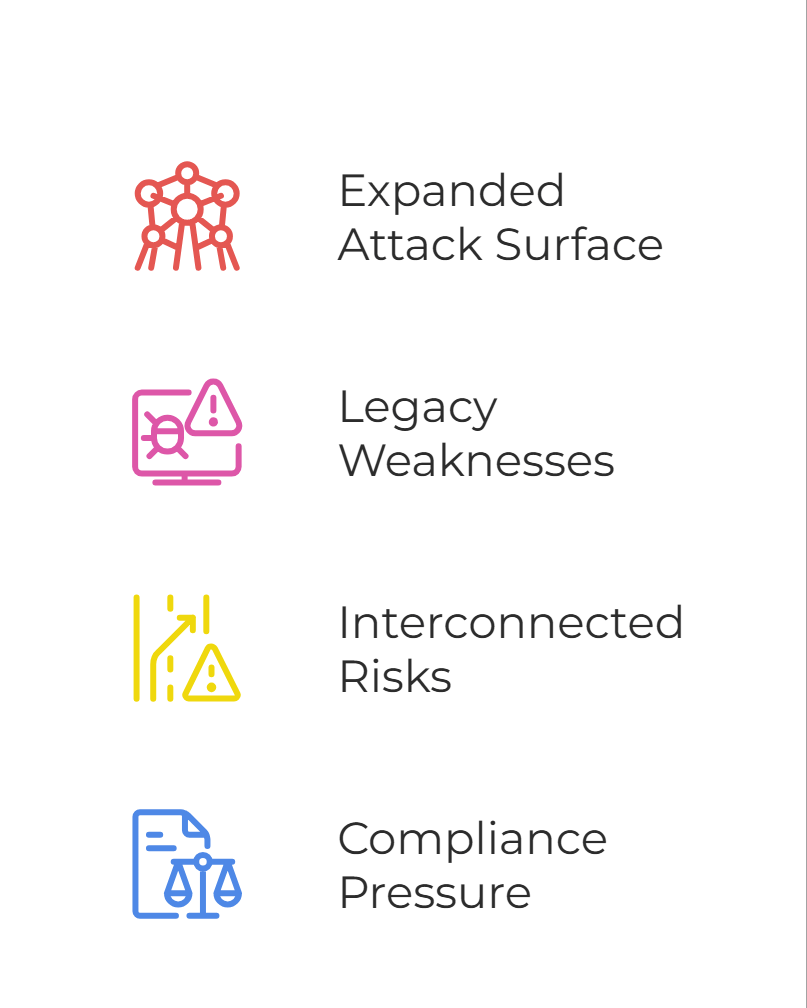
- The new attack surface: four core risks for utilities
- Compliance landscape: NERC CIP, FERC, and IEC 62443
- CIO checklist for convergence compliance
- Why segmentation and microsegmentation are non-negotiable
- Remote IT infrastructure as the backbone of modern utility operations
- Industry momentum and the AI/automation outlook for 2026
Why IT/OT Convergence Is Reshaping Utilities
Traditionally, Operational Technology (OT) — SCADA, grid control, industrial systems — operated in isolation. Today, convergence with Information Technology (IT) — enterprise apps, analytics, and cloud — drives operational efficiency, smarter grids, and predictive maintenance.
McKinsey research confirms utilities embracing convergence achieve cost savings and scale efficiencies. Yet this integration creates three new realities:
Four Core Risks Emerging from IT/OT Convergence
Unlike IT networks, OT was rarely designed with Zero Trust or encryption-first models. SixMap data found thousands of exposed OT services online — many on non-standard ports. Nation-state actors are actively exploiting these entry points.
NERC CIP, FERC, and the Standards That Govern IT/OT Security
U.S. utilities face some of the strictest critical infrastructure mandates in the world. Non-compliance is not just a regulatory issue — it is a board-level accountability with severe financial consequences.
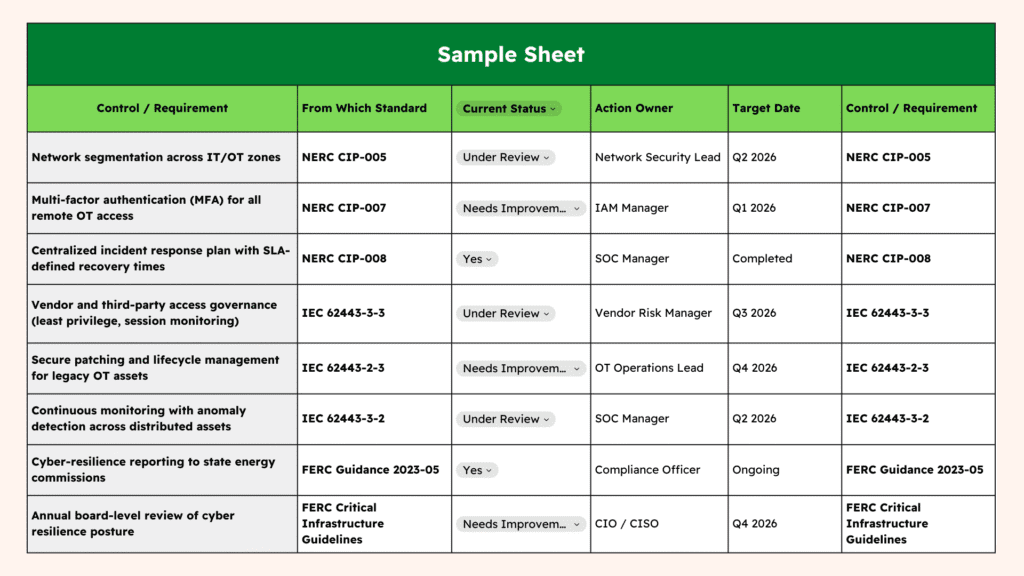
CIO Checklist for IT/OT Convergence Compliance
- Validate network segmentation controls across IT and OT zones — no flat networks between corporate and operational environments.
- Ensure multi-factor authentication for all remote OT access — vendor, employee, and field technician accounts included.
- Implement continuous monitoring via SOC integration — anomaly detection across distributed substations and field assets.
- Document incident response SLAs tied to OT continuity — MTTR targets must align with grid reliability obligations.
- Audit vendor and third-party access to control networks — role separation and time-limited access for all external parties.
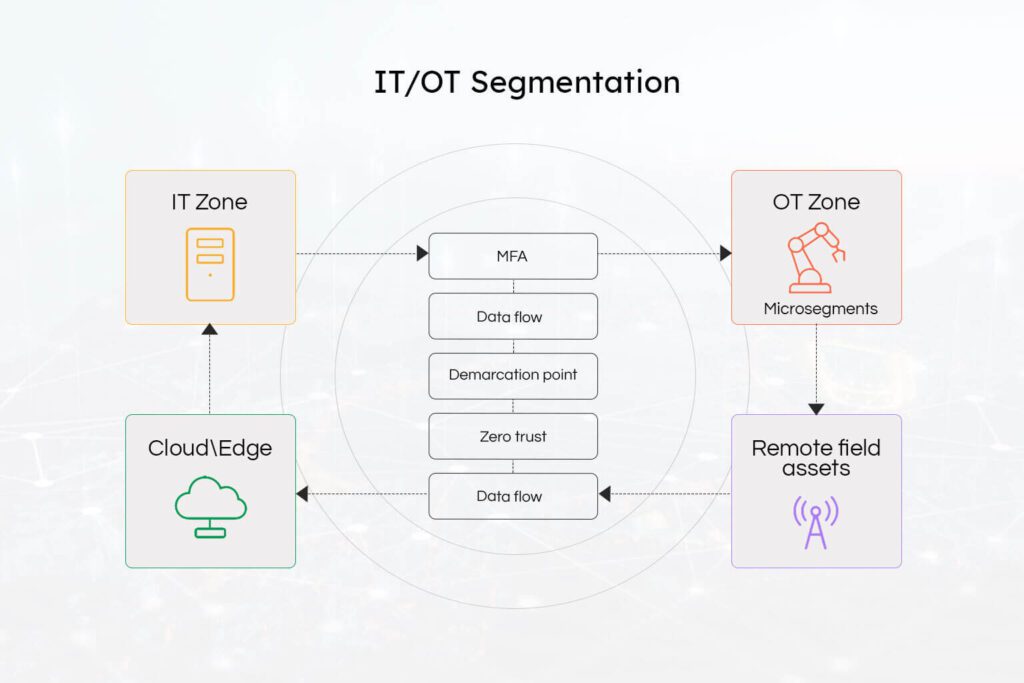
Why Segmentation and Microsegmentation Are the First Line of Defence
Leading frameworks — Fortinet, Zero Networks — agree: segmentation is the most critical safeguard for converged IT/OT environments. For utilities with distributed infrastructure across substations, sensors, and field assets, segmentation ensures resilience even when one domain is compromised.
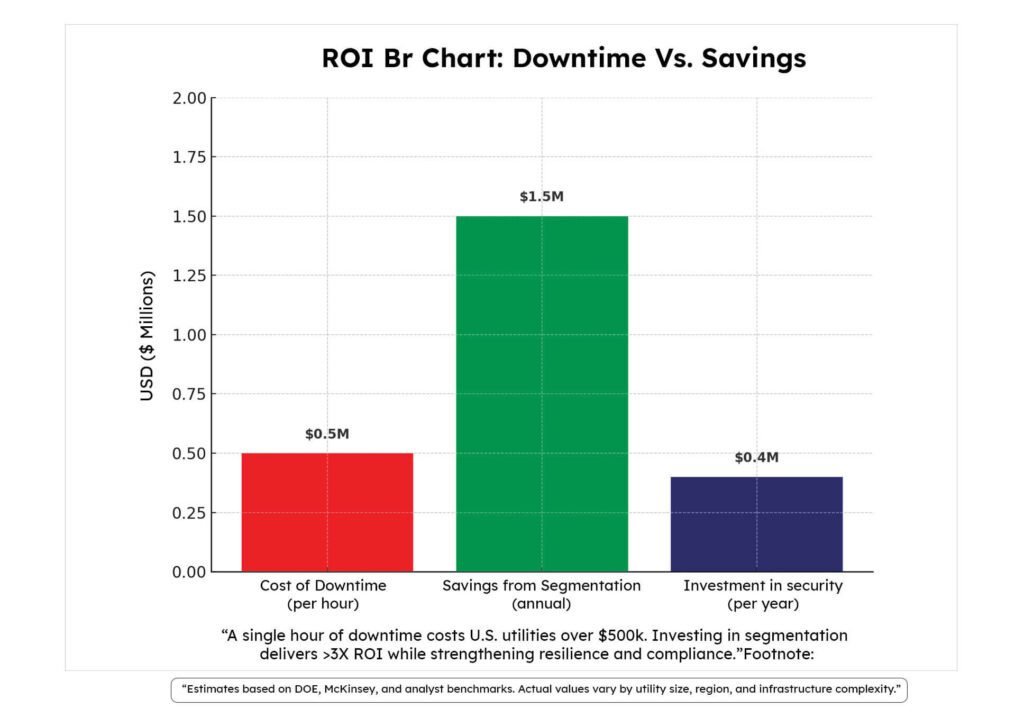
The business outcomes for utilities that implement mature segmentation are measurable and audit-ready:
The Backbone of Modern Utility Operations
Hybrid IT and cloud-driven ecosystems are redefining how utilities operate. Remote IT infrastructure is now mission-critical — not a convenience layer but the operational foundation that keeps distributed assets online and compliant.
CIO priorities for resilient infrastructure in a converged utility environment:
-
1
Boundary Protection Guarding IT/OT interfaces with enforced segmentation, firewall policies, and continuous monitoring of east-west traffic between zones.
-
2
SOC-Enabled Monitoring Real-time anomaly detection across distributed sites — substations, pumping stations, field sensors — with 24×7 alert triage and escalation. See: Softenger SOCaaS.
-
3
Resilience Engineering High-availability systems with redundancy and automation — ensuring uptime SLAs are met even during cyber incidents or infrastructure failures.
-
4
Hybrid IT Readiness Seamlessly supporting workloads across data centers, edge devices, and cloud platforms — without creating new security gaps at integration points.
Four Forces Driving IT/OT Convergence Acceleration
Utilities worldwide are accelerating convergence — not just for operational reasons, but because the strategic and regulatory environment demands it. Reports from EY, Microsoft, and Wipro highlight convergence as strategic leverage for competitiveness and compliance.
Built for Utilities That Cannot Afford to Go Dark
For energy and utilities leaders, IT/OT convergence is not just about connectivity — it is about ensuring that critical infrastructure remains secure, compliant, and resilient in an era of growing threats.
-
Secure Convergence Design Architecting segmented IT/OT environments aligned with NERC CIP and IEC 62443 — built for your asset topology, not a generic template.
-
SOC-Enabled Monitoring Real-time visibility across distributed utility operations with 24×7 threat detection — see Softenger SOCaaS.
-
Resilience & SLA Assurance Ensuring 99.9% uptime through high-availability frameworks, redundancy, and automation — with contractual SLA commitments.
-
Compliance Automation Streamlining regulatory reporting and audit-readiness for CIOs and infrastructure leaders — NERC CIP, IEC 62443, and state mandate aligned.
-
AOTS Model Advise, Optimize, Transform, Support — guiding utilities through every stage of digital transformation without compromising security or uptime.
Frequently Asked Questions
-
IT/OT convergence is the integration of Information Technology — enterprise applications, analytics platforms, and cloud ecosystems — with Operational Technology such as SCADA systems, substations, and grid control equipment. For utilities, this convergence drives smarter grids, predictive maintenance, and operational efficiency. However, it also expands the cyberattack surface, making network segmentation, Zero Trust frameworks, and continuous monitoring essential safeguards.
-
Unlike IT environments, many OT devices were never designed with modern security controls. Once connected, they are exposed to ransomware, supply chain attacks, and even nation-state adversaries. A layered cybersecurity approach — including segmentation, SOC-enabled monitoring, and incident response playbooks — ensures that an IT breach cannot cascade into OT operations. This protects grid uptime, regulatory compliance, and public safety.
-
U.S. utilities face NERC CIP (requiring access controls, segmentation, monitoring, and incident response), FERC oversight enforcing grid reliability and cyber resilience, and IEC 62443 as the global industrial cybersecurity benchmark. Penalties for non-compliance can reach $1 million per day, per violation. For CIOs, maintaining audit readiness is not optional — it is a board-level accountability.
-
Resilience in distributed IT/OT environments requires boundary protection at IT/OT interfaces, 24×7 SOC monitoring with AI-powered anomaly detection, redundancy and automation across data centers, edge sites, and cloud platforms, and compliance automation to remain continuously audit-ready. Utilities implementing these measures typically achieve 30–40% reduction in downtime costs and deliver SLA-backed continuity even during cyber incidents.
-
By 2026, AI-driven SOCs will detect and contain threats in minutes, predictive maintenance models will reduce downtime and optimize asset lifecycles, and automated compliance reporting will shrink audit preparation from weeks to days. For CIOs and CFOs, this evolution transforms IT/OT convergence from a compliance expense into a strategic ROI driver — improving resilience, cutting costs, and strengthening investor confidence.
Ready to Secure Your IT/OT Convergence Journey?
Softenger’s infrastructure specialists can help you architect a segmented, SOC-monitored, compliance-ready IT/OT environment — built for your utility’s topology, asset profile, and regulatory obligations.