

Your production systems run around the clock. Your IT operations should too.
Softenger delivers 24/7 remote IT infrastructure management purpose-built for manufacturing and mining enterprises — covering MES, ERP, SCADA, OT/IT integration, NOC and SOC operations, IEC 62443 and ISO 45001 compliance, and remote mine site connectivity. One operations team. Every plant, every mine site, every control system, every hour. ISO 27001:2022 certified.
In manufacturing and mining, IT failures aren’t service interruptions — they’re production events with a cost per minute.
These are the operational realities of enterprises running assembly lines, processing plants, and remote mine sites with IT infrastructure that wasn’t designed to match the 24/7 uptime expectations of production — and compliance frameworks that require continuous monitoring, not pre-audit assembly.
Production downtime is measured in cost per minute — not service desk ticket severity
An MES outage during peak production or a SCADA failure on a processing plant control system isn’t a service interruption — it’s a production yield event with financial consequences that begin immediately. Reactive IT support with 30-minute response windows is structurally incompatible with the uptime expectations of manufacturing and mining operations running three shifts.
OT/IT convergence creates unmonitored security boundaries across SCADA and enterprise IT
Industry 4.0 integration — connecting SCADA, PLCs, and DCS to ERP, cloud analytics, and IoT platforms — creates integration boundaries that OT vendors and enterprise IT providers both leave uncovered. IEC 62443, now increasingly mandatory in manufacturing supply chains, requires continuous security monitoring of precisely this boundary — the zone that fragmented vendor arrangements leave as a compliance gap.
Remote mine sites and field operations have connectivity but no managed IT coverage
Mining operations rely on VSAT or satellite connectivity at remote sites — but connectivity is not the same as managed IT. SCADA failures at remote processing plants, GPS telemetry outages on mine fleets, and network disruptions at underground operations are discovered by operations staff when systems stop responding, not detected by a monitoring system before production impact occurs.
Legacy control systems and IoT create integration complexity that standard IT models can’t manage
Manufacturing and mining enterprises operate legacy DCS and PLC infrastructure alongside modern IoT sensor networks, cloud analytics, and mobile field applications. The data pipelines between these layers — OPC-UA servers, MQTT brokers, process historians — are operations-critical and unmonitored in most managed IT engagements because they sit at the boundary between OT and IT vendor responsibility.
IEC 62443, ISO 45001, and ISO 14001 compliance requires continuous IT monitoring — not pre-audit sprints
Industrial cybersecurity (IEC 62443), occupational health and safety management (ISO 45001), and environmental management (ISO 14001) all impose IT control requirements on manufacturing and mining enterprises — access logging, audit trails, incident documentation, and OT network segmentation evidence. These cannot be assembled before audit cycles; they require continuous infrastructure monitoring from the first day of operations.
We treat your SCADA and MES as production infrastructure — not applications on a generic IT template.
Most managed IT providers classify systems by their technical architecture — servers, networks, applications, cloud workloads. Softenger classifies manufacturing and mining IT systems by their production criticality, OT/IT boundary position, and compliance exposure. A SCADA system controlling an assembly line, an MES managing production scheduling across a three-shift operation, and a process historian feeding cloud analytics are not “applications” — they are production infrastructure that requires distinct monitoring models, distinct security controls, and distinct SLA tiers.
That classification difference drives everything downstream: which systems receive production-critical SLA tiers, which access events trigger immediate SOC escalation, which compliance controls are applied at the infrastructure level, and which incidents route directly to your plant engineering team rather than waiting in a standard triage queue. For remote mine sites, it determines whether an infrastructure failure is detected by Softenger’s monitoring system or reported by an operations supervisor at shift handover.
The result is a managed IT service that understands what matters in your production environment — where an OPC-UA historian outage is not a generic server alert, where an IEC 62443 network segmentation violation is not a standard security event, and where a VSAT link failure at a remote mine site carries operational consequences that demand the same urgency as a plant-side production system failure.
Production criticality classification before monitoring is configured
Every system — assembly line IT, mine site SCADA, ERP, engineering workstations — is classified by production impact and OT/IT position before any monitoring rule is written. The classification model defines SLA tiers, escalation paths, and which incidents bypass the standard queue entirely.
Classification audit is the deliverable — not a generic IT template.OT/IT boundary monitored as a standing security perimeter — not a vendor gap
The boundary between OT environments (SCADA, PLC, DCS) and enterprise IT is where most manufacturing security incidents originate and where IEC 62443 auditors consistently find gaps. Softenger monitors this boundary as a first-class security control from the first day of operations — continuously, not periodically.
OT/IT boundary is a monitored security perimeter — not a coverage gap.IEC 62443, ISO 45001, and ISO 14001 as continuous system outputs — never pre-audit assembly
Industrial compliance controls are configured as infrastructure monitoring outputs from onboarding. OT network segmentation monitoring, access logging, audit trail integrity, and incident documentation are always on. The IEC 62443 auditor arrives to a compliance system that’s been running for months — not evidence assembled in the preceding weeks.
Compliance posture is a system state — not an audit-season activity.Remote mine sites managed under the same SLA as plant-side production IT
VSAT and satellite-connected mine sites are monitored as production-critical environments — not treated as connectivity-limited outposts. SCADA systems, fleet management platforms, and environmental monitoring at remote sites receive the same alert tiers and escalation paths as plant-side infrastructure.
Remote site IT is production IT — managed under the same model.Five IT environments. One managed operations model for industrial enterprises.
Manufacturing and mining IT isn’t a single operational layer. Softenger manages five distinct environments — each with its own production criticality tier, OT security requirements, compliance obligations, and SLA model — under one unified operations framework that covers plant floors, underground mines, and everything between.
Three service domains. The full industrial IT stack — managed as one environment.
Softenger consolidates what most manufacturing and mining enterprises manage across multiple vendors into a single operations model — unified visibility, a single SLA commitment, one escalation path, and one team that understands how production IT, OT systems, and remote site connectivity connect to each other.
Production IT & OT Operations
MES, ERP, SCADA, PLC, DCS, and process historian infrastructure — monitored under production-critical and OT-calibrated SLA tiers. Plant-floor incidents reach an engineer in minutes, not after queue processing. OT alert thresholds reflect production operational patterns, not corporate IT defaults.
Cybersecurity, Compliance & OT Security
24/7 SOC with industrial threat intelligence — IEC 62443 compliance monitoring, ISO 45001 and ISO 14001 IT controls, OT network segmentation validation, and VAPT for both IT and OT-facing systems. Compliance posture maintained as a continuous system state — never assembled pre-audit.
Remote Connectivity & Cloud Infrastructure
VSAT and satellite-connected mine site IT, edge compute management, multi-cloud infrastructure (AWS, Azure, GCP), process historians, predictive analytics platforms, and backup/DR — all under the same SLA model as plant-side production IT. No coverage gap between headquarters and the remote site.
What industrial enterprises achieve with Softenger’s managed IT model
Outcomes from enterprises operating in high-compliance, production-critical manufacturing and mining environments — documented results from managed IT engagements, not projected estimates from a generic managed IT cost comparison.
Production IT & OT Availability
MES, SCADA, and production IT managed under production-critical SLA tiers deliver measurable uptime improvements over fragmented vendor arrangements — because incidents are detected before they cascade to shift supervisors, not reported after production impact has already occurred and been counted.
IEC 62443 & Compliance Posture Transformation
Continuous IEC 62443 compliance monitoring — configured as system outputs from onboarding — eliminates the compliance gap between certification cycles that represents the highest contractual risk for enterprises with OEM supplier qualification requirements and industrial cybersecurity mandates.
IT Operational Cost Reduction
Consolidating per-plant IT vendor arrangements into Softenger’s offshore delivery model consistently produces 50%+ IT operational cost reduction — while expanding monitoring coverage to 24/7, adding IEC 62443 compliance monitoring, and eliminating the attrition risk where a SCADA-experienced IT engineer leaves during a production-critical period.
Remote Mine Site Coverage
Mining enterprises operating VSAT-connected remote sites gain the same monitoring quality as plant-side production IT — infrastructure failures are detected by Softenger’s monitoring system before operations staff discover them, not reported after the morning shift handover has already absorbed the production impact.
Every industrial IT engagement follows the same four-phase discipline.
AOTS — Advise, Optimize, Transform, Support — applied to manufacturing and mining IT has specific meaning in each phase. Advise produces a plant and mine topology audit and OT/IT boundary map before any monitoring rule is written — not a generic infrastructure inventory. Optimize configures production-calibrated alert thresholds and IEC 62443 compliance controls before go-live. Transform onboards environments in production-criticality order with validation gates between each cluster. Support operates a 24/7 NOC and SOC that understands the difference between a SCADA alarm and a corporate IT application alert.
Advise
Every facility’s IT and OT environment is mapped in documented detail — production system architecture, SCADA and PLC topology, remote site connectivity, compliance obligations (IEC 62443, ISO 45001, ISO 14001), and operational criticality tiers that drive SLA design.
- Five-environment topology audit — production IT, OT, security, remote, cloud
- OT/IT boundary identification — SCADA, PLC, DCS integration points documented
- IEC 62443, ISO 45001, and ISO 14001 compliance obligation mapping
- Remote site connectivity assessment — VSAT, satellite, edge compute topology
- Onboarding phasing plan — production-critical environments first, by plant and mine site
A documented plant and mine IT topology with compliance-aligned monitoring architecture — built from your production environment, not from a generic manufacturing IT template.
Optimize
Monitoring rules are built from the Advise topology audit — not from vendor defaults. MES alert thresholds reflect production shift patterns. SCADA monitoring is calibrated to operational cycles. IEC 62443 controls are configured and tested before the first production environment goes live under Softenger management.
- MES, ERP, and production IT monitoring configuration — shift-aware thresholds
- SCADA, PLC, and OT monitoring — production-impact alert tiers calibrated
- IEC 62443 OT network segmentation and access control monitoring activated
- Remote site connectivity monitoring — VSAT, satellite, edge node health checks
- Industrial incident runbooks — MES failure, SCADA anomaly, IEC 62443 violation, remote site outage scenarios pre-built
A tested, production-calibrated monitoring environment — IEC 62443 controls active, OT alert tiers validated, remote site monitoring confirmed before the first live incident.
Transform
Environments are onboarded in production-criticality order — highest-output plants and critical processing facilities first, then remote mine sites, then cloud and analytics infrastructure. Each environment runs in parallel with existing monitoring and is validated before the next cluster begins.
- Production-priority plant onboarding — MES and SCADA environments first
- Parallel monitoring run during transition — no production coverage gap
- Industrial incident simulation — MES failure, SCADA anomaly, remote site outage scenarios tested pre-handover
- IEC 62443 compliance validation per environment cluster before progression
- Knowledge transfer — plant and mine IT teams briefed on escalation paths and runbooks
All plant and mine environments onboarded in production-criticality order — validated and operating under defined SLAs without disruption to live manufacturing or mining operations.
Support
Softenger’s GSC operates your manufacturing and mining IT environment continuously — production monitoring, OT security operations, compliance reporting, and remote site IT management. Quarterly AOTS reviews ensure the model evolves as your production footprint grows, new plants come online, and regulatory requirements develop.
- 24/7/365 NOC and SOC across all five environments — no shift exceptions, no remote site gaps
- Industrial incident management — L1–L3 with pre-built manufacturing and mining runbooks
- Monthly IEC 62443, ISO 45001, and compliance posture reports
- Remote site infrastructure health reporting — VSAT performance, edge node status
- Quarterly AOTS review — new plants, new mine sites, new compliance requirements
A continuously operated manufacturing IT environment — IEC 62443 posture documented, production systems monitored, and every remote site covered under the same model as plant-side infrastructure.
Every new plant, mine site, or compliance obligation re-enters AOTS.
When you commission a new production facility, expand to a new mine site, or face new IEC 62443 certification requirements, that change enters at Advise. The new environment is audited, monitoring updated, onboarded through Transform, and returned to Support. Industrial growth never creates monitoring or compliance gaps.
How a multi-plant manufacturing group unified IT across eight facilities and achieved IEC 62443 certification in 14 months
A discrete manufacturing group operating eight production plants across India and Southeast Asia engaged Softenger after three consecutive IEC 62443 assessments produced OT/IT boundary findings — each requiring remediation programmes that consumed IT team capacity for months and disrupted production planning cycles. The full case study documents the OT security remediation, compliance posture transformation, and 18-month operational outcomes.
OT/IT boundary secured, IEC 62443 compliance achieved, and 50% IT cost reduction across eight production plants in 18 months of Softenger engagement
The group managed production IT and OT across eight plants through separate vendor arrangements — a different IT provider at each facility with no unified monitoring, no OT/IT boundary security, and no continuous IEC 62443 compliance posture. Three consecutive IEC 62443 assessments found OT network segmentation gaps and access control deficiencies at multiple plants. Each remediation cycle consumed 3–4 months of IT management attention. The group’s Industry 4.0 programme — connecting SCADA to cloud analytics — was stalled because the OT/IT boundary had never been properly secured for the integration to proceed safely.
Three ways to engage. One industrial-grade standard.
Manufacturing and mining enterprises range from single-plant discrete manufacturers to global mining groups operating dozens of remote sites across multiple jurisdictions. Softenger’s delivery models match engagement depth to your operational scale today — and expand as your footprint grows.
Dedicated Offshore Support Center
End-to-end managed IT across all five environments from Softenger’s India-based GSC. 24/7 NOC and SOC with industrial-sector knowledge, IEC 62443 compliance monitoring, and OT/IT security — at 50%+ lower cost than equivalent in-house or per-plant vendor capability.
- 24/7 NOC and SOC across all plants, mine sites, and remote environments
- MES, SCADA, and OT systems managed under production-critical SLA tiers
- 50%+ IT operational cost reduction vs. in-house or multi-vendor model
- IEC 62443, ISO 45001, and compliance monitoring as continuous system outputs
- Scalable as you commission new plants, expand mine sites, or deploy Industry 4.0
Hybrid Delivery Model
Offshore GSC for 24/7 monitoring and L1/L2 triage; your plant IT team retains L3 escalation, OEM relationship management, and operational governance. Softenger extends coverage without displacing the production and OT knowledge your team carries.
- Offshore NOC/SOC for 24/7 monitoring and L1/L2 incident management
- Your team retains L3 escalation, plant vendor management, and OT governance
- Compliance monitoring aligned across onshore-offshore operating model
- Structured handover protocols and shared incident management tooling
- Designed to extend — not displace — existing plant IT and OT expertise
On-Demand IT Support
Expert manufacturing and mining IT support for specific initiatives — IEC 62443 gap remediation, OT/IT boundary security, new plant IT commissioning, remote site connectivity projects, or SCADA and MES upgrade support.
- No long-term commitment — engage for defined projects or specific scopes
- Full manufacturing and mining IT expertise across all five environments
- Ideal for IEC 62443 remediation, OT security, or new facility IT commissioning
- Transparent scope and billing — clear boundaries on coverage and deliverables
- Clear path to a managed engagement as operational complexity grows
What a Manufacturing & Mining IT Assessment produces for your organisation
A conversation with a Softenger industrial IT specialist produces a documented plant and mine topology assessment — not a vendor pitch. We review your five IT environments, IEC 62443 obligations, OT/IT boundary architecture, and remote site connectivity, then produce specific recommendations. No commitment required.
Six structural reasons why industrial enterprises choose Softenger over a generic managed IT provider applied to a production environment
These are operational and structural realities — built into how Softenger engages, classifies, monitors, and responds — that determine whether your manufacturing and mining IT estate operates at the production, security, and compliance level the operational context demands.
Industrial-native operations — MES and SCADA treated as production assets, not generic applications
Softenger’s manufacturing monitoring model classifies MES, SCADA, DCS, and OT systems by their production criticality — not their technical architecture. An MES outage during peak production is never processed in the same queue as a corporate email alert. SLA tiers, monitoring thresholds, and escalation paths reflect industrial operational context from the first day of operations.
OT/IT boundary monitored as a security perimeter — not a gap between OT and IT vendor domains
Softenger closes the coverage gap between OT vendors and enterprise IT providers that most manufacturing enterprises accept as unavoidable. The OT/IT boundary — where SCADA meets ERP, where PLCs connect to cloud analytics — is monitored as a first-class security control from onboarding. IEC 62443 OT network segmentation monitoring is always on.
Remote mine sites covered under the same SLA model as plant-side production IT
Softenger monitors VSAT and satellite-connected mine sites as production-critical environments — applying the same alert tiers and escalation paths as plant-side infrastructure. A SCADA failure at a remote processing plant at 3am receives the same response quality as a plant-side MES failure at 3pm. Remote does not mean unmonitored.
24/7 GSC coverage — India-based operations across all manufacturing time zones
Softenger’s Global Support Center operates continuous shifts. A SCADA anomaly on a night-shift assembly line, an MES outage during a weekend production run, or a remote mine site connectivity failure at 4am — all reach an engineer with industrial IT experience in minutes, without on-call arrangements or shift-change delays.
50% IT cost reduction and 40% faster incident resolution — documented industrial outcomes
Consolidating per-plant IT vendor arrangements into Softenger’s offshore delivery model consistently produces 50%+ IT operational cost reduction and 40% faster incident resolution. Manufacturing enterprises also eliminate the attrition risk — when a SCADA-experienced IT engineer leaves during peak production season, Softenger’s bench depth covers it without operational impact.
25 years of enterprise IT delivery — Oracle, SAP, VISA, and Reliance Jio among our clients
Softenger’s 25-year enterprise IT delivery history includes Oracle, SAP, VISA, and Reliance Jio — engagements where operational rigour, SLA governance, and compliance standards are non-negotiable. The discipline built for those clients defines the baseline for every manufacturing and mining engagement, regardless of the enterprise’s size or sector.
Insights for manufacturing & mining IT leaders
Explore all insights →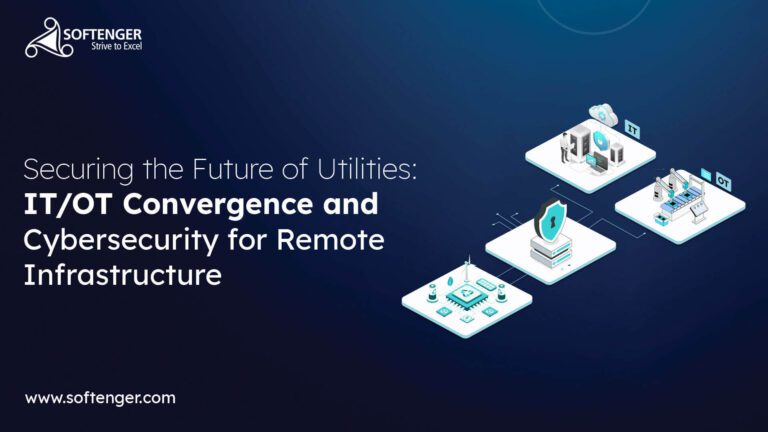
Securing the Future of Critical Infrastructure: IT/OT Convergence and Cybersecurity for Remote Operations
The security principles from IT/OT convergence apply directly to manufacturing and mining — where SCADA systems, PLC networks, and production IT share boundaries that ransomware groups and IEC 62443 auditors both examine closely, and where the cost of a security incident is measured in production yield, not IT service hours.
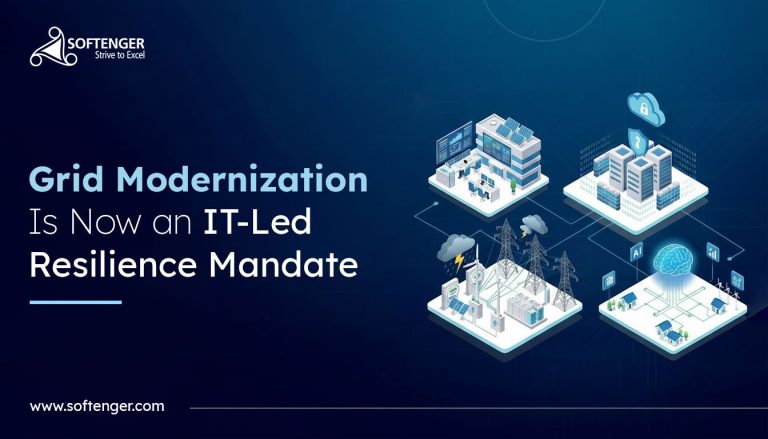
IT-Led Infrastructure Modernization: Building Resilient, Secure Industrial Operations at Scale
How manufacturing and mining enterprises modernizing from legacy SCADA and on-premises MES to cloud-connected production and analytics platforms use managed IT frameworks to drive Industry 4.0 transformation — without disrupting live production operations or creating the OT/IT security gaps that accelerate certification findings.
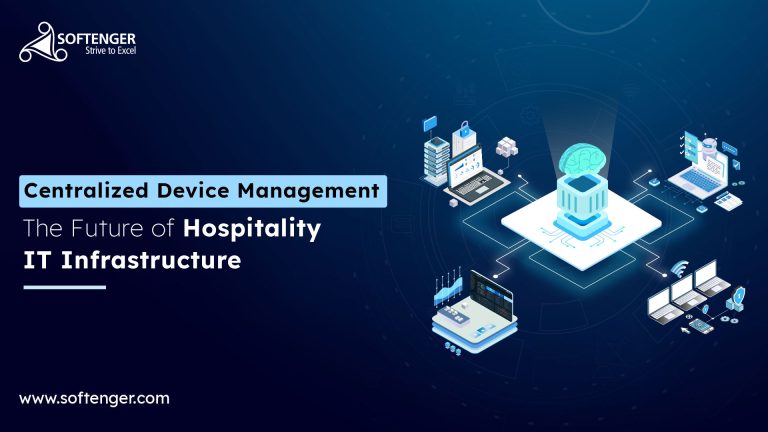
Why Remote and Centralized IT Management Is Transforming Operations Across Distributed Industrial Infrastructure
The centralized remote management model applies directly to manufacturing and mining enterprises managing production IT, SCADA systems, and mine site infrastructure across dozens of geographically distributed plants and remote sites — where per-facility vendor arrangements create exactly the monitoring gaps that production disruptions and compliance findings exploit.
Questions manufacturing & mining IT leaders ask before engaging Softenger
Tell us about your production and mine site IT environment. We’ll show you what industrial-grade managed looks like.
A conversation with a Softenger industrial IT specialist produces a documented five-environment classification and IEC 62443 compliance assessment — not a vendor pitch. We review your production IT, OT environment, remote site connectivity, and compliance obligations, then produce specific recommendations. No commitment required.
🏭 Request an Industrial IT Infrastructure Assessment
ISO 27001 certified. Handled securely, never shared with third parties.