Critical infrastructure IT that runs when everything depends on it.
Softenger delivers 24/7 remote IT infrastructure management purpose-built for energy and utilities enterprises — covering SCADA monitoring, NOC operations, SOC cybersecurity, cloud and hybrid infrastructure, and NERC CIP compliance across power generation, oil & gas, renewable energy, and utility distribution environments. One operations team. One SLA commitment. Zero tolerance for downtime. ISO 27001:2022 certified.
IT failures in critical infrastructure aren’t service outages — they’re national incidents.
In energy and utilities, IT infrastructure is not a business support function — it is the operational backbone of systems that millions of people and industrial processes depend on continuously. When a power plant’s IT systems fail, when a refinery’s SCADA environment is compromised, or when a grid operator loses visibility across distribution networks — the consequences extend far beyond an IT service desk ticket. These are the five infrastructure challenges that energy IT leaders are managing before every quarter-end.
Zero tolerance for downtime in systems that can never be scheduled offline
Power plants, oil refineries, water treatment facilities, and renewable energy farms operate continuously — and the IT systems controlling and monitoring them must match that availability requirement. Planned maintenance windows don’t exist when operations run 24/7/365.
Nation-state actors and ransomware groups target critical energy infrastructure specifically
Energy and utilities rank among the most targeted sectors for sophisticated cyberattacks. Nation-state groups and ransomware operators actively develop energy-sector capabilities — the Colonial Pipeline attack and similar incidents confirm that this is not a theoretical risk. Standard IT security postures are not calibrated for this threat level.
Legacy SCADA and OT systems co-existing with modern cloud creates unmonitored boundaries
Most energy enterprises operate a deeply hybrid environment — decades-old SCADA and ICS systems, IoT-enabled smart grid assets, cloud-hosted ERP and billing platforms, and corporate IT infrastructure — all interconnected. No single vendor manages this boundary, and the gaps between systems are where security incidents originate and propagate.
NERC CIP, ISO 55001, and GDPR overlap in ways that strain compliance teams
Energy enterprises operating across jurisdictions face simultaneously applicable compliance frameworks — NERC CIP for bulk electric systems, ISO 55001 for asset management, GDPR for consumer data, and regional energy authority mandates. Each requires continuous monitoring, evidence logging, and audit-ready documentation that is impossible to sustain manually.
Rapid renewables scaling demands IT flexibility that legacy infrastructure management can’t provide
Renewable energy portfolios — solar farms, wind assets, battery storage networks — scale faster than the IT management models designed for centralized fossil fuel infrastructure. Distributed renewable assets generate distributed monitoring requirements that traditional NOC models, built for single-site operations, cannot scale to cover efficiently.
Three operating domains. One managed service. Built for the energy stack.
Softenger’s energy and utilities RIM covers three distinct operational domains — critical operations and SCADA management, cybersecurity and OT security, and infrastructure operations across cloud and hybrid environments. Every domain is managed from a single operations center, under a single SLA commitment.
SCADA, OT & Critical Systems Operations
The operational technology layer that controls physical energy infrastructure. Monitored continuously to detect anomalies, prevent failures, and ensure the IT systems managing power generation, distribution, and asset operations maintain the availability their operational context demands.
- SCADA system availability monitoring and L2/L3 incident response
- DCS (Distributed Control System) and ICS performance and health management
- ERP platform support — SAP, Oracle, and asset management systems
- Smart grid and IoT device monitoring across distributed renewable assets
- Real-time alerting on OT system anomalies with energy-specific escalation tiers
- OT patch management on validated maintenance schedules — no unplanned downtime
SOC Operations & IT/OT Security
Energy infrastructure faces a uniquely sophisticated threat environment — nation-state actors, ransomware operators targeting critical sectors, and insider threats across distributed operational sites. Softenger’s SOC is tuned for the energy sector’s specific threat profile, monitoring both IT and OT environments from a single operations center.
- 24/7 SOC monitoring with energy-sector threat intelligence feeds
- IT/OT boundary monitoring — lateral movement detection across corporate and operational networks
- Ransomware and advanced persistent threat (APT) behavioural detection
- NERC CIP, ISO 55001, and GDPR compliance monitoring and audit-ready logging
- Network segmentation enforcement — guest, corporate IT, and OT zones continuously validated
- Incident response playbooks pre-built for energy-sector threat scenarios
NOC, Cloud, Data Center & Disaster Recovery
The underlying IT infrastructure layer — from on-premises data centers at operational sites to cloud-hosted billing and customer management platforms. Managed 24/7 with disaster recovery planning aligned to the recovery time requirements of energy operations, not generic enterprise IT.
- 24/7 NOC monitoring across all operational sites and data center environments
- Multi-cloud and hybrid environment management — AWS, Azure, GCP, on-premises
- Disaster recovery planning with RPO/RTO aligned to energy operational criticality
- Database and application management — billing, CRM, regulatory reporting systems
- WAN and connectivity management across geographically distributed energy sites
- Infrastructure capacity planning aligned to seasonal and demand-driven load patterns
We don’t monitor generic IT infrastructure. We monitor energy and utilities operational environments.
The distinction matters operationally. A generic managed IT provider monitors servers and network devices. Softenger monitors the energy operational stack — with monitoring rules, alert tiers, and escalation paths calibrated to the difference between a routine IT alert and an operational technology anomaly in a SCADA environment managing active power generation. Our SOC threat intelligence is energy-sector specific, our compliance monitoring covers NERC CIP and IEC 62443, and our response playbooks are written for the threat scenarios that target critical infrastructure — not generic enterprise IT incidents.
We audit your OT/IT boundary before we monitor anything.
Most managed IT providers onboard quickly and apply a generic monitoring configuration. Softenger starts with an infrastructure audit that maps your complete operational environment — SCADA topology, OT/IT boundary architecture, cloud dependencies, compliance obligations, and the site-specific operational patterns that determine what a critical incident actually looks like in your environment.
The audit produces an energy-specific monitoring model: which OT systems carry the highest operational risk, which network segments require dedicated security monitoring, what threshold constitutes an actionable SCADA alert versus routine data, and which incidents require immediate escalation to your on-site operations team. Only then does 24/7 monitoring go live.
The result is a managed IT service that understands your operational infrastructure as thoroughly as your own engineers — and monitors it more reliably because it never goes offline, never has a staffing gap at 3am, and never loses a SCADA specialist to attrition at the worst possible moment.
OT/IT boundary audit before monitoring goes live — every engagement
Every site’s SCADA environment, network architecture, and compliance obligations are mapped in documented detail before a single monitoring rule is configured. The audit defines which systems carry operational risk, which alert thresholds matter, and what an escalation-worthy event looks like in your specific operational context.
Infrastructure topology audit is the deliverable — not a generic template.NERC CIP, IEC 62443, and GDPR embedded into operations from day one
Compliance obligations are configured into the monitoring model during onboarding — not treated as a separate compliance project that runs in parallel. Security event logging, access control monitoring, network segmentation validation, and compliance documentation are system outputs from day one of operations.
Compliance is an operating posture, not an annual audit exercise.OT-calibrated SLA tiers — not generic IT response timelines applied to critical systems
Standard managed IT SLAs are not designed for operational technology environments. Softenger’s energy SLA model distinguishes a SCADA system alert during peak generation from a back-office application performance issue — because those incidents carry materially different operational risk and require fundamentally different response timelines.
SLA response priorities reflect operational technology risk, not IT convention.Single operations team across all sites, all systems, all compliance frameworks
Every site in your energy portfolio is managed by the same operations team, under the same SLA commitment, with the same institutional knowledge of your SCADA environment and compliance obligations. No per-site vendor fragmentation. No gaps between IT and OT coverage. One escalation path, always.
One team. All assets. One SLA. All frameworks.How AOTS governs an energy IT engagement — end to end.
AOTS — Advise, Optimize, Transform, Support — is Softenger’s delivery framework applied to every energy and utilities IT engagement. In an energy context, each phase has a specific mandate built around the realities of critical infrastructure: operational technology environments that cannot tolerate unplanned downtime, compliance frameworks with criminal liability exposure, geographically distributed assets, and a threat landscape calibrated specifically to the sector. Every phase produces a documented output before the next begins. No phase is skipped.
Advise
Before monitoring goes live, Softenger’s team audits your infrastructure across all operational sites — mapping SCADA topology, OT/IT boundary architecture, compliance requirements, and operational risk tiers. The audit output drives the monitoring configuration.
- Site-by-site OT/IT topology audit and boundary documentation
- Compliance obligation mapping — NERC CIP, IEC 62443, ISO 55001, GDPR
- Operational risk tiering — systems ranked by criticality and downtime impact
- SLA design aligned to OT operational rhythms and peak generation periods
- Monitoring architecture recommendation and phased site onboarding plan
A documented infrastructure topology and compliance-aligned monitoring model — built for your operational environment, not adapted from a generic IT template.
Optimize
Monitoring is configured to the energy-specific model developed during Advise. SCADA alert thresholds, OT escalation tiers, and compliance monitoring rules are established and tested before go-live — so the first real incident reaches a prepared team with a validated response path.
- OT-calibrated monitoring rule configuration — SCADA, ICS, DCS, smart grid
- Alert noise reduction — operational data signals separated from critical incident indicators
- Escalation path design — OT operations team, IT escalation, and executive notification levels
- Compliance monitoring rules — NERC CIP event logging, network segmentation validation
- Incident response runbook development for top energy-sector threat scenarios
A configured, tested monitoring environment — compliance checks active, runbooks validated, escalation paths confirmed before the first live incident.
Transform
Onboarding is delivered site-by-site — not as a single network-wide go-live that exposes every operational asset simultaneously. Each site cluster is onboarded, monitored in parallel with existing coverage, validated, and handed to the operations team before the next cluster begins.
- Phased site cluster onboarding — validation gate between each phase
- Parallel monitoring run — GSC team alongside existing IT/OT staff during transition
- OT incident simulation — top energy-sector failure scenarios tested before handover
- Compliance posture validation — NERC CIP and ISO monitoring verified by site cluster
- Knowledge transfer — your internal engineering team briefed on operating model and escalation paths
A fully operational managed service across all sites — onboarded, validated, and running under defined SLAs without disruption to active energy operations.
Support
From go-live, Softenger’s GSC operates your energy IT environment continuously — NOC monitoring, SOC security operations, compliance reporting, and proactive infrastructure health management. Quarterly AOTS reviews ensure the operating model evolves as your asset portfolio grows and compliance requirements change.
- 24/7/365 NOC and SOC operations — no business hours, no coverage gaps
- Incident management under defined SLA tiers — L1 through L3 resolution paths
- Monthly compliance reporting — NERC CIP posture, security events, audit-ready documentation
- Proactive infrastructure health reporting — before degradation becomes an operational incident
- Quarterly AOTS review — infrastructure evolution roadmap, new asset onboarding plans
A continuously operated, continuously improved energy IT environment — compliance posture maintained and infrastructure health documented every quarter.
Every new site, asset acquisition, or compliance requirement re-enters the AOTS cycle.
When you commission a new renewable energy farm, acquire an oil & gas asset, or face a new regulatory mandate, that change enters at Advise. The new environment is audited, the monitoring model is updated, the change is onboarded through Transform, and it returns to Support. Infrastructure growth doesn’t create monitoring gaps — it follows the same governance cycle every time.
Three ways to engage. One operational standard.
Energy and utility enterprises vary in scale from regional distribution networks to multinational integrated energy companies spanning hundreds of operational sites. Softenger’s three delivery models are designed to match the right level of engagement to your organization today — and scale as your asset portfolio and geographic footprint grow.
Dedicated Offshore Support Center
End-to-end remote IT management delivered from Softenger’s India-based GSC. The right model for energy enterprises seeking comprehensive, always-on NOC and SOC coverage across all operational sites without the cost and attrition risk of building equivalent in-house teams.
- 24/7 NOC and SOC monitoring across every operational site and data center
- Dedicated team with deep knowledge of your SCADA, ERP, and OT environment
- 50% reduction in IT operational costs versus equivalent in-house NOC/SOC capability
- Scalable coverage as you commission new assets or expand geographically
- NERC CIP, IEC 62443, and GDPR compliance monitoring built into the operating model
Hybrid Delivery Model
A balanced onshore-offshore approach for energy enterprises with existing operational technology and IT engineering teams who need to extend monitoring coverage to 24/7 without replacing the institutional knowledge those teams carry. Softenger extends coverage; your team retains governance.
- Offshore GSC for 24/7 NOC/SOC monitoring and L1/L2 incident management
- Your on-site engineering team retains L3 OT escalation and vendor management
- Structured handover protocols and shared incident management tooling
- NERC CIP compliance monitoring aligned across onshore-offshore coverage model
- Onboarding designed to extend — not displace — your existing operational expertise
On-Demand IT Support
A flexible, project-based model for energy operators requiring expert IT infrastructure support for specific initiatives — OT security assessments, SCADA monitoring implementation, compliance gap remediation, new site commissioning, or infrastructure modernization programs.
- No long-term contract — engage for specific projects or defined scopes
- Access to Softenger’s full energy IT expertise across all service domains
- Ideal for NERC CIP gap remediation, SCADA modernization, or site onboarding projects
- Transparent scope and billing — no ambiguity about what is covered
- Clear path to a full managed service engagement as operational needs mature
What an IT Infrastructure Assessment produces for your energy operations
A structured conversation with a Softenger energy IT specialist produces a documented output — not a vendor proposal. We review your site topology, OT/IT boundary architecture, compliance obligations, and current operations model, then produce a specific recommendation with evidence. No commitment required. No obligation beyond the conversation.
Six structural differences that determine whether your critical infrastructure IT performs or fails when it matters most
These aren’t marketing differentiators. They are operational and structural realities — built into how Softenger engages, monitors, and responds — that determine whether your energy infrastructure IT operates at the reliability level the operational environment demands.
Energy-native operations model — not generic IT monitoring applied to a power plant
Softenger’s energy RIM model is built around the operational requirements of energy enterprises — OT-calibrated alert tiers, SCADA-specific escalation paths, and compliance monitoring tuned to NERC CIP and IEC 62443. The difference between a SCADA alert and a server performance alert is built into the operations model, not decided by an on-call engineer at 3am.
SOC threat intelligence calibrated to critical infrastructure threat actors
Softenger’s SOC for energy enterprises uses threat intelligence feeds specific to the critical infrastructure sector — covering nation-state attack patterns targeting SCADA systems, ransomware group TTPs specific to energy operators, and ICS vulnerability disclosures. General-purpose threat intelligence is not adequate for the energy sector’s threat environment.
24/7 GSC coverage — India-based operations across all time zones
Softenger’s Global Support Center operates continuous shifts across every time zone. A SCADA anomaly at 2am at a remote energy facility doesn’t wait for a local IT team to arrive on shift. True 24/7 coverage for distributed energy assets requires a shift-based operations model, not an on-call arrangement that depends on someone answering a phone.
Unified IT/OT monitoring — single operations center for both environments
The IT/OT boundary is where most energy security incidents originate and propagate. Softenger monitors both sides of that boundary and the boundary itself — from a single operations center, under a single incident management framework. No coverage gap between the IT team and the OT team. No incident that falls between two vendors.
50% IT cost reduction and 40% faster incident resolution — documented outcomes
Softenger’s offshore delivery model delivers 50% reduction in IT operational costs compared to building equivalent in-house NOC and SOC capability. Proactive monitoring and energy-sector-tuned runbooks reduce incident resolution time by 40% compared to reactive support models. These are client-reported outcomes, not modelled estimates.
25 years of enterprise IT delivery — VISA, Kotak, and Reliance Jio
Softenger has delivered managed IT services to enterprises including VISA, Kotak Bank, and Reliance Jio for 25 years. The operational discipline, governance frameworks, and delivery standards built for high-compliance financial services environments are directly transferable to the compliance obligations of energy enterprises — and have been applied across critical infrastructure engagements since 1999.
Insights for energy & utilities IT leaders
Explore all insights →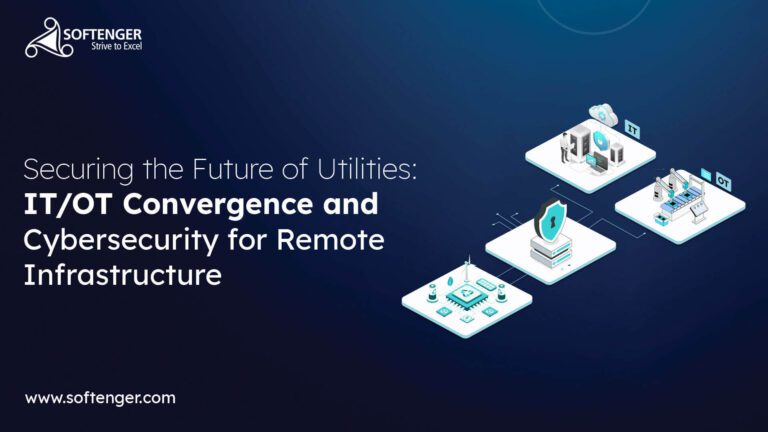
Securing the Future of Utilities: IT/OT Convergence and Cybersecurity for Remote Infrastructure
How the convergence of IT and OT is redefining security operations for energy enterprises — and the specific monitoring gaps that emerge when IT security models are applied to operational technology environments without adaptation.
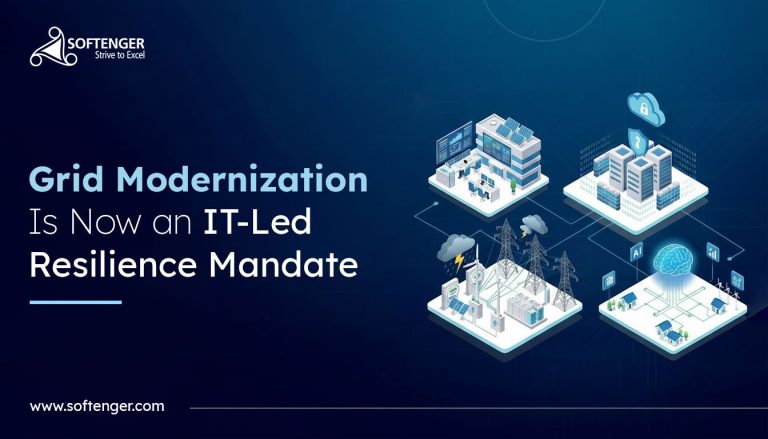
Grid Modernization in the Energy & Utilities Sector: Building a Resilient, Secure, and Intelligent Power Infrastructure
The IT infrastructure decisions that determine whether grid modernization programs deliver the resilience and security outcomes they promise — and how managed IT operations enable modernization without operational disruption.
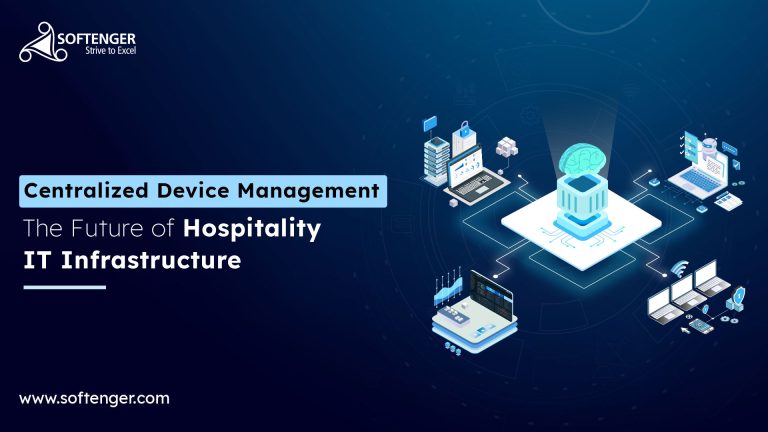
Why Remote and Centralized Device Management Is Transforming IT Operations Across Distributed Infrastructure
How centralized remote management models are replacing fragmented per-site device management across industries operating distributed infrastructure — with direct application to energy enterprises managing geographically dispersed assets.
Questions energy IT leaders ask before engaging Softenger
Tell us about your operational environment. We’ll show you what managed looks like for energy.
A conversation with a Softenger energy IT specialist produces a documented infrastructure assessment — not a vendor pitch. We review your SCADA environment, OT/IT boundary, compliance obligations, and current operations model, then produce a specific recommendation for how Softenger would manage your infrastructure. No commitment required to proceed.
⚡ Request an Energy IT Assessment
ISO 27001 certified. Your information is handled securely and never shared.