
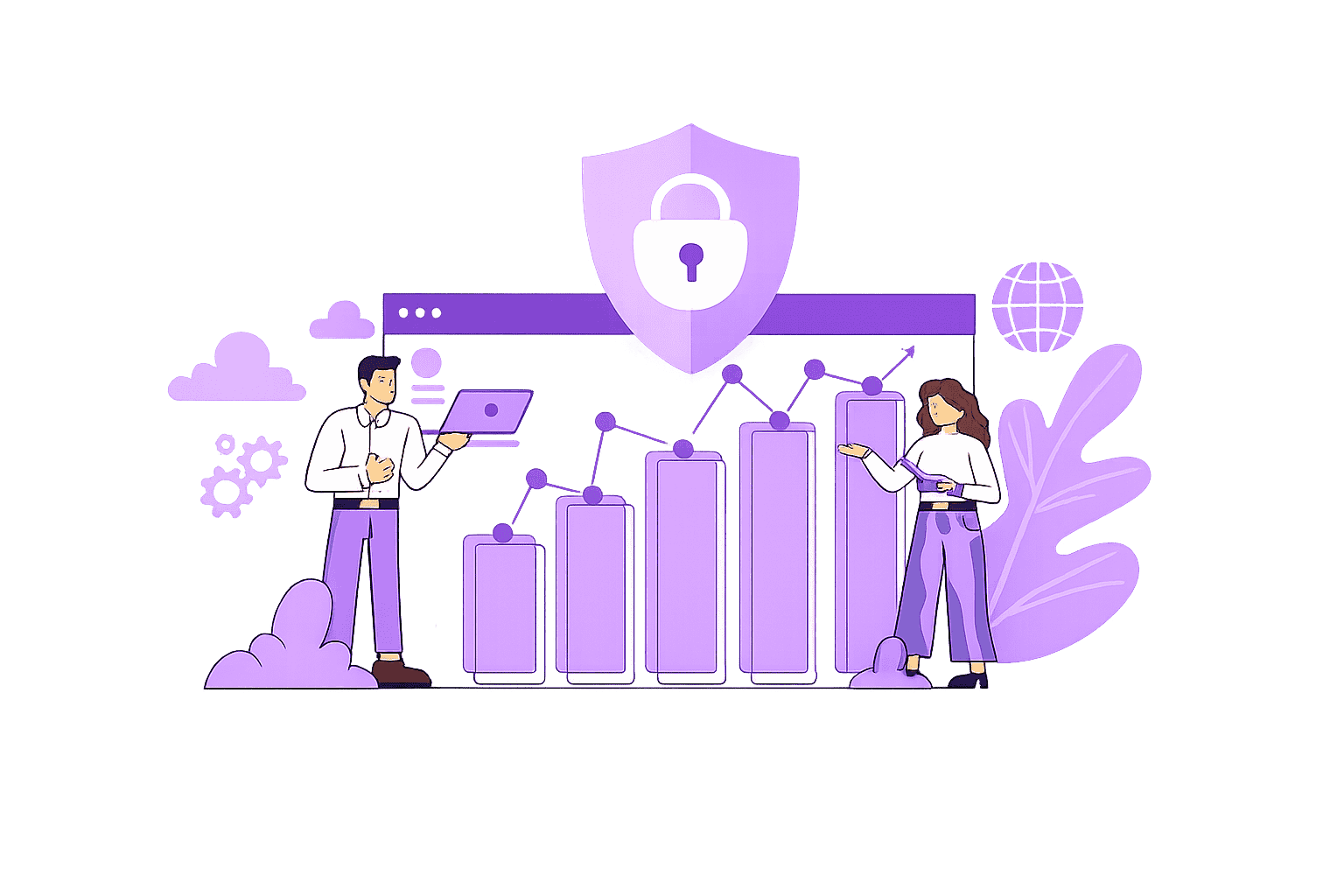

Your IP is in your IT systems. Most managed IT providers don’t understand what that means.
In electronics and semiconductor enterprises, IT infrastructure isn’t just operational support — it is the environment in which your competitive advantage lives. EDA design files, mask sets, process IP, and test data represent years of R&D investment stored in systems that most managed IT providers treat as generic file servers. Softenger’s electronics RIM is built around the security, availability, and compliance requirements of organizations where IT and IP are the same thing.
Every quarter you run electronics IT with a generic managed service, the exposure compounds.
These are not hypothetical risks. They are the operational and security realities of electronics and semiconductor enterprises running IT infrastructure with a service model that wasn’t designed for environments where EDA tools, MES platforms, and ITAR compliance all live on the same network.
State-sponsored IP theft targets semiconductor design data specifically
Nation-state actors actively target semiconductor IP — EDA design files, mask sets, process recipes, and test data. The theft of a next-generation chip design doesn’t show up in an IT incident report; it shows up two years later in a competitor’s product roadmap. Generic security postures don’t detect sophisticated exfiltration.
ITAR and export control liability is personal — not just organizational
Export control violations in semiconductor operations carry criminal liability for the responsible individuals — not just regulatory fines for the company. Every system that touches controlled technology must be monitored, access-controlled, and audit-logged continuously. A compliance gap discovered in an audit is a legal exposure that cannot be retroactively closed.
Fab and test environment downtime has a cost-per-hour that makes every IT incident a financial event
A four-hour MES outage at a semiconductor fab isn’t an IT service interruption — it’s a yield loss event with a direct dollar figure. IT incidents in production environments that could have been detected proactively but weren’t are management accountability issues, not just service desk tickets.
ERP, MES, PLM, and EDA managed by separate vendors with no unified operations view or security perimeter
Most electronics enterprises have four or more IT operations vendors — each managing a different system stack, with no unified view of the overall security posture, no single point of escalation, and no common incident classification. The gaps between vendor domains are precisely where sophisticated attackers operate.
Recruiting and retaining IT specialists who understand semiconductor manufacturing is an escalating competition
IT professionals with genuine semiconductor manufacturing knowledge — who understand the difference between a PLM system issue and a generic application support ticket — are in globally limited supply. Attrition of a senior specialist at the wrong moment means institutional knowledge leaves and vulnerabilities open. Offshore delivery models eliminate the attrition risk entirely.
We treat your EDA tools and PLM systems as critical infrastructure — not applications.
Most managed IT providers classify systems by their IT architecture — servers, databases, networks, applications. Softenger classifies systems by their operational and IP security significance. In an electronics enterprise, the EDA tool running Cadence Virtuoso and the server hosting your latest mask layer design data are not “applications” — they are the primary security perimeter around your competitive advantage.
That classification difference drives everything downstream: which systems get the highest SLA tier, which access events trigger immediate SOC alerts, which compliance controls are applied at the infrastructure level rather than the policy level, and which incidents escalate directly to your IP security officer rather than waiting for a standard ticket queue.
The result is a managed IT service that operates with genuine understanding of what matters in your environment — where an anomalous data transfer from a PLM server at 11pm is categorically different from the same event on a payroll system, and where the monitoring model reflects that distinction rather than treating all servers equally.
IP sensitivity classification before any monitoring goes live
Every system in your environment is classified by its IP sensitivity and compliance obligation before monitoring is configured. EDA tool environments, design data repositories, and mask layer storage get distinct monitoring profiles — not the same rules applied to an HR system.
IP topology audit is the deliverable — not a generic IT template.ITAR and export controls embedded at the infrastructure level
Compliance controls for ITAR, EAR, and regional export regulations are implemented at the infrastructure monitoring level — access logs, data transfer alerts, and user activity monitoring are continuous system outputs, not compliance-cycle deliverables.
Compliance monitoring is always on — not assembled pre-audit.Production-critical SLA tiers — fab and MES events don’t wait in a standard queue
Incidents affecting MES, fab floor IT, and cleanroom systems are assigned the highest SLA tier — with dedicated alert paths that reach an engineer in minutes. A fab IT alert during peak production is never treated as a routine service desk ticket.
SLA tiers reflect production criticality, not generic IT convention.Unified operations across EDA, PLM, MES, ERP, and corporate IT
Every system in your electronics operation — engineering tools, fab floor IT, enterprise systems, and corporate infrastructure — is managed from one operations center, under one SLA, with one escalation path. No inter-vendor gaps. No incidents that fall between teams.
One team. All systems. One accountability model.Five IT environments. One managed service model.
Electronics and semiconductor IT doesn’t fit a single operating model. Softenger manages five distinct IT environments — each with its own security classification, SLA tier, and compliance requirement — under one unified operations framework.
Three service domains. Every system in your electronics operation — managed.
Softenger’s electronics RIM consolidates what most organizations manage across four or five separate vendors into a single operations model — with unified visibility, a single SLA commitment, and one team that understands how each domain connects to the others.
Production & Engineering Systems
The IT environments where your competitive advantage is built and protected — fab floor systems, MES platforms, EDA tools, PLM, and design data repositories. Managed with production-critical SLAs and IP-specific security monitoring that generic managed IT providers don’t apply to these systems.
IP Security & Compliance Operations
24/7 SOC monitoring with electronics-sector threat intelligence — covering state-sponsored IP theft patterns, ITAR access control monitoring, data transfer anomaly detection, and continuous compliance documentation. Compliance posture maintained as a system state, not assembled before audits.
Enterprise IT & Infrastructure
ERP, supply chain systems, cloud and hybrid infrastructure, data centers, WAN connectivity, and backup/DR — managed under a unified operations model that understands the dependency chain from infrastructure layer to production-critical systems. One team, not four vendors.
What electronics enterprises achieve with Softenger’s managed IT model
These are outcomes reported by enterprises operating in high-compliance, high-IP-sensitivity IT environments — not modelled projections from a generic managed IT cost comparison.
Production System Availability
MES, fab floor IT, and EDA tool environments managed under production-critical SLA tiers deliver measurable uptime improvements over fragmented vendor arrangements — because incidents are detected before they cause operational impact, not after production is affected.
IP Security & Compliance Posture
Continuous ITAR and export control monitoring — configured as system outputs from day one — eliminates the compliance gap between audit cycles that represents the highest personal liability risk for compliance officers and executives in electronics enterprises.
IT Operational Cost Reduction
Consolidating four to six separate IT vendors into a single offshore operations model consistently produces 50%+ reduction in IT operational costs — while expanding monitoring coverage, adding 24/7 availability, and eliminating the attrition risk that creates institutional knowledge gaps in in-house teams.
Multi-Facility Operations Visibility
Electronics enterprises operating across design centres, fab facilities, and test sites in multiple countries gain a single-pane view of their entire IT environment — replacing the per-facility vendor reports and the weekly cross-vendor status calls that characterize fragmented IT operations.
Every electronics IT engagement follows the same four-phase discipline.
AOTS — Advise, Optimize, Transform, Support — applied to electronics and semiconductor IT has specific meaning in each phase. Advise doesn’t start monitoring; it produces a documented IP sensitivity classification and compliance mapping for your entire IT environment. Optimize doesn’t configure generic alerts; it builds EDA-aware, MES-calibrated, ITAR-aligned monitoring rules. Transform doesn’t switch vendors; it onboards by system domain, validating each cluster before expanding to the next. Support doesn’t staff a help desk; it operates a 24/7 NOC and SOC that understands the difference between a PLM alert and a file server alert.
Advise
Every facility, every system, every compliance obligation is mapped and classified in documented detail. The audit produces an IP sensitivity model — which systems are crown jewels, which carry ITAR exposure, which have production criticality — that drives everything in Optimize and beyond.
- IP sensitivity classification for all systems and data repositories
- ITAR, EAR, and ISO 27001 compliance obligation mapping
- Production criticality tiering — fab, engineering, enterprise, infrastructure
- OT/IT boundary identification in fab environments
- Onboarding phasing plan — system domain sequence and validation gates
A documented IP sensitivity map and compliance-aligned monitoring architecture — built from your environment, not a generic electronics IT template.
Optimize
Monitoring rules are built from the Advise audit — not from a standard template applied to your environment. EDA tool alert thresholds, MES performance baselines, ITAR access control monitoring, and SOC detection rules are configured and tested before any system goes live.
- EDA and PLM monitoring rule configuration — IP access behavioural baselines
- MES and fab floor monitoring calibration — production-critical alert tiers
- ITAR and EAR compliance monitoring — access logging, data transfer alerts
- Alert noise elimination — actionable signals separated from operational data
- Incident response runbooks — top electronics-sector threat scenarios pre-built
A tested, electronics-calibrated monitoring environment — compliance checks active, EDA monitoring validated, production SLAs confirmed before the first live incident.
Transform
Onboarding proceeds by system domain — production-critical systems first, then engineering, then enterprise and infrastructure. Each cluster is monitored in parallel with existing coverage, validated, and handed over before the next begins. Configuration issues resolve at cluster level, not after the entire environment is live.
- Phased domain onboarding — Fab → Engineering → Enterprise → Infrastructure
- Parallel monitoring run — GSC team alongside existing IT staff during transition
- IP security simulation — anomalous access scenarios tested before handover
- ITAR compliance validation — access control and logging verified by domain
- Knowledge transfer — your internal team briefed on operating model and escalation paths
A fully operational managed IT service across all five environments — onboarded by domain, validated, and running under defined SLAs without disruption to active engineering or production operations.
Support
From go-live, Softenger’s GSC operates your electronics IT environment continuously — NOC monitoring, SOC IP security operations, ITAR compliance reporting, and proactive infrastructure health management. Quarterly AOTS reviews ensure the operating model evolves as your product roadmap, facility footprint, and compliance obligations change.
- 24/7/365 NOC and SOC operations — no business hours, no coverage gaps
- Production-critical incident management — L1 through L3 with pre-built runbooks
- Monthly compliance reporting — ITAR posture, IP security events, audit-ready documentation
- Proactive infrastructure health reporting — degradation flagged before production impact
- Quarterly AOTS review — new product lines, new facilities, new compliance obligations
A continuously operated, continuously improved electronics IT environment — compliance posture maintained, IP security monitoring active, and infrastructure health documented every quarter.
Every new product line, facility, or compliance obligation re-enters AOTS.
When you tape out a new chip design requiring a different IP classification, commission a new fab, or face a new export control obligation, that change enters at Advise. It’s classified, the monitoring model is updated, it’s onboarded through Transform, and it returns to Support. Infrastructure growth doesn’t create compliance gaps — it follows the same four-phase governance every time.
How a semiconductor enterprise consolidated six IT vendors into one operations model
A mid-size semiconductor enterprise operating design centres in Singapore and Malaysia and a fab in India engaged Softenger after a near-miss ITAR audit finding identified access control gaps in their EDA tool environment. The full case study documents the onboarding process, compliance remediation timeline, and 18-month operational outcomes.
Six IT vendors consolidated into one managed IT operations model — ITAR compliance gaps closed within 90 days of onboarding
The enterprise ran six separate IT vendors — one for EDA tool support, one for network, one for cloud infrastructure, one for SAP ERP, one for SOC, and one for fab floor IT. Each produced separate monthly reports. No vendor had visibility into the others’ environments. The ITAR audit found access control gaps in the boundary between the corporate network and the engineering workstation subnet — a boundary managed by two different vendors with no coordination protocol.
Three ways to engage. One operational standard.
Electronics and semiconductor enterprises range from fabless design houses to fully integrated device manufacturers with fabs, test facilities, and global supply chains. Softenger's three delivery models are designed to match the right engagement depth to your organization's scale and operational model.
Dedicated Offshore Support Center
End-to-end managed IT across all five operating environments — from Softenger's India-based GSC. The right model for enterprises seeking comprehensive NOC, SOC, and IP security coverage without building equivalent in-house capability at each facility.
- 24/7 NOC and SOC across all facilities and system domains
- Dedicated team with electronics-specific knowledge of your EDA, MES, and ERP environment
- 50%+ IT operational cost reduction vs. multi-vendor or in-house equivalent
- ITAR and export control compliance monitoring as a continuous system output
- Scalable as you add facilities, product lines, or compliance obligations
Hybrid Delivery Model
A balanced model for electronics enterprises with existing IT staff who need 24/7 monitoring coverage extended without replacing the institutional knowledge those teams hold. Softenger handles continuous monitoring; your team retains governance and escalation ownership.
- Offshore GSC for 24/7 NOC/SOC monitoring and L1/L2 resolution
- Your internal team retains L3 escalation, architecture decisions, and vendor relationships
- Structured handover protocols and shared incident management tooling
- Compliance monitoring aligned across onshore-offshore operating model
- Designed to extend — not displace — your existing team's expertise
On-Demand IT Support
A flexible, project-based model for electronics enterprises needing expert IT support for specific initiatives — ITAR compliance gap remediation, EDA tool environment audit, new facility onboarding, MES implementation support, or security assessment projects.
- No long-term commitment — engage for defined projects or specific scopes
- Access to Softenger's full electronics IT expertise across all five operating environments
- Ideal for ITAR remediation projects, EDA environment audits, or facility onboarding
- Transparent scope and billing — clear boundaries on what is covered
- Direct path to a managed service engagement as operational needs mature
What an IT Infrastructure Assessment produces for your electronics operation
A conversation with a Softenger electronics IT specialist produces a documented assessment — not a vendor proposal deck. We review your system topology, IP security posture, compliance obligations, and current operations model, then produce a specific recommendation with rationale. No commitment required. No obligation beyond the conversation.
Six structural differences between Softenger and a generic managed IT provider applied to an electronics enterprise
These are not positioning statements. They are the operational realities — built into how Softenger engages, classifies, monitors, and responds — that determine whether your electronics IT environment operates at the security and availability level the operational context demands.
IP-native operations — EDA and PLM treated as the primary security perimeter, not just applications
Softenger's electronics monitoring model classifies EDA tools, PLM systems, and design data repositories as primary security perimeter assets — with monitoring rules, alert tiers, and SOC detection capabilities calibrated specifically for IP theft threat patterns. Generic application monitoring is not applied to these systems.
ITAR and export control compliance embedded at the infrastructure level — not the policy level
Compliance controls for ITAR, EAR, and regional export regulations are implemented as infrastructure monitoring outputs — access logs, data transfer alerts, and user activity records are generated continuously, not assembled before audits. Monthly compliance reports are a standard deliverable, not a special request.
24/7 GSC coverage — India-based operations across all time zones, no on-call friction
Softenger's Global Support Center operates continuous shifts. A MES anomaly at 3am at a fab in Malaysia reaches an engineer with electronics-sector knowledge in minutes. True 24/7 coverage is a shift model — not an on-call rota that depends on someone being willing to answer a phone at 3am.
Five IT environments, one operations team — no inter-vendor gaps in your security perimeter
The boundary between your EDA tool environment and your corporate network, or between your MES and your ERP, is where most electronics IT security incidents originate. Softenger monitors all five environments and their integration boundaries from a single operations center — no gap between vendor domains.
50% IT cost reduction and 40% faster incident resolution — client-reported outcomes
Consolidating multi-vendor electronics IT operations into Softenger's offshore delivery model consistently delivers 50%+ reduction in IT operational costs and 40% faster incident resolution. Electronics enterprises also eliminate the attrition risk that creates institutional knowledge gaps when a senior specialist leaves at the wrong moment.
25 years of enterprise IT delivery — financial services discipline applied to electronics compliance
Softenger's 25-year enterprise IT delivery history includes engagements with VISA, Kotak Bank, and Reliance Jio — high-compliance environments where security operations, compliance monitoring, and 24/7 availability are baseline requirements. The governance frameworks built for financial services translate directly to ITAR and export control environments.
Insights for electronics & semiconductor IT leaders
Explore all insights →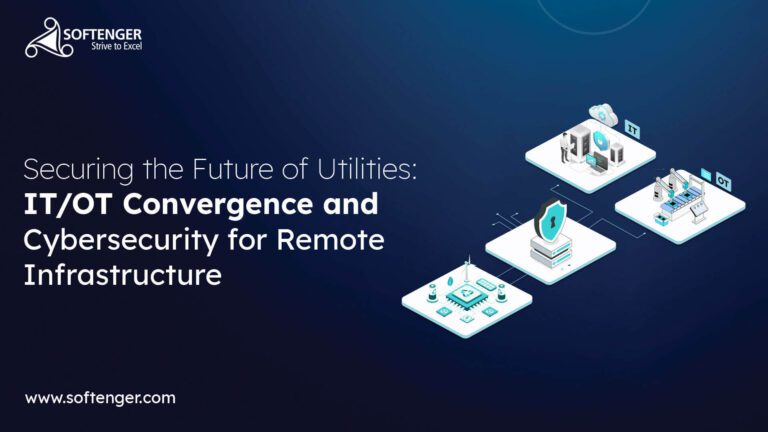
Securing the Future of Utilities: IT/OT Convergence and Cybersecurity for Remote Infrastructure
The security lessons from IT/OT convergence in utilities apply directly to semiconductor fab environments — where engineering IT and production OT share infrastructure and the boundary between them is the primary attack surface.
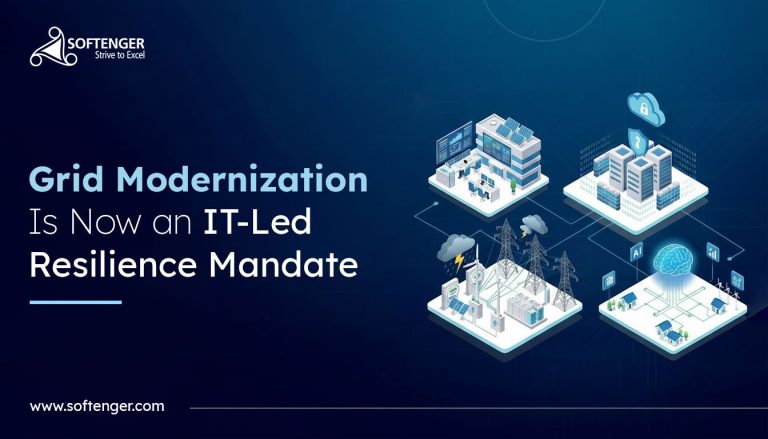
IT-Led Infrastructure Modernization: Building Resilient, Secure Operations at Scale
How enterprises managing complex, distributed infrastructure — including semiconductor fabs and electronics design centres — are using managed IT frameworks to drive modernization without disrupting production operations.
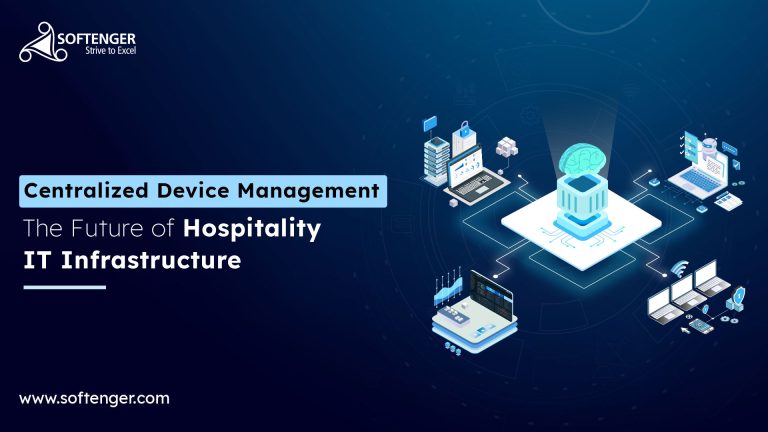
Why Remote and Centralized Device Management Is Transforming IT Operations Across Distributed Infrastructure
The centralized remote management model that transformed hospitality and utilities IT operations applies with equal force to electronics enterprises managing engineering workstations, fab floor systems, and test equipment across multiple facilities.
Questions electronics IT leaders ask before engaging Softenger
Tell us about your electronics IT environment. We'll show you what secure managed looks like.
A conversation with a Softenger electronics IT specialist produces a documented IP sensitivity assessment and compliance gap analysis — not a vendor pitch. We review your system topology, compliance obligations, and current operations model, then produce a specific recommendation. No commitment required.
🔬 Request an Electronics IT Assessment
ISO 27001 certified. Your information is handled securely and never shared.