Retail IT that scales for flash sales, protects every transaction, and never blinks.
Softenger delivers 24/7 remote IT infrastructure management built for e-commerce and retail enterprises — covering platform uptime, cloud auto-scaling, PCI-DSS compliance, omnichannel IT, POS networks, and last-mile warehouse infrastructure. Zero downtime tolerance. No peak-season exceptions. Every storefront, every channel, every customer interaction — managed. ISO 27001:2022 certified.
Every quarter that retail IT runs without retail-native management, the revenue and compliance exposure compounds.
These aren’t theoretical risks. They are the operational realities of e-commerce and retail enterprises running digital storefronts, omnichannel operations, and payment infrastructure with a managed IT model that wasn’t designed for environments where a checkout timeout, a flash sale performance failure, or a PCI-DSS control gap all carry immediate, measurable business consequences.
Zero tolerance for downtime — every second of website or app unavailability is a revenue loss event
In e-commerce, an IT service interruption isn’t an inconvenience — it’s a real-time abandoned cart event. Platform downtime during a flash sale, payment gateway latency during checkout, or app crashes during a product launch all translate directly to lost revenue, NPS damage, and social media exposure that a service desk SLA cannot recover.
Traffic spikes at flash sale scale expose IT infrastructure that wasn’t designed to auto-scale fast enough
Festive sale events, viral product launches, and influencer-driven demand spikes create traffic volumes that multiply normal load within minutes. Infrastructure that isn’t pre-scaled, pre-validated, and actively monitored for scaling failures during the event will degrade exactly when customer demand — and revenue opportunity — is at its peak.
PCI-DSS, GDPR, and payment fraud exposure — every transaction is simultaneously a revenue event and a compliance obligation
E-commerce enterprises processing millions of transactions daily operate under PCI-DSS cardholder data environment requirements, GDPR consumer data protection obligations, and fraud detection mandates that all require IT infrastructure controls — not just compliance policies. Managing these obligations manually without embedded IT monitoring creates exactly the gaps that QSA assessors and fraud actors both exploit.
Omnichannel complexity — physical POS, online storefronts, mobile apps, and delivery systems demand unified IT management no single vendor has provided
Modern retail doesn’t operate on a single channel — it operates across physical stores with POS networks, online storefronts, mobile commerce back-ends, loyalty platforms, inventory management systems, and last-mile delivery integrations. Each channel has been managed separately, and the integration gaps between them are where customer-facing failures originate and where data inconsistencies create the errors that reach customers at checkout.
Last-mile IT and warehouse edge infrastructure require the same management discipline as the digital storefront — and rarely receive it
Warehouse management systems, RFID and barcode scanning infrastructure, delivery tracking platforms, and edge compute at distribution centres are directly connected to the customer experience — an inventory visibility failure at a fulfilment warehouse creates the same customer-facing problem as a checkout failure on the website. These systems are rarely managed to the same standard as the digital storefront that the IT team watches most closely.
We treat your storefront and payment systems as revenue-critical infrastructure — not IT applications.
Most managed IT providers classify retail systems by their technical architecture — servers, networks, cloud workloads, applications. Softenger classifies retail IT by its revenue criticality, compliance exposure, and customer experience impact simultaneously. Your checkout infrastructure, your payment gateway, your inventory sync system, and your POS network are not “applications” — they are revenue-generating, compliance-governed customer experience systems that require distinct monitoring tiers, distinct security controls, and distinct SLA commitments.
That classification difference drives everything downstream: which systems get the highest response SLA, which platform events trigger immediate escalation, which compliance controls are applied at the infrastructure level, and which incidents get escalated to your commercial operations team rather than waiting for standard incident management queue processing.
The result is a managed IT service that operates with genuine understanding of what a checkout timeout at 11pm on the day of a flash sale actually means for your business — and monitors the entire commerce IT stack with alert thresholds and response models that reflect that understanding.
Revenue-criticality classification before any monitoring goes live
Every system — storefront infrastructure, payment environments, POS networks, inventory systems, warehouse IT — is classified by its revenue and customer experience impact before monitoring rules are configured. Checkout and payment systems always receive the highest SLA tier.
Classification drives the monitoring model — not a generic template.PCI-DSS and GDPR embedded at the infrastructure level — never assembled pre-audit
Payment infrastructure access controls, cardholder data environment monitoring, GDPR consumer data protection logging, and compliance documentation are configured as system outputs from the first day of operations — continuously maintained, not built before QSA assessments.
Compliance posture is a system state — not an audit-season activity.Peak-event readiness built into the operations model — not reacted to as emergencies
Flash sales, festive seasons, and product launches are planned events that require pre-event infrastructure validation, scaling policy testing, enhanced monitoring configuration, and real-time capacity tracking during the event. Softenger’s retail operations model treats peak events as operations milestones with defined preparation steps — not traffic spikes that reveal IT gaps.
Peak traffic is planned for — not reacted to after checkout failures.Omnichannel integration health monitored — inventory sync and POS-to-online gaps detected before customers see them
The integration pipelines connecting online storefronts to inventory management, POS systems to loyalty platforms, and delivery tracking to order management are monitored as first-class targets. Integration failures are detected before they create the checkout errors, stock discrepancies, and delivery tracking gaps that customers report.
Integration health monitoring covers the gaps between your channels.Five IT environments. One retail operations model.
E-commerce and retail IT doesn’t fit one monitoring model. Softenger manages five distinct environments — each with its own revenue criticality, compliance requirement, and SLA tier — under one unified operations framework that treats the customer experience as the primary monitoring signal.
Three service domains. The full retail IT stack — managed as one.
Softenger’s retail RIM consolidates what most e-commerce enterprises manage across multiple vendors — storefront IT, payment compliance, and omnichannel operations — into one managed service with one SLA, one operations team, and one escalation path.
Platform Performance & Availability Operations
24/7 monitoring of web and mobile storefronts, checkout infrastructure, CDN performance, cloud auto-scaling, and API gateway health — under revenue-critical SLA tiers. Peak events managed proactively with pre-scaling validation and enhanced monitoring. Incidents resolved before customers notice them.
Payment Security, PCI-DSS & Compliance Operations
Payment gateway monitoring, PCI-DSS cardholder data environment management, fraud detection system availability, GDPR consumer data protection, and monthly compliance posture reporting — all configured as continuous system outputs from the first day of engagement. Compliance is never assembled pre-audit.
Omnichannel, POS & Last-Mile Infrastructure
POS network management across physical stores, inventory and order management integration health, loyalty platform availability, warehouse IT operations, delivery tracking infrastructure, and edge compute at distribution centres — all managed under one operations model that connects physical and digital retail without leaving gaps between channels.
What retail enterprises achieve with Softenger’s managed IT model
Outcomes from e-commerce and retail IT engagements — documented results from enterprises operating in high-traffic, high-compliance commerce environments where IT performance is directly connected to revenue.
Platform Availability — Zero Downtime During Peak Events
E-commerce storefronts managed with pre-event scaling validation, enhanced monitoring mode, and revenue-critical SLA tiers consistently achieve 99.99% uptime — including during flash sales and festive peak seasons where infrastructure failures historically occurred.
PCI-DSS Compliance — Zero Findings in Post-Engagement QSA Assessments
Continuous PCI-DSS cardholder data environment monitoring — configured as infrastructure system outputs from day one — eliminates the compliance gaps that QSA assessors find when compliance is assembled manually before certification cycles.
IT Cost Reduction — 50% Reduction vs. Multi-Vendor Management Model
Consolidating per-channel vendor arrangements — separate providers for cloud, security, POS, and helpdesk — into Softenger’s unified offshore delivery model consistently produces 50%+ IT operational cost reduction while expanding monitoring coverage and adding peak-event management capability.
Omnichannel IT Unification — One Operations Team Across All Channels
Retail enterprises running separate IT management arrangements for online storefronts and physical stores consolidate into one Softenger operations model — eliminating the integration boundary gaps that create the stock discrepancies, checkout errors, and delivery tracking failures that customers experience as brand failure.
Every retail IT engagement runs the same four-phase discipline.
AOTS — Advise, Optimize, Transform, Support — applied to retail IT has specific meaning in each phase. Advise doesn’t configure monitoring; it classifies your entire IT estate across five retail environments — storefront, payment, omnichannel, cloud, and warehouse — before a single alert rule is written. Optimize doesn’t apply generic thresholds; it builds monitoring calibrated to your traffic patterns, peak-event calendar, and PCI-DSS certification requirements. Transform onboards environments in revenue-criticality order with validation gates. Support operates a 24/7 retail NOC and payment SOC that treats checkout failures and compliance events with the urgency they carry in a commerce context.
Advise
Every environment in your retail IT estate is classified — storefront infrastructure, payment environments, POS networks, cloud architecture, and warehouse IT — by revenue criticality and compliance exposure. The classification model drives all monitoring decisions and SLA tier assignments.
- Five-environment topology audit across all retail IT environments
- Revenue criticality and compliance exposure classification
- PCI-DSS CDE mapping and compliance gap assessment
- Peak-event calendar review — flash sales, festive seasons identified
- Onboarding phasing — storefront and payment environments first
A documented retail IT topology and revenue-criticality monitoring architecture — built from your commerce context, not applied from a generic IT template.
Optimize
Monitoring rules are built from the Advise classification — storefront performance thresholds set to commerce operational baselines, payment monitoring calibrated to transaction volume patterns, PCI-DSS compliance controls configured and tested, and peak-event enhanced monitoring profiles prepared before the first live environment goes live.
- Storefront and checkout monitoring configuration
- PCI-DSS CDE monitoring controls activated
- Cloud auto-scaling policies configured and peak-event tested
- Omnichannel integration pipeline health checks configured
- Retail incident runbooks — checkout failures, PCI alerts, POS outages
A tested retail monitoring environment — compliance controls active, scaling policies validated, peak-event profiles ready before the first live incident.
Transform
Environments are onboarded in revenue-criticality order — storefront and payment first, then omnichannel and cloud, then warehouse and edge. Each environment is monitored in parallel with existing IT management, validated for performance and compliance, and handed to Softenger NOC before the next begins.
- Revenue-priority onboarding — storefront and payment environments first
- Parallel monitoring run — no commerce coverage gap during transition
- Commerce incident simulation — checkout failure, PCI alert scenarios tested
- PCI-DSS compliance validation per environment before progression
- First peak event managed — validation of enhanced monitoring profiles
Full retail IT estate onboarded in revenue-criticality order — validated and running under defined SLAs without disruption to live commerce operations.
Support
Softenger’s GSC operates your retail IT estate continuously — storefront monitoring, payment security operations, omnichannel integration health, and peak-event enhanced monitoring for every flash sale and festive season. Quarterly AOTS reviews ensure the model evolves as your product catalogue, geographic footprint, and technology stack grow.
- 24/7/365 retail NOC and payment SOC — no business hours
- Checkout and commerce incident management — L1–L3 with retail runbooks
- Monthly PCI-DSS and GDPR compliance posture reports
- Enhanced monitoring activation for every peak traffic event
- Quarterly AOTS review — new channels, new markets, new peak seasons
A continuously operated retail IT environment — PCI-DSS posture maintained, storefront monitored, and peak events managed as planned operations, not emergencies.
Every new channel, market, or peak season re-enters AOTS.
When you launch a new sales channel, expand into a new market, introduce a new payment method, or plan the next peak season, that change enters at Advise — classified, monitoring updated, onboarded through Transform, and returned to Support. Commerce growth never creates IT management gaps.
Built for Performance, Reliability & Scale — across the full retail IT estate
A documented outcome from Softenger’s managed IT engagement with a multi-channel retail enterprise — showing the operational and financial impact of a retail-native IT management model versus the per-channel vendor approach it replaced.
Remote IT Infrastructure built for performance, reliability and scale across e-commerce, physical stores, and last-mile operations
A multi-channel retailer operating online storefronts, physical stores across Southeast Asia, and a growing direct-to-consumer delivery operation managed IT across five separate vendors — cloud, POS, security, helpdesk, and warehouse IT all handled independently with no unified view, no single SLA, and no peak-event coordination. Flash sale infrastructure failures had occurred in two consecutive festive seasons. PCI-DSS compliance had remediation findings at every QSA cycle. IT costs were increasing while service quality across channels was fragmented.
Three ways to engage. One retail-grade standard.
Retail and e-commerce enterprises range from direct-to-consumer brands with a single digital storefront to multinational omnichannel retailers with hundreds of physical stores, multiple international websites, and complex distribution networks. Softenger's delivery models match the right engagement depth to your scale today.
Dedicated Offshore Support Center
End-to-end retail IT management from Softenger's India-based GSC. 24/7 storefront NOC, payment SOC, omnichannel operations, and peak-event management — at 50%+ lower cost than equivalent in-house multi-vendor arrangements, with PCI-DSS compliance built in.
- 24/7 NOC and SOC across storefront, payment, and omnichannel environments
- Dedicated team with retail IT expertise and PCI-DSS compliance knowledge
- 50%+ IT operational cost reduction vs. multi-vendor equivalent
- PCI-DSS, GDPR compliance monitoring as continuous system outputs
- Peak-event management — enhanced monitoring for every flash sale
Hybrid Delivery Model
Offshore GSC for 24/7 monitoring; your IT team retains L3 escalation, vendor governance, and operational decision-making. Softenger extends coverage across all retail environments without displacing the commerce knowledge your team carries.
- Offshore NOC/SOC for 24/7 monitoring and L1/L2 triage
- Your team retains L3 escalation, vendor governance, and commerce decisions
- Compliance monitoring aligned across onshore-offshore model
- Structured handover protocols and shared incident management tooling
- Designed to extend — not replace — existing retail IT capabilities
On-Demand IT Support
Expert retail IT support for specific initiatives — PCI-DSS gap remediation, peak-season infrastructure preparation, new channel launch IT support, cloud migration, or capacity augmentation for major commerce events.
- No long-term commitment — engage for defined projects or scopes
- Full retail IT expertise across all five commerce environments
- Ideal for PCI-DSS remediation, peak preparation, or new channel launches
- Transparent scope and billing — clear coverage boundaries
- Clear path to a full managed service as retail scale grows
What a Retail IT Infrastructure Assessment produces for your business
A conversation with a Softenger retail IT specialist produces a documented five-environment classification and PCI-DSS gap assessment — not a vendor proposal. We review your storefront topology, compliance obligations, peak-event history, and current IT management model, then produce specific recommendations. No commitment required.
Six structural differences between Softenger and generic managed IT applied to an e-commerce operation
These are operational and structural realities — built into how Softenger classifies, monitors, and responds — that determine whether your retail IT estate operates at the availability, compliance, and peak-event management level your customers and payment partners demand.
Retail-native operations — checkout and payment systems treated as revenue infrastructure, not IT applications
Softenger's retail monitoring model classifies storefront, payment, and POS systems by their revenue and customer experience impact — not their technical architecture. A checkout failure is never processed in the same queue as a corporate file server alert. SLA tiers, alert thresholds, and escalation paths reflect commerce operational context.
Peak-event management built into the model — flash sales planned for, not reacted to
Flash sales, festive season peaks, and major product launches are identified during Advise, pre-validated during Optimize, and managed with enhanced monitoring profiles during the event. Scaling failures don't happen at checkout because the infrastructure was validated before the first customer arrived — not after the first performance alert.
24/7 GSC coverage — India-based operations aligned to every retail time zone and trading window
Softenger's Global Support Center operates continuous shifts. A checkout failure at 2am during a global flash sale, a POS network outage at peak trading hours on a Saturday, or a payment gateway degradation during a major shopping event — all reach a retail-experienced engineer in minutes. Commerce never stops, and neither does Softenger's monitoring.
PCI-DSS embedded as system outputs — zero findings in QSA assessments post-onboarding
PCI-DSS cardholder data environment controls are configured as infrastructure monitoring outputs from the first day of operations — always on, continuously monitored, and documented for QSA evidence. Monthly compliance posture reports are standard deliverables. The pattern of finding compliance gaps at the QSA assessment ends when Softenger starts.
Omnichannel integration monitoring — inventory sync gaps and POS failures detected before customers see them
Integration pipelines between online storefronts, inventory systems, POS networks, and delivery platforms are monitored as first-class targets — not background infrastructure. The stock discrepancies, checkout errors, and delivery tracking failures that customers report as brand failures are detected at the integration layer before they reach a customer interaction.
25 years of enterprise IT delivery — Oracle, SAP, VISA, and Reliance Jio among our clients
Softenger has delivered managed IT to Oracle, SAP, VISA, and Reliance Jio for 25 years. The operational discipline, SLA rigour, and compliance governance built for financial services and enterprise technology relationships define the baseline for every retail IT engagement — not just the flagship clients. PCI-DSS compliance is standard operating procedure in financial services; Softenger brings that rigour to retail.
Insights for automotive & aerospace IT leaders
Explore all insights →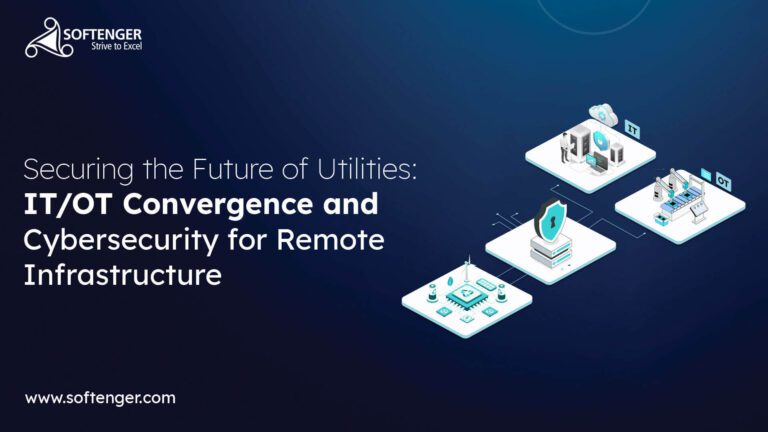
Securing the Future of Utilities: IT/OT Convergence and Cybersecurity for Remote Infrastructure
The security principles from IT/OT convergence in industrial environments apply directly to automotive and aerospace manufacturing — where SCADA systems, PLC networks, and production IT share boundaries that sophisticated attackers and TISAX auditors both examine closely.
Why Remote and Centralized Device Management Is Transforming IT Operations Across Distributed Infrastructure
The centralized remote management model transforming multi-site operations applies directly to automotive and aerospace enterprises managing production IT, test lab equipment, and engineering workstations across globally distributed manufacturing networks and design centres.
IT-Led Infrastructure Modernization: Building Resilient, Secure Operations at Scale
How enterprises managing complex distributed infrastructure — including automotive manufacturers modernizing from legacy SCADA and on-premises ERP to cloud-connected production and design platforms — use managed IT frameworks to drive transformation without disrupting live operations.
Questions retail IT leaders ask before engaging Softenger
Tell us about your retail IT environment. We'll show you what commerce-grade managed looks like.
A conversation with a Softenger retail IT specialist produces a documented five-environment classification and PCI-DSS compliance assessment — not a vendor proposal. We review your storefront topology, peak-event history, compliance obligations, and current IT management model, then produce specific recommendations. No commitment required.
🛒 Talk to Our Retail IT Experts
ISO 27001 certified. Handled securely, never shared with third parties.