

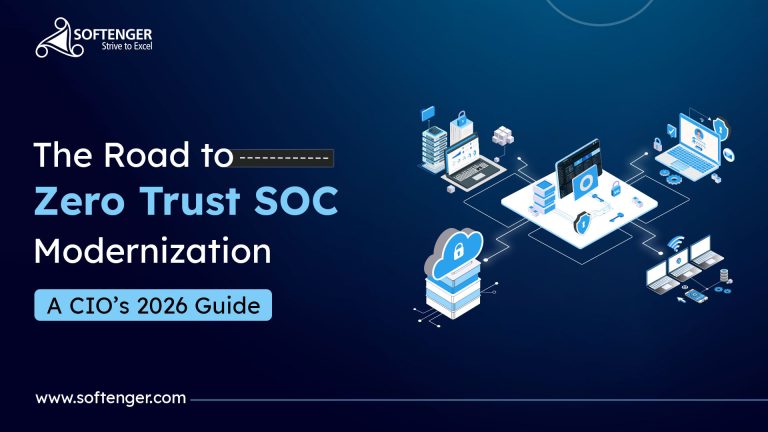
The Road to Zero Trust SOC Modernization — A CIO’s 2026 Guide
- Strategic Clarity: Why Zero Trust is the backbone of SOC resilience and cyber governance.
- Operational Insight: How identity, telemetry, and automation drive ROI and reduce risk across hybrid environments.
- Action Plan: A readiness checklist and KPIs to benchmark your SOC for 2026.
- Why modern SOCs must move from perimeter defense to identity-driven resilience
- The NIST-aligned, AI-ready SOC architecture and its five operational layers
- Integration pathways — SIEM/XDR, MDR, and adaptive automation
- ROI levers and governance impact for CIO dashboards
- Zero Trust SOC Readiness Checklist for 2026
- The AI and autonomous SOC evolution outlook
Why Modern SOCs Must Rethink Trust
Perimeter security, once sufficient for static data centers, collapses under today’s hybrid, cloud-native, and remote-first architectures — where identity defines access.
CIOs face a dual mandate: reduce Mean Time to Respond (MTTR) while ensuring continuous compliance with frameworks like GDPR, PDPA, and ISO 27001. Zero Trust Architecture meets this challenge by enforcing “never trust, always verify” through continuous authentication, authorization, and policy validation.
From Perimeter Defense to Identity-Driven Resilience
Zero Trust transforms SOCs from reactive defense centers into proactive, identity-driven control hubs. It delivers visibility and granular control across users, devices, and workloads — ensuring only verified entities interact within critical systems.
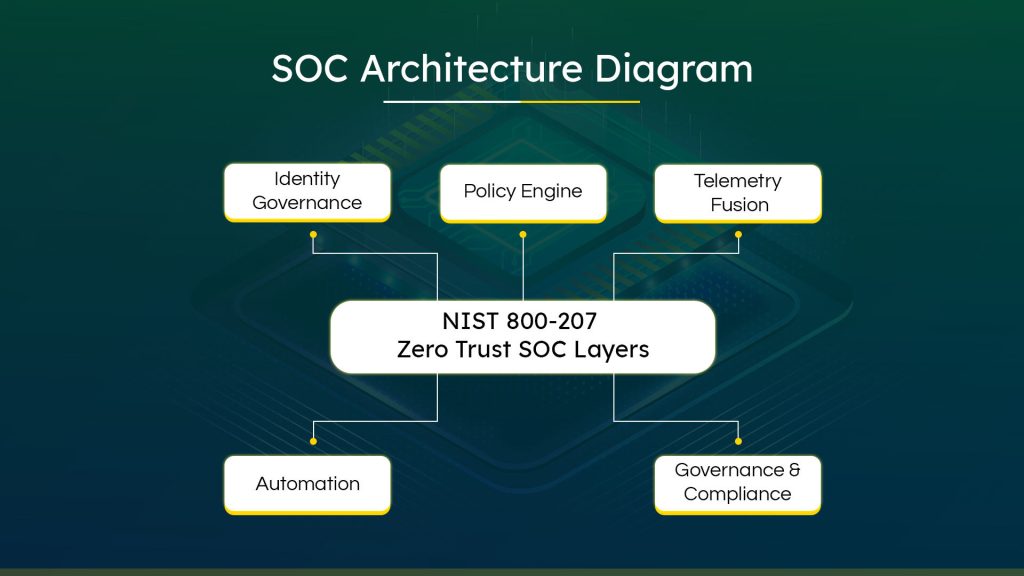
The SOC Architecture of Tomorrow — AI-Ready and NIST-Aligned
Zero Trust functions as an operational fabric woven into every SOC layer — from identity governance to automated response orchestration.
Unifying Zero Trust With SOC Operations
Zero Trust thrives when integrated within existing SOC ecosystems — not layered on top as a parallel system. Three integration pathways deliver the most immediate operational lift.
SIEM / XDR Fusion
Platforms like Splunk, QRadar, and Azure Sentinel can ingest Zero Trust telemetry for risk-aware alert prioritization — transforming raw identity signals into actionable, correlated threat intelligence.
Managed Detection & Response (MDR)
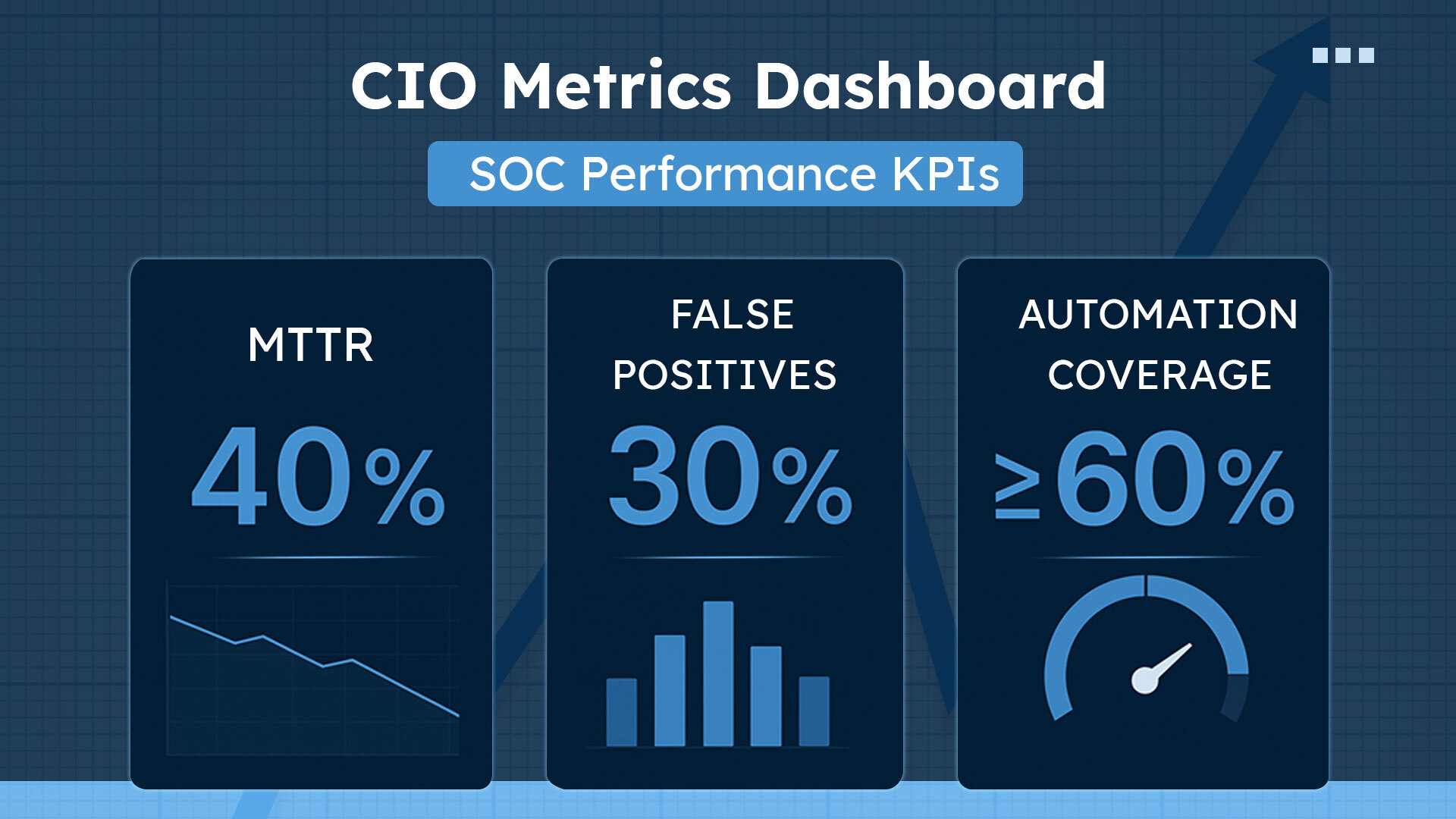
Modern SOC providers embed Zero Trust logic to automatically revoke session tokens when credentials are compromised — reducing MTTR by up to 40% (CISA Zero Trust Maturity Model, 2025).
Adaptive Automation Layer
Adaptive playbooks adjust access in real time based on behavioral anomalies — improving containment speed and maintaining governance continuity without manual analyst intervention.
Quantifying ROI and Governance Value
From a leadership lens, Zero Trust is both a security imperative and a governance accelerator. Four measurable ROI levers give CIOs the language to justify investment to boards.
Operational Efficiency
Incident recovery time reduced by 35% through automated containment and orchestrated response playbooks.
Tool Rationalization
Telemetry unification via XDR eliminates redundant point tools — consolidating spend without sacrificing coverage.
Analyst Productivity
Tier-1 alert automation frees analyst capacity for high-value threat hunting and complex investigation work.
Compliance Assurance
Continuous verification ensures auditable controls across PDPA, GDPR, ISO 27001, and NIST CSF 2.0 — always ready for review.
Zero Trust SOC Readiness Checklist
Five foundational integration steps CIOs should validate before 2026 planning cycles close.
Core Integration Steps
- ZTNA integration across hybrid and cloud workloads — no standing access, verified sessions only.
- SIEM/XDR telemetry fusion for centralized, cross-layer visibility across endpoint, network, and cloud.
- Identity federation and JIT access controls implemented with behavioral analytics for continuous validation.
- Automation coverage embedded in SOC playbooks — triage, containment, and revocation without human delay.
- Continuous compliance monitoring via dashboards — PDPA, GDPR, ISO 27001, and NIST CSF 2.0 aligned.
AI and Autonomous SOC Evolution
- Machine learning models correlating telemetry across identity, endpoint, and network domains simultaneously.
- Predictive anomaly isolation before exploitation — threat modeling without waiting for an alert.
- Self-healing response orchestration with minimal human intervention for known attack patterns.
Zero Trust Is Not a Destination — It’s a Continuous Evolution
To stay ahead, CIOs must treat SOC modernization as a journey of constant validation and optimization, anchored in identity, automation, and governance. The architecture exists. The frameworks are defined. The gap is implementation discipline.
SOC Automation in Action — A CIO’s Zero Trust Playbook
Benchmark your SOC’s resilience, coverage, and compliance posture against 2026 standards — and build the roadmap to AI-assisted autonomous operations.
Download the Playbook →
Ready to Build a Zero Trust–Aligned SOC?
Softenger’s cybersecurity specialists can assess your current posture, map gaps against NIST 800-207 and CISA benchmarks, and deliver a Zero Trust roadmap aligned to your 2026 compliance requirements.