
Upgrading to Dynamics 365
for Operational Excellence
An Abu Dhabi holding company with 11 diverse subsidiaries was running on AX 2012 R3 — a legacy system that could no longer support the conglomerate’s financial complexity, block new acquisitions from being integrated quickly, or provide the real-time analytics the business needed to make informed decisions. Softenger delivered the functional and technical consulting to move them to Dynamics 365.
Dynamics 365 Upgrade —
Abu Dhabi Conglomerate
A conglomerate that had outgrown
the system built for a simpler time
AX 2012 R3 was a capable ERP when it was implemented. But a holding company that has since grown to 11 diverse subsidiaries — with more acquisitions in view — has different requirements from the system that served it a decade ago. Financial consolidation across entities, real-time reporting for leadership decisions, and the ability to onboard a newly acquired company without a six-month integration project: none of these were things AX 2012 R3 was built to do at the pace a modern conglomerate demands.
The situation was compounded by an increasingly uncomfortable reality: AX 2012 R3 is end-of-life. Running a holding company’s financial and operational backbone on unsupported software isn’t just an inconvenience — it’s a compliance risk, a security exposure, and a gap in the governance framework of a business that answers to multiple stakeholders across 11 companies.
A comprehensive digital transformation to support a complex and growing business landscape. Upgrade from AX 2012 R3 to Dynamics 365, re-architect workflows for the D365 ecosystem, implement Finance and Operations and Retail modules, and deliver real-time analytics — all coordinated across 11 diverse entities.
System Limitations — AX 2012 R3 No Longer Fit for Purpose
The legacy system’s outdated features could not meet the conglomerate’s operational demands or manage its financial complexities effectively — multi-entity consolidation, cross-company transactions, and the reporting depth required by a holding company’s finance team.
ERP Limitation · Financial ComplexityOperational Inefficiencies Across Manual Processes
Manual processes, performance bottlenecks, and growing data volumes were hindering productivity across the group. Work that should have been automated — approvals, reconciliations, reporting — was consuming time that should have been spent on higher-value decisions.
Process Automation · ProductivityNew Acquisitions Difficult to Integrate
The legacy system struggled to integrate new entities efficiently. Each acquisition required lengthy customisation and integration work before it could operate within the group’s IT environment — slowing the holding company’s ability to realise value from acquisitions.
Scalability · Acquisition IntegrationEnd-of-Life Software Carrying Compliance and Security Risk
Running unsupported software introduced vulnerabilities, compliance gaps, and operational risks that a regulated holding company cannot carry. Without Microsoft support, the system was receiving no security patches — and every day it ran was a day those exposures compounded.
Security Risk · Compliance · End of LifeReal-Time Analytics and Advanced Financial Tools Absent
The conglomerate’s leadership needed real-time data for informed decision-making — forecasting, cross-entity performance visibility, retail analytics. AX 2012 R3 provided none of this natively, and the workarounds in place were unreliable and slow.
Analytics · Reporting · Decision IntelligenceWhat the upgrade from
AX 2012 R3 to Dynamics 365 actually changed
This was not a version update — it was a platform generation change. AX 2012 R3 is an on-premise, layer-based system. Dynamics 365 is cloud-native, extension-based, and continuously updated by Microsoft. Every capability the conglomerate lacked in AX 2012 R3 exists natively in D365.
On-premise deployment — hardware-constrained, locally managed
Cloud-native on Azure — Microsoft-managed, always current
Batch reporting only — no real-time data visibility
Real-time analytics via built-in Power BI integration
Manual approval and reconciliation workflows throughout
Automated workflows — approvals, reconciliations, notifications
Layer-based customisation — upgrades break every modification
Extension-based — customisations survive platform updates
New entity onboarding: lengthy bespoke integration per acquisition
Multi-entity architecture — new subsidiaries onboarded within the platform
End-of-life — no Microsoft support, no security patches
Microsoft-supported — continuous updates, compliance-ready
Four workstreams — upgrade, consult, implement, govern
An ERP upgrade across 11 companies is not a technical project with business stakeholders observing from the side. It is a business transformation program that requires technical delivery, functional expertise, data management, and active governance — all running simultaneously. Softenger owned all four.
Upgrade & Optimization
Transitioned the conglomerate from AX 2012 R3 to Dynamics 365 — not a lift-and-shift, but a deliberate re-architecture that replaced legacy processes with their D365-native equivalents.
- Transitioned to D365 leveraging advanced cloud-based features
- Re-architected critical workflows for optimal efficiency and accuracy in the D365 ecosystem
- Automated manual processes that had been running on human effort — reducing error rates and boosting productivity
- Legacy AX customisations evaluated, rebuilt as D365 extensions where required
Technical & Functional Consulting
Designed the upgrade roadmap and managed the data migration — the two workstreams that determine whether an ERP transition delivers a working system or inherits the previous system’s problems in a new interface.
- Tailored upgrade roadmap designed for the conglomerate’s specific operational requirements across 11 entities
- Data migration strategy covering profiling, cleansing, validation, and transfer
- D365 integrated with existing systems across the group for a cohesive IT environment
- Functional design aligned to the holding company’s finance and retail operations model
Advanced Module Implementation
Finance and Operations and Retail — the two modules that address the conglomerate’s core operational complexity. Both deployed with the configuration and integration required for a multi-entity conglomerate, not a single-company implementation.
- Finance and Operations deployed to address multi-entity financial consolidation, cross-company transactions, and compliance reporting
- Retail module implemented for the group’s retail operations — POS integration, inventory, and retail analytics
- Real-time analytics and reporting configured — Power BI integration for leadership dashboards
- Advanced financial tools providing forecasting and planning capabilities that didn’t exist in AX 2012
Governance & Oversight
With 11 entities, multiple vendors, and a holding company stakeholder group expecting a coordinated outcome — governance wasn’t a supporting function. It was the mechanism that kept the program coherent.
- Strategic advisory aligning stakeholder objectives across the holding company and its subsidiaries
- Progress monitoring and quality compliance throughout the program
- Central coordinator between vendors — single point of accountability for program outcomes
- Scope and decision management ensuring entity-specific requirements didn’t fragment the program
Why the Governance workstream was the differentiating factor
Most ERP upgrade failures aren’t technical — they’re coordination failures. When the technical team, the functional consultants, the entity-level stakeholders, and the third-party vendors are all operating without a single coordinating authority, decisions get made in isolation, scope creeps entity by entity, and the integration layer becomes a patchwork of point-to-point fixes. Softenger’s Governance workstream prevented that by acting as the central authority on scope, decisions, and vendor coordination from day one of the program.
Two modules — each solving
a different dimension of the conglomerate’s complexity
Finance and Operations addressed the holding company’s financial management and multi-entity operational requirements. Retail addressed the group’s customer-facing commercial operations. Neither was a standard out-of-box deployment — both required configuration and integration specific to an 11-company conglomerate in Abu Dhabi.
Finance & Operations
The core of the conglomerate’s financial and operational management — multi-entity consolidation, compliance, and the real-time financial intelligence the holding company needed to govern 11 subsidiaries.
- Multi-entity financial consolidation — consolidated P&L, balance sheet, and cash flow across all 11 companies
- Cross-company transactions and intercompany accounting automated within the platform
- Advanced financial reporting with real-time Power BI dashboards for holding company leadership
- Automated approval workflows replacing manual financial process chains
- Compliance frameworks aligned to UAE regulatory requirements — audit trails and reporting built in
- Scalable entity onboarding — new acquisitions added to the D365 environment without bespoke integration projects
The holding company’s finance team gained real-time visibility across all 11 entities — financial close processes accelerated, cross-company transactions automated, and compliance reporting produced without manual consolidation effort.
Retail
The commercial operations layer — connecting the group’s retail entities to a unified platform for POS, inventory, merchandising, and customer analytics that AX 2012 R3 could never provide.
- Unified point-of-sale integration across the conglomerate’s retail locations
- Real-time inventory management — stock visibility across locations and warehouses
- Merchandising and pricing management centralised within D365
- Customer loyalty and engagement data unified across retail entities
- Retail analytics — sales performance, basket analysis, and forecasting available in real time
- Omnichannel capability — online and in-store operations managed within the same platform
The group’s retail operations moved from fragmented, entity-by-entity reporting to unified commercial visibility — enabling the holding company to make merchandising and inventory decisions based on group-wide data rather than consolidated spreadsheets.
What the conglomerate had
when D365 went live across all 11 entities
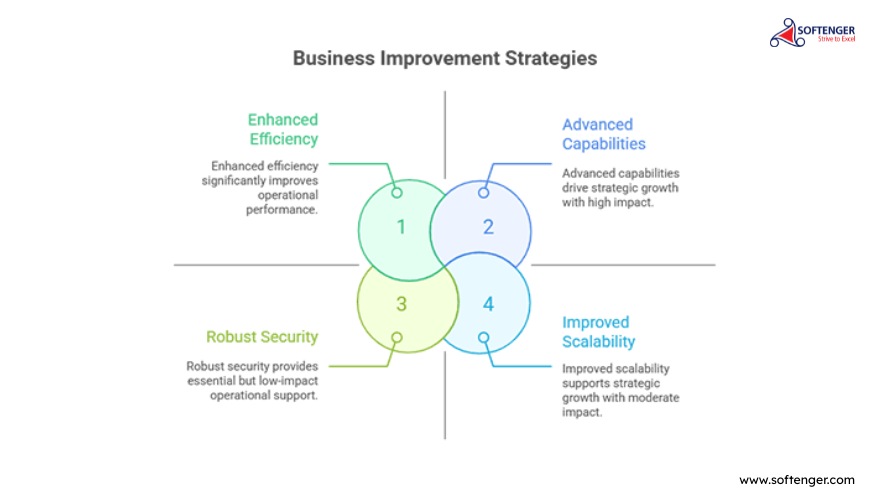
Five outcomes — each measuring a different dimension of what changes when an Abu Dhabi conglomerate moves from an end-of-life ERP to a cloud-native platform designed for its scale of complexity.
Streamlined Workflows & Automated Operations
Automated workflows and streamlined processes eliminated redundancies and manual tasks that had been consuming capacity across the group. Approval chains, reconciliations, and reporting that previously required human intervention now run within D365.
New Entities Onboarded Within the Platform
Seamless integration of new entities into the D365 environment supports the holding company’s acquisition strategy. New subsidiaries can now be onboarded within the platform framework rather than through bespoke integration projects for each acquisition.
Real-Time Data for Strategic Decision-Making
Real-time data insights enabled better forecasting and planning across the group. The holding company’s leadership now has unified visibility across all 11 entities — financial performance, retail analytics, and operational data available in dashboards rather than monthly consolidated reports.
Compliance with Modern Standards — Risk Eliminated
Migration from an end-of-life, unsupported system to Microsoft-maintained Dynamics 365 eliminated the security vulnerabilities and compliance gaps that AX 2012 R3 carried. The conglomerate’s IT governance framework is now built on a platform with continuous security updates and regulatory alignment.
Coordinated Program Delivery Across 11 Entities
A dedicated project consultant ensured timely delivery and effective coordination between the holding company, its subsidiaries, and all third-party vendors involved in the program. Decisions were made consistently, scope was governed centrally, and the program completed without the fragmentation that commonly derails multi-entity ERP upgrades.
Key Takeaways
Two specific insights from this engagement that apply to any complex ERP upgrade. First — data migration complexity requires a strategy, not just a tool: the validated migration approach ensured the conglomerate’s legacy data landed in D365 clean, structured, and trustworthy. Second — legacy customisations cannot be migrated as-is: re-architecting AX 2012 R3 features for the D365 ecosystem ensured the conglomerate got cloud-native capability rather than cloud-hosted legacy problems.
Every engagement follows
the AOTS framework
The D365 upgrade was structured around Softenger’s AOTS model. The Advise phase was where the most consequential decisions were made — specifically, the decision not to migrate AX 2012 R3 customisations directly, but to map each one against D365 native capability first. This single Advise-phase decision prevented the program from becoming a cloud-hosted version of the conglomerate’s legacy system rather than a genuine platform upgrade.
The Optimize phase built the data migration strategy and tested it against a subset of entities before full deployment. The Transform phase rolled out D365 across all 11 companies. The Support phase keeps the platform current — and in a continuously-updated cloud ERP, that means staying ahead of the platform’s evolution, not just maintaining the status quo.
Advise
Assessed AX 2012 R3 estate across all 11 entities. Mapped legacy customisations to D365 equivalents. Designed upgrade roadmap. Established governance model for multi-vendor, multi-entity program.
Re-architecture strategy agreed. Data migration approach defined. Governance framework established. Stakeholder alignment confirmed across holding company and subsidiaries.
Optimize
Data profiled, cleansed, and validated across entities. D365 configured and tested for Finance & Operations and Retail. Integration with existing systems verified. UAT executed with entity stakeholders.
Clean data ready for migration. Module configurations UAT-approved. Integration points confirmed. All 11 entities signed off on their operational design.
Transform
D365 deployed across all 11 entities. Finance & Operations and Retail modules live. Real-time analytics and reporting operational. Multi-entity workflows automated. AX 2012 R3 decommissioned cleanly.
Full D365 go-live across the conglomerate. Both modules operational. Holding company leadership accessing real-time group dashboards from day one.
Support
Ongoing platform support as D365 evolves. New entity onboarding as the conglomerate acquires. Continuous optimisation of workflows and analytics as the business requirements develop.
D365 running across 11 entities. Platform supported and current. Conglomerate positioned for acquisition-driven growth without ERP integration delays.
The AOTS model is applied to every Softenger engagement
ERP upgrades, datacenter migrations, SOC operations, product support — Advise, Optimize, Transform, Support structures every engagement Softenger delivers, from the first conversation to ongoing operations.
Questions about Dynamics 365 upgrades for conglomerates
 Application Support
Implementing 24×7 IT Process Automation Support
A USA-based automation product company moved from 12×5 borrowed R&D support to a dedicated 24×7 L2 team — serving 200+ global customers with 70% cost reduction and 98% resolution rate.
 IT Infrastructure
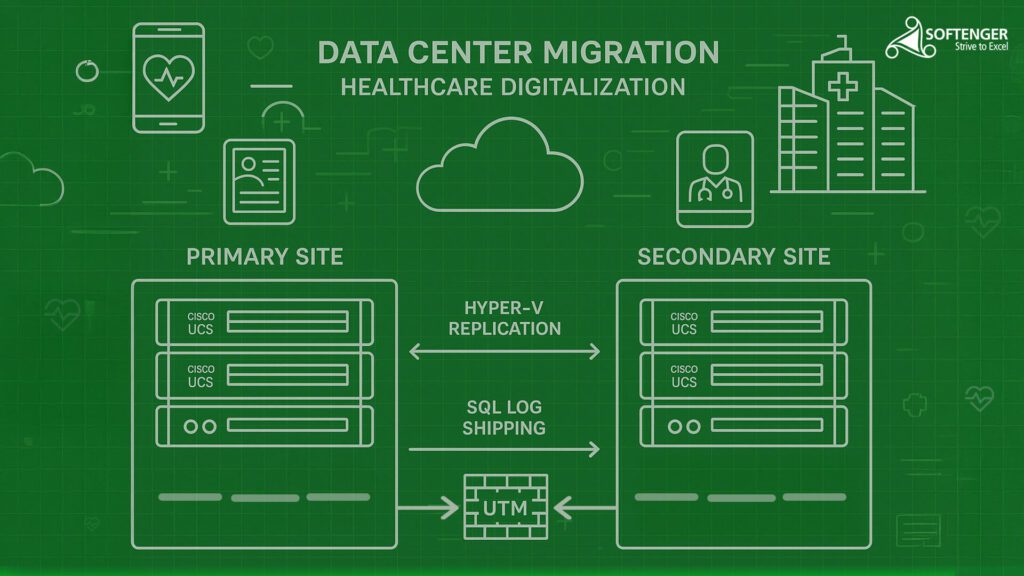
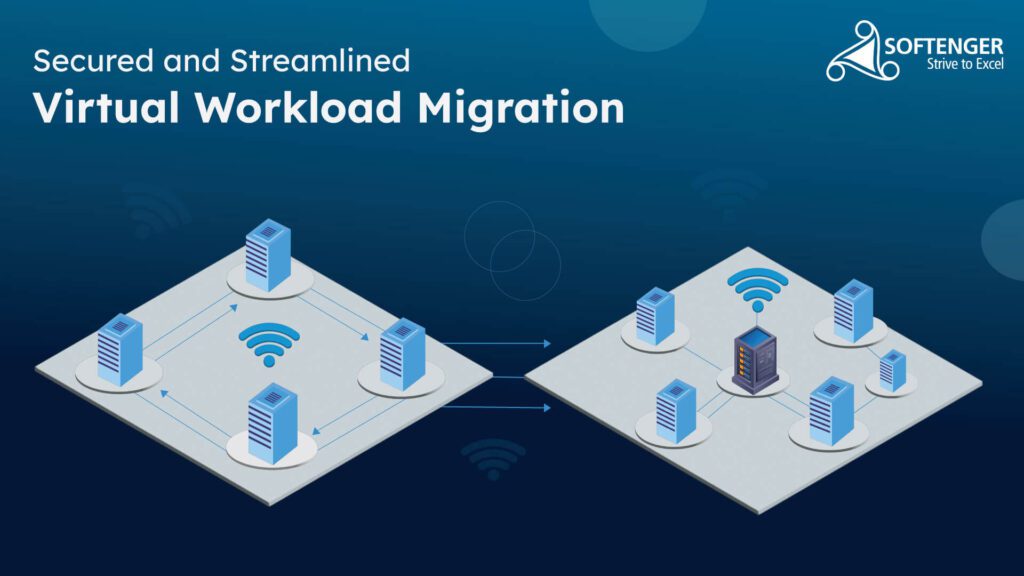
Datacenter Migration & Secondary Site Deployment
200+ virtual machines, 15+ databases, and 20+ critical applications migrated to a new Cisco UCS secondary site for a leading healthcare diagnostic entity — zero disruption to operations.
 Security Operations
Enhancing Security Operations Efficiency
Softenger assumed full SOC infrastructure engineering ownership — freeing a global technical services firm’s SecOps team to focus entirely on core security product work across a multi-cloud environment.
Tell us what your current
system can’t do — and we’ll
show you what D365 can.
Whether it’s an AX 2012 R3 upgrade, a Dynamics 365 implementation from scratch, or an ERP consolidation across multiple entities — Softenger brings the functional knowledge, technical delivery capability, and governance experience to run it properly. A conversation with one of our enterprise application specialists starts with your current system and your business requirements, not a product catalogue.
🧩 Discuss a Dynamics 365 Project
ISO 27001 certified. Your information is handled securely and never shared.