Implementing 24×7
IT Process Automation
Support for a Niche Infrastructure Product
A USA-based IT automation product company was running support with borrowed development and R&D engineers — 12 hours a day, 5 days a week, for a global customer base that needed coverage around the clock. Softenger built the dedicated support function they never had: a 24×7 Level 2 team that resolved 98% of issues without touching R&D — and cut operational costs by 70%.
24×7 Product Support —
IT Automation Solutions, USA
When your engineers are doing
support instead of engineering
For a niche infrastructure automation product, every customer issue is also a product knowledge test. The engineering and R&D teams understand the product at the code level — so when something goes wrong, they get the call. What starts as a stopgap becomes a structural problem: your best engineers are now your support function, spending hours on customer queries that pull them off the product work that keeps you competitive.
The client’s support model had reached exactly that point. A 12×5 coverage window that borrowed from development and R&D meant inconsistent response, gaps across global time zones, and an engineering team that was permanently on call for a customer base spread across multiple continents. Softenger was brought in to build the dedicated support function the product had outgrown its own capacity to run.
Establish a true 24×7 support system to cater to 200+ global customers. Reduce dependency on R&D and development teams for customer support. Optimize operational costs while maintaining high-quality service for a technically complex, niche infrastructure automation product.
12×5 Coverage Leaves Every Other Hour Unattended
For a product with 200+ global customers across multiple time zones, a 12-hour, 5-day support window means a significant portion of customer business hours aren’t covered. Issues raised outside the window wait. In infrastructure automation — where a failed job or a blocked workflow affects production — that wait has a direct business cost.
Global Coverage Gaps · Timezone RiskDevelopment and R&D Are the Wrong People to Run Support
Borrowing engineers from development and R&D to handle support is a compounding inefficiency. Engineers paid to build the product are handling queries that don’t require code-level knowledge. The product development timeline slips. The engineers burn out on reactive work. And support is still inconsistent because the people doing it aren’t focused on it.
R&D Capacity Drain · Engineering Cost of SupportNo Dedicated Infrastructure Means No Consistent Customer Experience
Without a dedicated support team, structure, and tooling, every issue is handled differently depending on which engineer happened to be available. Customers experience variance — in response time, in depth of investigation, in resolution quality. For a product sold on reliability, that variance is a commercial risk.
Inconsistent Support · No Dedicated InfrastructureFrom 12×5 borrowed resources
to 24×7 dedicated L2
The transition wasn’t a single switch — it was a deliberate, phased build. Phase 1 established coverage and product expertise. Phase 2 deepened capability and extended hours. Each stage was only entered when the previous one was stable. This sequencing is why the engagement delivered a 98% L2 resolution rate: the team earned it progressively, not by declaration.
Four capabilities that made
24×7 L2 support possible
Running L2 support for a niche infrastructure automation product requires more than headcount. It requires product knowledge deep enough to resolve complex issues without going back to the people who built it. Softenger built that knowledge systematically — and built the operating infrastructure around it that made 24×7 sustainable.
-
Rapid Product Onboarding on a Niche Platform
Softenger onboarded and trained on the infrastructure automation product quickly — a capability that required immersion in both the product’s architecture and its most common failure patterns. Starting at L1 wasn’t a limitation — it was the training mechanism. Every issue resolved at L1 built the product knowledge needed to operate at L2.
-
Phased Transition: 15×7 L1 → 24×7 L2
The support capability was built in two phases rather than a single implementation. The 15×7 L1 phase established consistency, product familiarity, and the trust of the client’s customer base before expanding hours and capability. The 24×7 L2 model was earned through the L1 phase, not declared from the outset.
-
Structured R&D Escalation Channels
The 2% of issues that required R&D involvement were handled through documented, efficient escalation channels — specific protocols, shared tooling, and agreed response SLAs. Escalation was targeted and fast, not a default fallback. R&D engineers handled only what genuinely required their involvement.
-
Dedicated Support Infrastructure — No Borrowed Resources
From Phase 1 onwards, every person handling a customer issue was a dedicated Softenger support specialist — trained on the product, measured on support outcomes, and available when the customer needed them. The inconsistency of the borrowed-resource model was eliminated from day one of Softenger’s involvement.
L1 → L2 → R&D Escalation Model
Standard Queries & Known Issues
Configuration guidance, documented error resolution, product usage questions, standard diagnostic walkthroughs. First contact resolution on all well-documented scenarios.
Complex Issues — No R&D Required
Advanced product configurations, integration troubleshooting, non-standard deployment scenarios, root cause analysis. Resolves 98% of all customer issues including technically complex ones.
Genuine Product Defects Only
Code-level defects requiring a product fix, or entirely undocumented behaviour outside known product scope. Structured escalation channels — R&D involvement is targeted, not default.
More support, fewer hours wasted,
lower cost than before
The counterintuitive result — going from 12×5 to 24×7 support while cutting costs by 70% — is only counterintuitive if you’re measuring the wrong thing. The original model wasn’t cheap. It was expensive in the most hidden way possible: engineering time.
Development and R&D engineers don’t stop being expensive when they’re handling support calls. They’re paid for their expertise, and their expertise was being consumed by work that dedicated support specialists could do — often faster, because support specialists build pattern recognition on customer issues that engineers never develop from periodic involvement.
Softenger’s offshore delivery model then applies a further cost efficiency: the same L2 capability, structured and dedicated, at a cost base that doesn’t carry the overhead of a USA-based in-house round-the-clock roster. The result is a support function that does more, costs less, and frees the people who were previously doing it to do the work they should have been doing all along.
Operational Cost Reduction
The combined effect of removing engineering time from the support function and replacing it with a dedicated, structured, offshore delivery model. The same quality of outcome at a fraction of the blended cost of R&D-staffed support.
Engineering Time Recovered
Every hour removed from the support rotation is an hour returned to the product roadmap. For a niche automation product competing on innovation, R&D capacity is the primary competitive asset — not one to be consumed by reactive support work.
Coverage Expanded, Cost Reduced
The final model covers twice the hours of the original — all time zones, all days — at 30% of the operational cost. This is what a purpose-built support function delivers that a borrowed-resource model structurally cannot: more for less, consistently.
What the client had when
the 24×7 L2 model went live
Three outcomes — each measuring a different dimension of the problem that was solved: coverage, cost, and customer experience.
Fully Functional 24×7 Support Organization
- True 24×7 L2 support organization operational — all time zones covered for 200+ global customers
- Phased transition from 12×5 to 15×7 to 24×7 — each stage stable before the next was entered
- Dedicated support team with deep product expertise — no borrowed resources, no coverage gaps
- Consistent customer experience across all hours and all support tiers
70% Reduction in Operational Support Costs
- Operational costs reduced by 70% through dedicated support team structure and offshore delivery model
- R&D and development engineers freed entirely from support responsibilities
- Engineering capacity returned to product development — roadmap velocity restored
- Scalable support model — cost doesn’t scale linearly with customer growth
Improved Customer Satisfaction & 98% L2 Resolution
- 98% of customer issues resolved by Softenger’s L2 team — R&D escalation reserved for genuine product defects
- Prompt, consistent issue resolution across all customer geographies and time zones
- Structured R&D escalation channels ensure the 2% requiring engineering involvement are handled efficiently
- Customer satisfaction improved through predictable, high-quality support delivery
Key Takeaway
This engagement demonstrates Softenger’s capability to rapidly scale support operations for technically complex, niche products. By transitioning to a 24×7 L2 support model — built in deliberate phases and grounded in genuine product expertise — Softenger delivered significant cost savings and operational efficiency, empowering the client to meet the needs of their global customer base without sacrificing the engineering capacity the product’s continued development requires.
Every engagement follows
the AOTS framework
The 24×7 support build followed Softenger’s AOTS model — and the Support phase of the framework is, in this engagement, the entire point. The Advise phase identified the sequencing: build L1 first, earn product knowledge through real issues, then move to L2 once the team was ready. Rushing to 24×7 L2 on day one would have created a team that over-escalated to R&D — defeating the primary objective.
The Optimize phase refined the escalation protocols and support tooling. The Transform phase implemented the 24×7 L2 model. And the ongoing Support phase is where this engagement lives — a continuously operating support function that gets better as the team’s product knowledge deepens with every issue resolved.
Advise
Assessed the client’s support model, customer base, and product complexity. Defined the phased approach — 15×7 L1 first, then 24×7 L2. Established that knowledge must be earned before escalation rights are reduced.
Phased transition plan agreed. Product onboarding scope defined. R&D escalation protocols designed before go-live.
Optimize
Softenger team onboarded and trained on the niche automation product. Support tooling and documentation established. 15×7 L1 launched. Escalation channels with R&D tested and refined under real issue load.
15×7 L1 live and stable. Product knowledge base built from real customer issues. Escalation model validated.
Transform
Transition from 15×7 L1 to 24×7 L2 executed. Team expertise at the level required to resolve 98% of issues without R&D. Client’s development and R&D teams fully removed from the support rotation.
24×7 L2 operational. R&D freed. 70% cost reduction achieved. 200+ customers covered around the clock.
Support
Ongoing 24×7 L2 support operations — the primary deliverable of this engagement. Product knowledge continues to deepen. Escalation rate continues to decrease. Support quality improves as the team builds pattern recognition across customer issues.
This phase is the engagement. Continuous 24×7 L2 support for 200+ global customers — running, improving, and scaling.
The AOTS model is applied to every Softenger engagement
Whether the work is datacenter migration, network change management, SOC infrastructure, or product support — Advise, Optimize, Transform, Support provides the structure. The discipline is constant; the application is specific to what each client needs.
Questions about 24×7 product support operations
 Security Operations
Enhancing Security Operations Efficiency
Softenger assumed full SOC infrastructure engineering ownership for a global technical services firm — freeing their SecOps team to focus on core security product work across a multi-cloud environment.
 IT Automation
Windows Automation for AD, MSSQL & Oracle
Three parallel automation modules delivered for a banking client — Active Directory stale ID cleanup, MSSQL monitoring, and Oracle daily healthchecks — using PowerShell and Shell scripting.
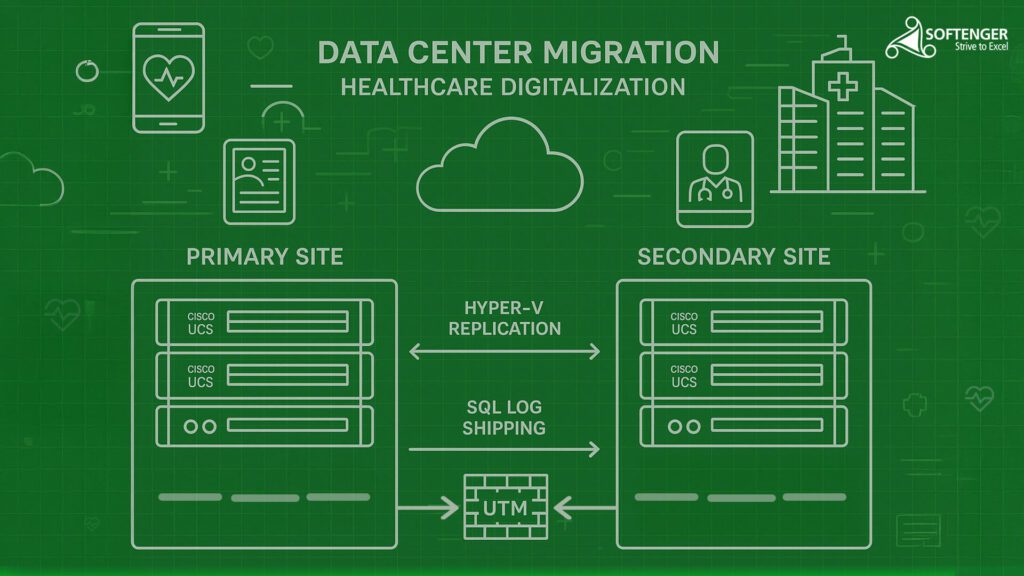 IT Infrastructure
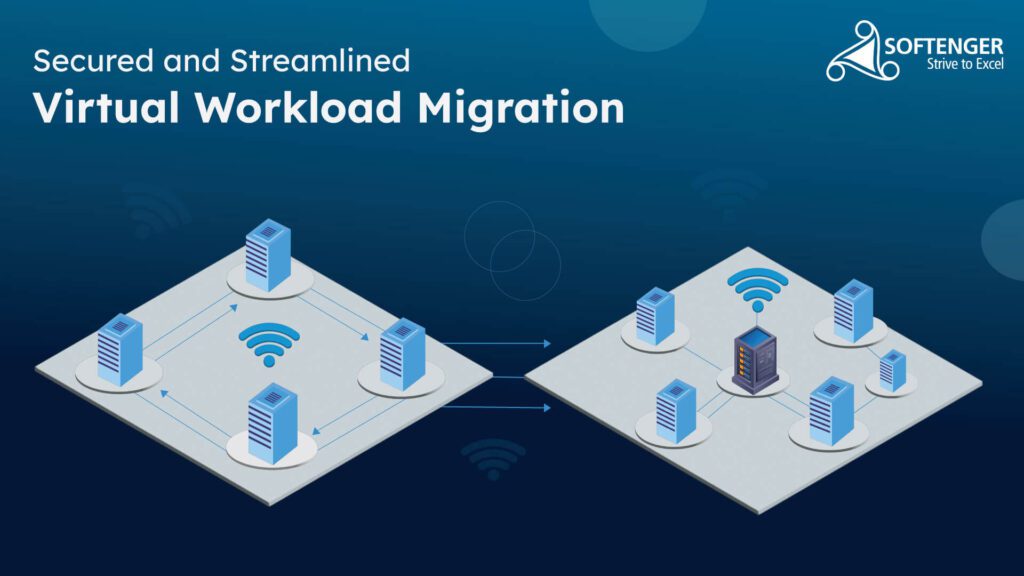
Datacenter Migration & Secondary Site Deployment
200+ virtual machines, 15+ databases, and 20+ critical applications migrated to a new Cisco UCS secondary site for a healthcare diagnostic entity — with zero disruption to operations.
Tell us what your engineers
are doing instead of
building your product.
If your development or R&D team is handling customer support — even part of the time — that’s the problem to solve first. Softenger builds dedicated product support functions for technically complex products: from onboarding and training through to 24×7 L2 operations that free your engineering team to stay focused on what they were hired to do. A conversation with one of our product support specialists starts with your current support model, not a service catalogue.
⚙️ Discuss a Product Support Challenge
ISO 27001 certified. Your information is handled securely and never shared.