
Remote IT infrastructure services built for supply chains that can’t stop moving
Softenger delivers 24/7 remote IT infrastructure management purpose-built for logistics and supply chain enterprises — covering WMS, TMS, ERP, NOC operations, SOC cybersecurity, IoT and fleet IT, GDPR and CTPAT compliance, and cloud/hybrid environments. One operations team. One SLA. Every warehouse, every hub, every route, every hour. ISO 27001:2022 certified.
Warehouse, fleet, and EDI systems don’t get a maintenance window.
WMS, TMS, and ERP downtime halts entire supply chains — every minute has a cascading consequence
In logistics, IT is the operational backbone. A warehouse management system outage halts picking and despatch. A TMS failure loses shipment visibility across a global network. An ERP integration break stops procurement. These aren’t IT service interruptions — they are supply chain events with measurable financial and customer satisfaction consequences.
Distributed warehouse and hub infrastructure creates fragmented IT visibility across geographies
Managing IT health across 50 to 500 warehouses, fulfilment centres, cross-dock facilities, and last-mile hubs — across multiple countries — without centralized monitoring means every IT incident starts with a phone call from an operations manager, not a NOC alert. The time between an IT failure and detection is measured in the shipments that don’t move.
IoT, fleet, and RFID data streams demand infrastructure that scales with real-time operational demands
Connected vehicles, RFID scanners, GPS trackers, and warehouse IoT sensors generate constant, high-volume data streams that require always-on infrastructure and real-time data pipeline integrity. When fleet telematics fail or RFID scanner networks degrade, supply chain visibility disappears — and operational decisions are made blind.
Sensitive shipment, partner, and customer data face GDPR, CTPAT, and customs compliance obligations simultaneously
Logistics enterprises handling cross-border shipments manage overlapping data protection and trade compliance obligations — GDPR for European operations, C-TPAT for US customs security, ISO 28000 for supply chain security management, and regional customs data requirements. Managing these simultaneously without embedded IT monitoring creates the compliance gaps auditors find.
Legacy logistics platforms and on-premises infrastructure block real-time integration and modernization
Many logistics enterprises still operate WMS and TMS platforms designed for a pre-cloud era of supply chain management — on-premises infrastructure that struggles to integrate with cloud-native visibility platforms, e-commerce order management systems, and the real-time data expectations of modern supply chain partners.
Three infrastructure service domains logistics operators call on most
Managing logistics IT is not about keeping servers online. It is about three distinct operational mandates that generic managed IT providers — designed for office-based corporate environments — are structurally unsuited to fulfil at logistics scale.
The first is operations continuity: WMS, TMS, and ERP systems must match the uptime expectations of a warehouse operating 24/7 across multiple shifts — not the uptime expectations of a corporate HR application. The second is real-time visibility: the IoT, fleet, and data pipeline infrastructure that generates supply chain visibility must be monitored end-to-end, because visibility gaps translate directly to operational decisions made without current data. The third is integration health: the pipelines connecting WMS, TMS, ERP, e-commerce platforms, carrier APIs, and customs systems are the operational nervous system of a modern logistics enterprise — and they must be monitored as carefully as the systems they connect.
Softenger’s logistics RIM is built around all three mandates — not two of three, and not one with the others treated as afterthoughts.
Operations Continuity
24/7 NOC monitoring of WMS, TMS, ERP, and all supporting logistics IT under operations-critical SLA tiers. Proactive anomaly detection before warehouse or delivery operations are impacted. Centralized visibility across all facilities from one operations center.
Security & Compliance Operations
24/7 SOC coverage with logistics and supply chain threat intelligence. GDPR, CTPAT, and ISO 28000 compliance monitoring embedded as system outputs from day one. Shipment data access controls and partner data protection continuously monitored.
Cloud & Integration Health
IoT and fleet data platform management, WMS-to-TMS and TMS-to-ERP integration pipeline monitoring, cloud and hybrid infrastructure operations, and last-mile platform availability — all managed as operations-critical environments, not background IT.
Three engagement models. Scoped to what your logistics stack actually needs
Softenger’s logistics RIM operates across three distinct service domains — each with its own SLA model, compliance requirements, and operational discipline. Together they cover the full supply chain IT stack from warehouse floor to cloud analytics platform.
Operations Continuity NOC
Softenger’s logistics NOC monitors WMS, TMS, ERP, and all supporting IT infrastructure 24/7 — with SLA tiers calibrated to the operational urgency of logistics, not corporate IT service windows. A WMS outage during peak picking hours or a TMS failure during live shipment tracking is a P1 event that reaches an engineer in under five minutes — not a ticket processed in standard queue order.
3PLs, freight forwarders, e-commerce fulfilment operators, and logistics enterprises where WMS, TMS, or ERP downtime has a direct, measurable consequence on delivery SLAs and customer satisfaction — and where reactive IT support is operationally unacceptable.
- 99.99% uptime on WMS, TMS, ERP, and operations-critical systems
- Logistics IT incidents detected before operations managers notice
- 40% faster incident resolution vs. reactive support models
- Single NOC view across all warehouses and hubs — no per-facility dashboards
- Monthly uptime and incident trend reports for all facilities
Security & Compliance Operations
Logistics enterprises handling cross-border shipments, partner data, and customer information face overlapping compliance obligations — GDPR for European data, C-TPAT for US customs security, ISO 28000 for supply chain security management. Softenger’s logistics SOC addresses these with continuous monitoring, shipment data access controls, and threat intelligence covering the supply chain attack surface — from insider threats to cargo theft analytics.
Cross-border logistics operators, freight forwarders, and 3PLs handling sensitive shipment data, partner trade information, and customer records across multiple regulatory jurisdictions — where GDPR, CTPAT, and customs compliance must be maintained continuously.
- Continuous GDPR and CTPAT compliance posture — audit-ready always
- Shipment and partner data anomalies detected in real time
- Ransomware and insider threat detection for logistics IT environments
- ISO 28000 compliance monitoring and audit-ready documentation
- Monthly security posture and compliance reports
Cloud & Integration Health Management
Modern logistics operations depend on real-time data flowing reliably between WMS, TMS, ERP, carrier APIs, IoT devices, and cloud analytics platforms. Softenger monitors the integration pipelines between these systems as first-class targets — because a data pipeline failure doesn’t announce itself, it quietly removes visibility from operations decisions that depend on current information to keep deliveries on time.
Logistics enterprises deploying IoT, real-time tracking, and cloud analytics alongside legacy WMS and TMS — where the integration pipelines between old and new systems carry the operational data that keeps supply chains moving.
- WMS-to-TMS-to-ERP pipelines monitored end-to-end — no blind spots
- IoT and fleet data streams managed as operations-critical infrastructure
- RFID and scanner networks maintained for warehouse operational uptime
- Cloud infrastructure optimised for logistics workload and volume patterns
- DR tested and validated — recovery within operations-aligned RTO
The systems we support across your logistics infrastructure
Softenger’s logistics IT operations run on a toolchain assembled for the supply chain environment — integrating enterprise monitoring platforms with logistics-system-aware alert configurations, IoT data pipeline health checks, and compliance monitoring for cross-border trade data.
Every component in the stack is configured to the logistics monitoring model developed during the Advise phase. WMS and TMS alert thresholds reflect the operational patterns of warehouse and transport operations — not corporate IT defaults. IoT and fleet data pipeline monitoring detects anomalies at the data stream level before they surface as visibility gaps in operational dashboards.
Operations-aware monitoring configuration
Alert thresholds for WMS, TMS, and logistics platforms calibrated to warehouse shift patterns, peak despatch windows, and fleet operational cycles — not set to vendor defaults that generate noise in a logistics environment.
End-to-end integration pipeline monitoring
WMS-to-TMS, TMS-to-ERP, carrier API, and e-commerce order management integrations monitored at the pipeline level — message queue health, API latency, and data completeness tracked before failures cascade into operational decisions made without current data.
IoT and fleet data stream health management
GPS tracking, RFID scanner networks, and fleet telematics platforms monitored as operations-critical infrastructure — real-time data stream integrity maintained so that supply chain visibility never goes dark at the IoT layer.
Six infrastructure services. Delivered wherever your stack runs.
Softenger’s logistics RIM covers the complete technology stack — from warehouse floor IT and fleet infrastructure to cloud analytics platforms and compliance systems — under one operations model with consistent SLAs and a single escalation path.
Warehouse Management Systems
WMS availability monitoring, integration health, and L2/L3 incident response under operations-critical SLA tiers. Picking, put-away, despatch, and inventory management workflows monitored proactively — incidents detected before warehouse operations are impacted.
Transport Management Systems
TMS availability and integration monitoring — shipment planning, carrier management, real-time tracking, and freight cost management platforms managed under operations-critical SLA tiers. TMS failures affecting live shipment visibility never wait in a standard service queue.
ERP & Supply Chain Platforms
ERP platform management covering procurement, inventory, order management, and financial operations — alongside supply chain planning and visibility platforms. ERP-to-WMS and ERP-to-TMS integration pipelines monitored end-to-end as operations-critical data flows.
IoT, Fleet & RFID Infrastructure
Fleet telematics platform availability, GPS tracking system uptime, RFID scanner network health, and IoT edge device monitoring — all managed as operations-critical infrastructure. Real-time data stream integrity maintained so supply chain visibility never goes dark at the IoT layer.
Security & Compliance Operations
24/7 SOC with logistics and supply chain threat intelligence. GDPR shipment data protection, CTPAT customs security compliance, ISO 28000 supply chain security monitoring — all embedded as continuous system outputs, not pre-audit deliverables. Monthly compliance reports standard.
Cloud & Data Integration Infrastructure
Multi-cloud and hybrid infrastructure management, supply chain analytics platform operations, carrier and partner API integration health monitoring, last-mile delivery platform availability, data center operations across facility environments, and backup/DR with logistics-aligned RTO requirements.
Results our logistics clients have shipped
Two documented outcomes from Softenger’s managed IT engagements in logistics and supply chain environments — showing the operational and financial impact of purpose-built logistics IT operations.
Remote IT Infrastructure built for performance, reliability and scale across distributed supply chain operations
A multi-site logistics enterprise operating warehouses and transport hubs across Southeast Asia managed IT on a per-facility model — separate vendors at each location, no centralized monitoring, and reactive incident management that consistently detected WMS and TMS issues after operations managers reported them. IT costs were rising across the facility network while incident response quality was declining due to specialist attrition at individual sites.
Seamless ITSM and application support for a leading technology enterprise — 99.99% application uptime achieved
A leading technology enterprise with supply chain and logistics software operations across multiple regions needed enterprise-grade ITSM and managed IT support for their platform infrastructure. Application downtime was impacting end-user operations and SLA commitments to logistics customers — eroding confidence in the platform's operational reliability at scale.
Three ways to bring us in. One service standard.
Logistics and supply chain enterprises range from regional 3PLs to global integrated logistics providers managing thousands of facilities and millions of daily shipments. Softenger's delivery models match engagement depth to your operational scale today — and scale as your network grows.
Dedicated Offshore Support Center
End-to-end managed logistics IT from Softenger's India-based GSC. 24/7 NOC and SOC coverage across all facilities and systems — at 50%+ lower cost than equivalent in-house capability, with compliance knowledge built in.
- 24/7 NOC and SOC across all warehouses, hubs, and logistics systems
- WMS, TMS, and ERP managed under operations-critical SLA tiers
- 50%+ IT operational cost reduction vs. per-facility or in-house model
- GDPR, CTPAT, and compliance monitoring built in from day one
- Scalable as you add facilities, carrier integrations, or IoT deployments
Hybrid Delivery Model
Offshore GSC for 24/7 monitoring and L1/L2 triage; your IT team retains L3 escalation, vendor management, and operational governance. Softenger extends coverage without displacing the supply chain knowledge your team carries.
- Offshore NOC/SOC for 24/7 monitoring and L1/L2 incident management
- Your team retains L3 escalation, vendor relations, and operations governance
- Structured handover protocols and shared incident management tooling
- Compliance monitoring aligned across onshore-offshore model
- Designed to augment — not replace — existing logistics IT expertise
On-Demand IT Support
Expert logistics IT support for specific initiatives — WMS implementation support, TMS integration, GDPR/CTPAT compliance remediation, new facility IT commissioning, or capacity augmentation during peak season volume spikes.
- No long-term commitment — engage for defined projects or specific scopes
- Full logistics IT expertise across all service domains
- Ideal for WMS/TMS implementations, facility onboarding, or compliance projects
- Transparent scope and billing — clear boundaries on what is covered
- Clear path to a managed service as operational scale increases
Advise — Logistics IT Topology Audit
Infrastructure audit across all facilities — WMS, TMS, ERP, IoT, compliance obligations, and operations criticality tiering. Integration pipeline mapping and GDPR/CTPAT gap identification. Audit drives the monitoring model.
Optimize & Transform — Configure & Go Live
Logistics-calibrated monitoring rules configured and tested. Compliance monitoring activated. First facility cluster onboarded in parallel with existing coverage, validated, and handed to Softenger NOC before the next begins.
Support — 24/7 Operations Active
Full 24/7 NOC and SOC operations live. Monthly compliance and uptime reports delivered. Remaining facilities onboarded by cluster. Quarterly AOTS reviews maintain alignment as your logistics network and systems evolve.
Six reasons logistics operators choose Softenger's IT services over a bolt-on generalist provider
These are operational and structural realities — built into how Softenger engages, monitors, and responds — that determine whether your logistics and supply chain IT infrastructure operates at the availability and integration level your operations and customers demand.
Logistics-native operations — WMS and TMS treated as operations-critical assets, not applications
Softenger's logistics monitoring model classifies WMS, TMS, and ERP systems by their operations impact — not their technical architecture. A WMS outage during peak picking hours is never processed in the same queue as a corporate file server alert. SLA tiers, monitoring rules, and escalation paths reflect logistics operational context.
Integration pipeline monitoring built in — WMS-to-TMS gaps detected before they create visibility blindspots
Softenger monitors integration pipelines between WMS, TMS, ERP, carrier APIs, and IoT platforms as first-class monitoring targets. Pipeline failures are detected at the data layer before they propagate to operational dashboards as missing shipment data — when it's too late to prevent the operational consequence.
24/7 GSC coverage — India-based operations across all time zones, every shift
Softenger's Global Support Center operates continuous shifts. A WMS failure at 2am during a night-shift warehouse operation reaches an engineer in minutes. A TMS outage affecting cross-border shipment visibility at 4am in Dubai doesn't wait for a local IT team to arrive on shift. True 24/7 logistics IT coverage is a shift model.
IoT and fleet infrastructure managed as operations-critical — not generic network devices
GPS tracking platforms, RFID scanner networks, and fleet telematics systems are monitored as operations-critical infrastructure under the same NOC model as WMS and TMS. Real-time data stream integrity is maintained continuously — because when IoT visibility fails, supply chain decisions are made blind.
50% IT cost reduction and 40% faster incident resolution — documented outcomes
Consolidating per-facility vendor coverage into Softenger's offshore delivery model consistently produces 50%+ IT operational cost reduction and 40% faster incident resolution. Logistics enterprises also eliminate the attrition risk where a senior WMS specialist leaves during a peak season — taking system knowledge at the worst possible time.
25 years of enterprise IT delivery — Oracle, SAP, VISA, and Reliance Jio among our clients
Softenger has delivered managed IT to Oracle, SAP, VISA, Kotak Bank, and Reliance Jio for 25 years. The operational discipline, SLA rigour, and delivery standards built for these global enterprise relationships define the baseline for every logistics and supply chain IT engagement — not just the flagship clients.
How a Softenger logistics services engagement actually runs.
AOTS — Advise, Optimize, Transform, Support — applied to logistics IT has specific meaning in each phase. Advise produces a logistics IT topology audit and integration pipeline map — not a generic IT inventory. Optimize configures logistics-calibrated WMS/TMS monitoring and GDPR-aligned compliance controls. Transform onboards facilities in operations-criticality priority clusters with validation gates. Support operates a 24/7 NOC and SOC that understands the difference between a WMS picking-hours alert and a back-office report generation failure.
Advise
Every facility's IT environment is mapped — WMS and TMS architecture, IoT and fleet data platforms, integration dependencies, compliance obligations, and operations criticality tiers. The audit produces the monitoring model that drives everything that follows — not adapted from a generic IT template.
- Multi-facility logistics IT topology audit — WMS, TMS, ERP, IoT
- Integration pipeline mapping — WMS-to-TMS, ERP, carrier APIs
- Operations criticality tiering — systems ranked by supply chain impact
- Compliance mapping — GDPR, CTPAT, ISO 28000 obligations
- Onboarding phasing — operations-critical facilities first
A documented logistics IT topology and compliance-aligned monitoring architecture — built from your supply chain environment, not applied from a generic IT template.
Optimize
Monitoring rules are built from the Advise audit — WMS alert thresholds reflecting warehouse shift patterns, TMS monitoring calibrated to shipment tracking cycles, IoT data stream health checks, and compliance monitoring all configured and tested before any facility goes live.
- WMS and TMS monitoring configuration — operations criticality tiers
- Integration pipeline monitoring — WMS-TMS-ERP-carrier health checks
- GDPR and CTPAT compliance monitoring activated
- IoT and fleet data platform monitoring configured
- Logistics incident runbooks — WMS failures, integration breaks, IoT outages
A tested, logistics-calibrated monitoring environment — compliance controls active, WMS alert tiers validated, integration monitoring live before first incident.
Transform
Facilities are onboarded in operations-criticality priority clusters — highest-volume warehouses and critical transport hubs first. Each cluster is monitored in parallel with existing coverage, validated, and handed to Softenger NOC before the next cluster begins.
- Operations-priority cluster onboarding — highest-impact first
- Parallel monitoring run during transition — no operations coverage gap
- Logistics incident simulation — WMS, TMS, integration failure scenarios tested
- Compliance posture validation per facility cluster
- Knowledge transfer — operations IT team briefed on escalation paths
All facilities onboarded in operations-criticality order — validated and running under defined SLAs without disruption to live supply chain operations.
Support
Softenger's GSC operates your logistics IT continuously — WMS/TMS monitoring, SOC security operations, compliance posture maintenance, and integration pipeline health management. Quarterly AOTS reviews ensure the model evolves as your facility network and supply chain systems grow.
- 24/7/365 NOC and SOC — no business hours, no coverage gaps
- Operations-critical incident management — L1–L3 with logistics runbooks
- Monthly GDPR, CTPAT, and compliance posture reports
- Proactive infrastructure health reporting — before operations impact
- Quarterly AOTS review — new facilities, new integrations, peak season planning
A continuously operated logistics IT environment — compliance maintained, supply chain systems monitored, and infrastructure health documented every quarter.
Insights for logistics & supply chain IT leaders
Explore all insights →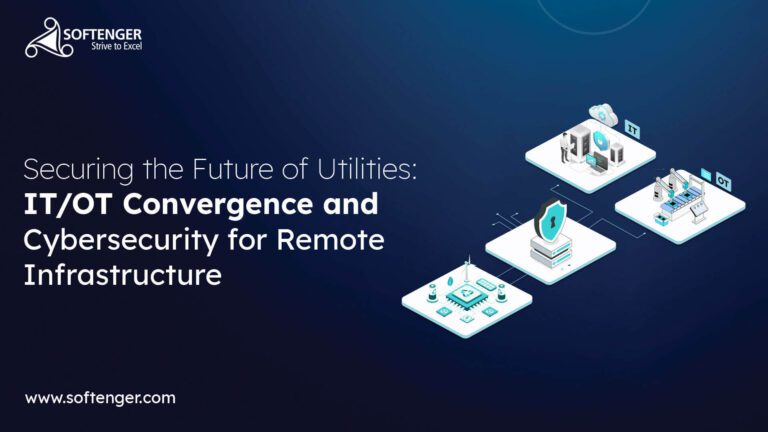
Securing the Future of Utilities: IT/OT Convergence and Cybersecurity for Remote Infrastructure
The security principles from IT/OT convergence in industrial environments apply directly to automotive and aerospace manufacturing — where SCADA systems, PLC networks, and production IT share boundaries that sophisticated attackers and TISAX auditors both examine closely.
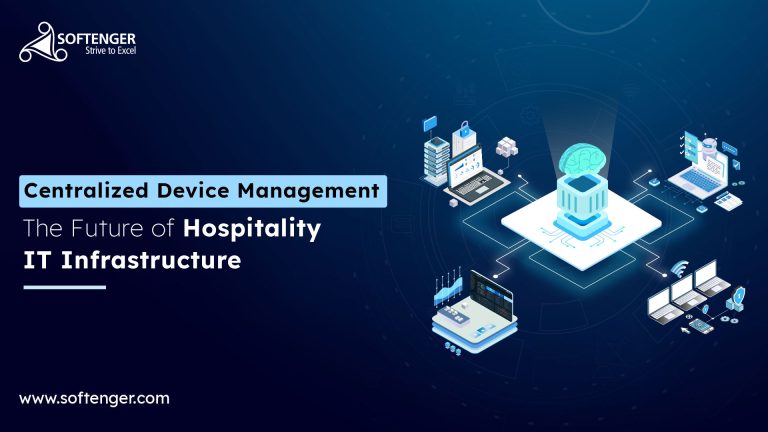
Why Remote and Centralized Device Management Is Transforming IT Operations Across Distributed Infrastructure
The centralized remote management model transforming multi-site operations applies directly to automotive and aerospace enterprises managing production IT, test lab equipment, and engineering workstations across globally distributed manufacturing networks and design centres.
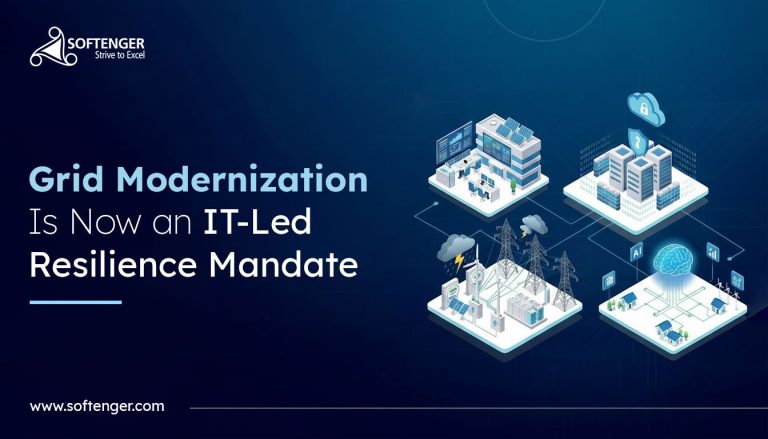
IT-Led Infrastructure Modernization: Building Resilient, Secure Operations at Scale
How enterprises managing complex distributed infrastructure — including automotive manufacturers modernizing from legacy SCADA and on-premises ERP to cloud-connected production and design platforms — use managed IT frameworks to drive transformation without disrupting live operations.
Questions logistics IT leaders ask before engaging Softenger
Tell us about your supply chain IT environment. We'll show you what a services engagement looks like for logistics.
A conversation with a Softenger logistics IT specialist produces a documented topology and compliance assessment — not a vendor proposal. We review your WMS, TMS, IoT, and integration environment, then produce specific recommendations with evidence. No commitment required.
🚚 Request a Logistics & Supply Chain IT Assessment
ISO 27001 certified. Handled securely, never shared with third parties.