
DLP isn’t a product you install. It’s a policy you operate.
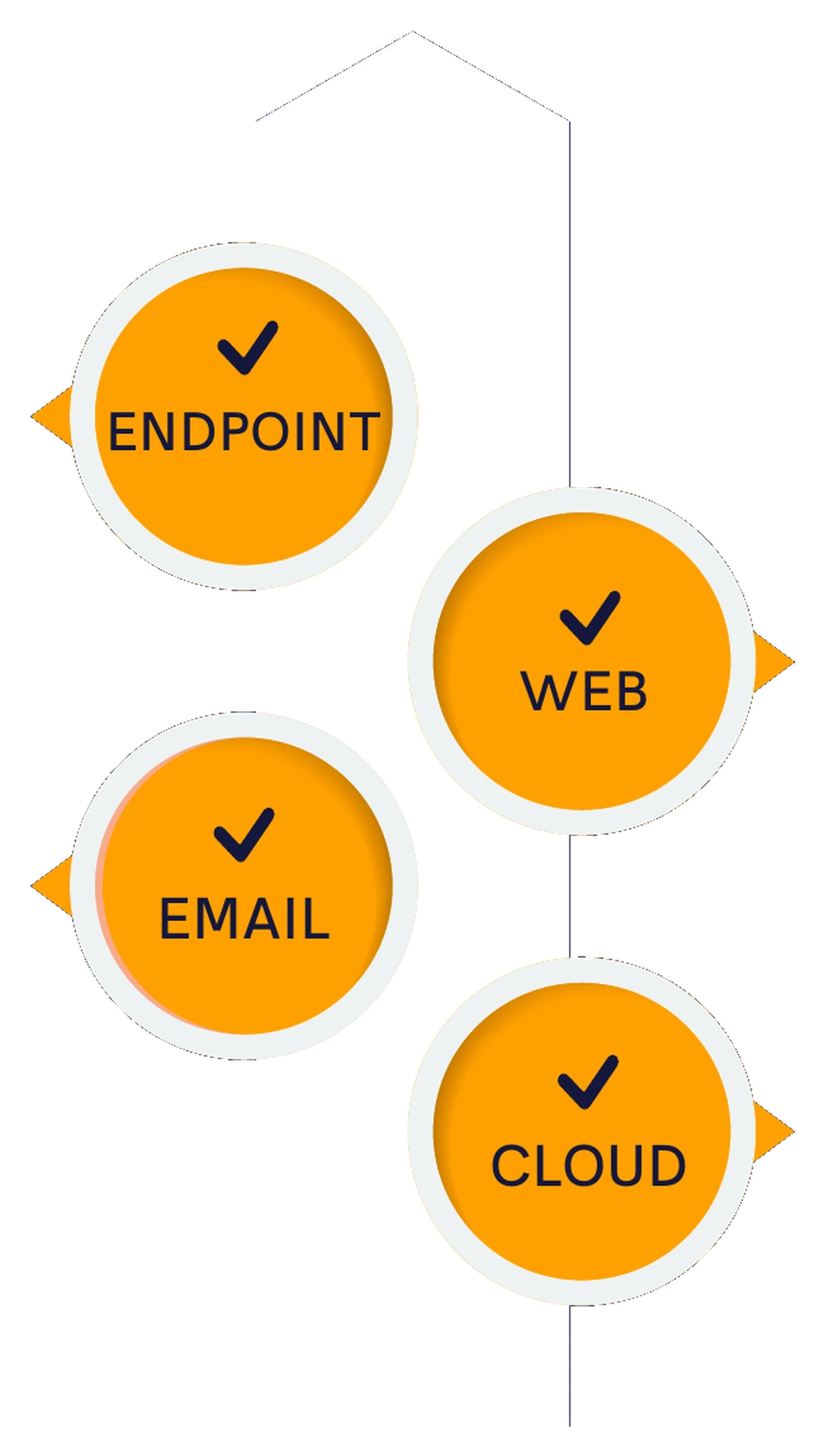
Most enterprises buy a DLP tool, switch on default policies, and watch it drown the team in false positives — until everyone mutes it and data walks out anyway. Softenger operates it instead. We classify what matters, tune policies that stop real exfiltration without blocking work, and run the alerts — tool-agnostic, across endpoint, email, web, and cloud.
Owning a DLP product is not the same as preventing data loss.
DLP rarely fails because the technology is weak. It fails because no one operates it. These are the six ways that plays out in practice — and why security leaders call us after they’ve already bought a tool.
The Tool Nobody Tuned
Default policies either block legitimate work — so users route around them — or silently pass everything. Most deployments never move past out-of-the-box rules.
Alert Flood → Alert Blindness
Thousands of policy hits with no triage means the team eventually mutes it — and the one real exfiltration incident hides in the noise where no one is looking.
Data You Never Classified
DLP can only protect what’s been classified — and classification is a project that’s never finished. Unlabelled sensitive data is invisible to even a perfectly tuned policy.
Coverage Gaps Across Channels
Endpoint is covered, but email, web, and cloud aren’t — so sensitive data simply leaves through the channel the tool doesn’t watch. One gap negates every other control.
Exposure Without Evidence
DPDP, GDPR, HIPAA, and PCI-DSS demand demonstrable data protection. A license sitting on the shelf is not evidence that data is actually being protected.
The DLP Skills Gap
Policy engineering, exfiltration investigation, and classification maintenance are specialist work — hard to hire for and impossible to sustain with team members who have ten other priorities.
We don’t sell DLP. We operate it.
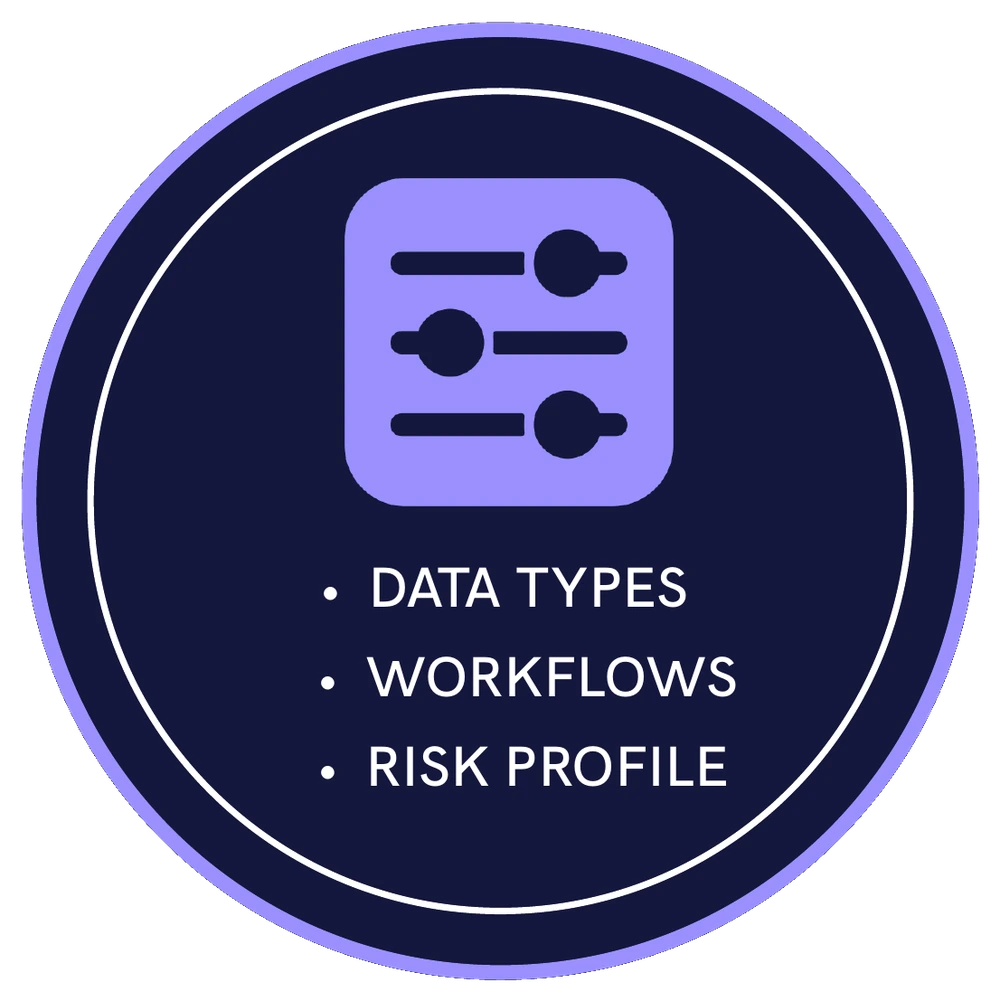
Before we touch a single policy, we find your sensitive data and map every way it can leave — endpoint, email, web, cloud. We don’t switch on default rules and call it protection. Defaults are why most DLP fails.
Our model is tool-agnostic: we operate the DLP you already own — Microsoft Purview, Forcepoint, Symantec, Zscaler — or deploy and run one from scratch. Either way you get tuned policies, triaged alerts, and real incident response from a team that does this every day.
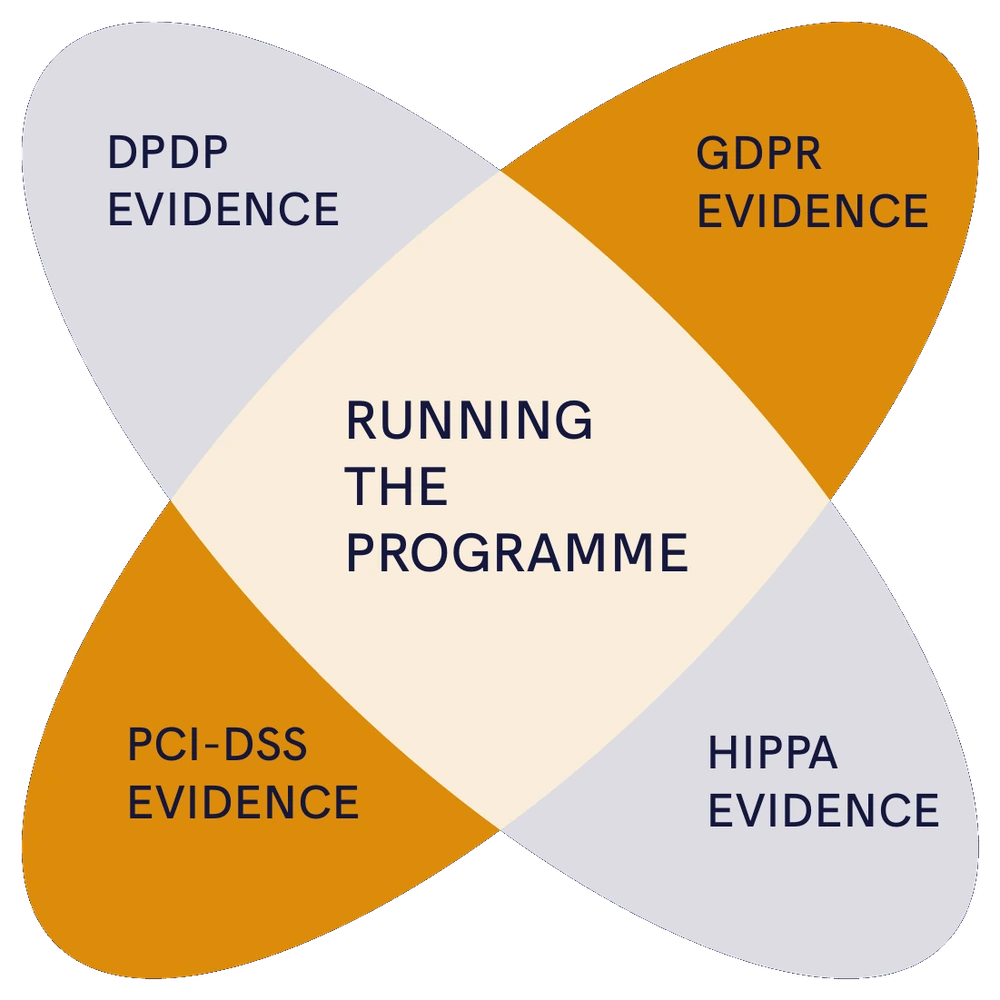
Then we prove it. Every regulator that audits your data protection — DPDP, GDPR, HIPAA, PCI-DSS — gets evidence generated by an operation that’s actually running, not assembled in a pre-audit scramble from a tool people stopped trusting months ago.
- Discover and classify sensitive data across the entire estate
- Engineer policies across endpoint, email, web & cloud channels
- Triage alerts and respond to confirmed exfiltration incidents
- Produce data-protection evidence for every regulator you answer to
- Sell or resell DLP product licenses
- Run a one-time deployment and leave default policies running
- Forward raw alerts to your team without tuning or triage
- Replace your internal IT or security function
Four pillars of operated data protection.
From finding sensitive data to proving it’s protected — the full lifecycle, run by one team with accountable SLAs.
- 01Classify
- 02Protect
- 03Monitor & Respond
- 04Prove
Classify
You can’t protect what you haven’t found. We discover and label sensitive data across your entire estate before a single policy is written.
- Sensitive-data discovery across all repositories and systems
- Classification scheme and labelling framework
- Data-flow mapping — every exfiltration path identified
- Ongoing classification maintenance as data grows
Protect
Policies engineered to your actual data and workflows — not the vendor’s defaults that block legitimate work and get muted within weeks.
- Endpoint, email, web & cloud policy build and tuning
- Block, encrypt, quarantine, or notify workflows
- False-positive reduction to levels teams trust
- Continuous policy refinement as data landscape changes
Monitor & Respond
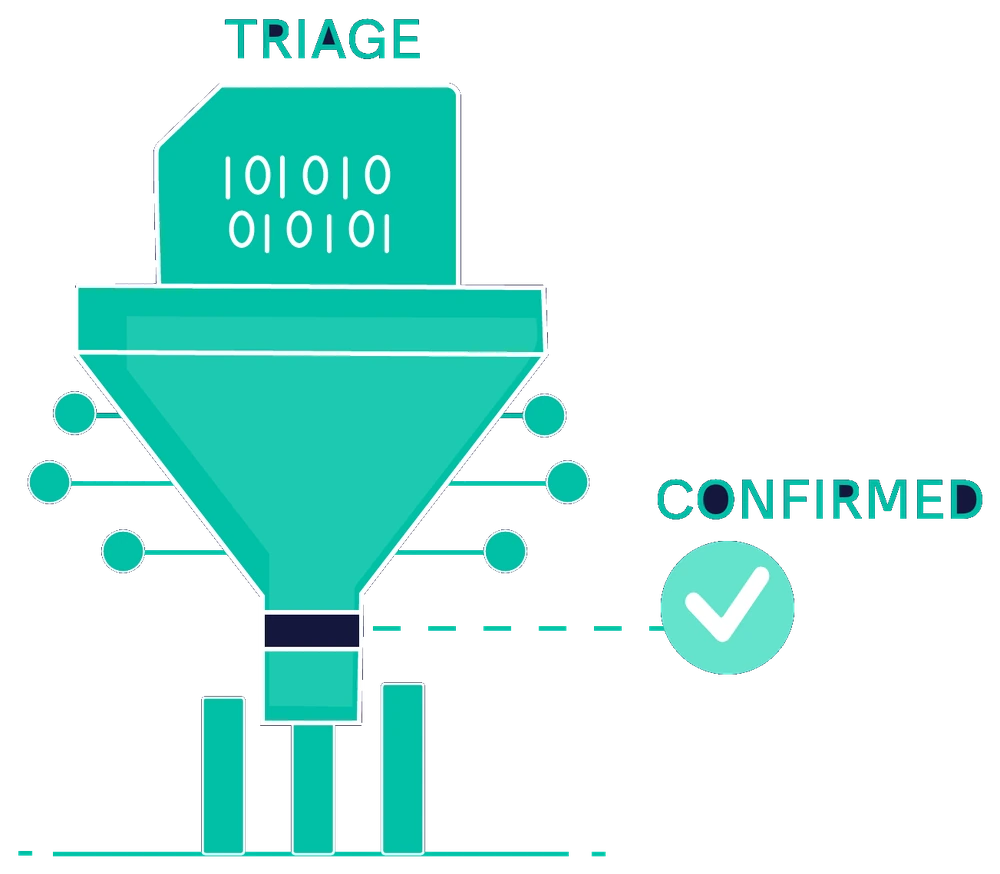
We absorb the alert volume so only confirmed incidents reach your team. When exfiltration happens, we investigate and contain — not just flag and escalate.
- Continuous alert triage and correlation
- Exfiltration incident investigation
- Incident containment and response
- Insider threat pattern identification
Prove
Evidence for every regulator that asks — generated continuously as a by-product of operation, not assembled in a panic when the audit notice arrives.
- DPDP / GDPR / HIPAA / PCI-DSS compliance reporting
- Audit-ready data-protection evidence packages
- Policy version history and change documentation
- Incident logs with resolution and closure records
From advice to operation — your data-protection programme.
The same four phases that run every Softenger engagement, applied to DLP. We don’t start with policies — we start with understanding your data, your channels, and your regulators. The difference is that we stay for all four phases, not just the deployment.
Phase 01Advise
Find the data before the policy
- Sensitive-data discovery across all systems and repositories
- Channel-coverage gap analysis — endpoint, email, web, cloud
- Regulatory obligation mapping against active frameworks
A clear map of where sensitive data lives and every path it can take to leave — before a single policy is written.
Phase 02Optimize
Stop real loss without blocking work
- Re-engineer existing policies from defaults to production-grade
- Cut false positives to levels teams actually act on
- Close channel coverage gaps — all four, unified
Policies that catch real exfiltration while staying invisible to legitimate business workflows.
Phase 03Transform
Build the full operating model
- Classification scheme deployed across the entire data estate
- Unified four-channel policy framework in production
- Incident-response workflow, runbooks, and escalation paths
DLP that’s operated, not just installed — wired into how the business actually runs at scale.
Phase 04Support
Run it, prove it, every cycle
- Continuous alert triage and confirmed incident response
- Data-protection compliance evidence — every audit cycle
- Ongoing policy tuning as data landscape and regulations evolve
Data protection you can prove to any regulator at any time — because it’s actively running every day.
Once DLP completes its first AOTS lifecycle, it re-enters at Advise with a richer classification baseline. Every cycle tightens policy precision and extends your data-protection maturity.
- A — Advise
- O — Optimize
- T — Transform
- S — Support
Why enterprises have us operate DLP, not sell it.
Six reasons data owners choose an operator over a product vendor — and keep us running it.

DLP doesn’t protect data alone.
Neither does Softenger’s delivery.
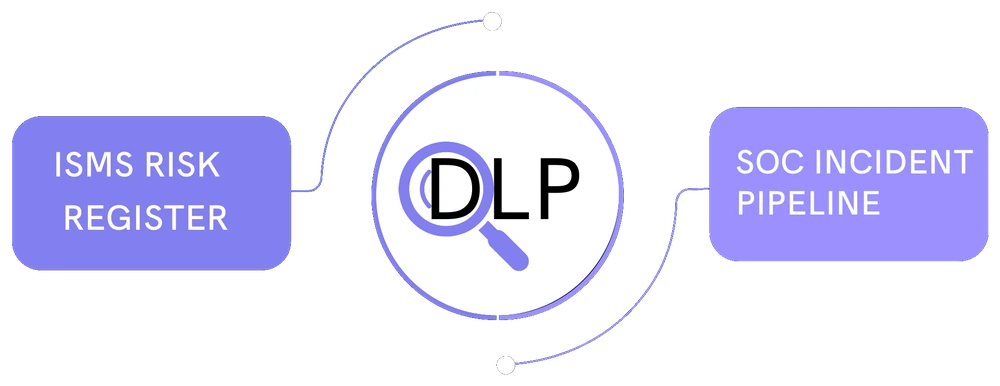
Data loss prevention is strongest when it’s wired into the wider security operation. A DLP incident feeds the ISM risk register. An insider-threat pattern feeds the SOC. Classification labels inform vulnerability scope. We connect DLP to the governance and detection layers so protection is continuous — not isolated.
Protecting the data that each sector can’t afford to lose.
The same operated DLP, tuned to the data type and regulator specific to your industry. One engagement model — not a generic template with your sector’s logo pasted on it.
BFSI
Account data, PII, and card data protected across all channels — aligned to RBI, SEBI, and PCI-DSS evidence requirements.
Healthcare & Pharma
PHI and clinical record protection with HIPAA-ready evidence and exfiltration monitoring across distributed clinical networks.
IT & SaaS
Source code, customer data, and IP protected across endpoints, repositories, and cloud collaboration tools — the channels where development IP is most at risk.
E-commerce & Retail
Payment and customer data protected across high-volume, multi-channel environments with PCI-DSS evidence built into operations.
Manufacturing
Designs, formulations, and trade secrets protected against insider leakage and supply-chain exfiltration. IP protection, not just regulatory compliance.
EdTech
Student records and PII protected with DPDP-ready governance across cloud-native platforms that scale rapidly and collect data at volume.
Telecom & Media
Subscriber data and usage records protected at scale across distributed systems where data volume makes manual oversight impossible.
Government & Public Sector
Citizen data protected with CERT-In aligned monitoring and a documented evidence trail — the operational proof government auditors specifically require.
Four ways to engage — matched to your DLP maturity
Whether you’ve never deployed DLP, own a tool you can’t tune, or need a specialist embedded with your team — there’s a model that fits where you are today and scales to where you need to go.
Managed DLP
We operate your data-loss prevention end to end — the model the product vendors don’t offer. Best for teams who need protection running without building a dedicated DLP function in-house.
- Classification, policy tuning and alert triage — continuous
- Tool-agnostic — your existing stack or one we deploy
- Incident response and exfiltration investigation
- Continuous compliance evidence for all active frameworks
Deployment & Tuning
We stand up and tune your DLP, then hand it back — or transition it into managed operation. Best for organizations deploying DLP for the first time or replacing a failed deployment.
- Channel-by-channel policy build from the ground up
- Classification scheme setup and initial labelling run
- False-positive baseline reduction before handover
- Optional transition path into Managed DLP
DLP Health Check
A structured review of your existing deployment against your actual data risk. Best for teams who own a DLP tool that isn’t earning its keep — too many false positives, gaps in coverage, or evidence that doesn’t satisfy auditors.
- Policy and coverage gap analysis against your data risk
- False-positive and tuning assessment with root causes
- Classification maturity review against active regulations
- Prioritised remediation roadmap with effort estimates
Embedded DLP Specialist
A Softenger DLP engineer working inside your team — Softenger-employed, client-directed. For regulated environments that need on-site policy expertise alongside remote monitoring capability.
- Dedicated, certified DLP policy engineer at your facility
- Works within your security governance structure
- Extends your team — doesn’t replace it
- Suitable for data-residency-sensitive or classified environments
From alert flood to data actually protected.
{{PLACEHOLDER: Replace with confirmed Softenger DLP engagement and verified numbers before publishing. Structure below reflects typical programme outcomes.}}
Tuning a noisy DLP into a working control
- ✓ {{PLACEHOLDER: X%}} reduction in DLP false positives within {{PLACEHOLDER: N}} months through policy re-engineering and threshold tuning.
- ✓ Coverage extended from endpoint-only to all four channels — endpoint, email, web, and cloud — closing previously invisible exfiltration paths.
- ✓ Sensitive-data classification completed across {{PLACEHOLDER: X repositories}}, making previously unprotected data visible to policy enforcement for the first time.
- ✓ Audit-ready data-protection evidence produced for {{PLACEHOLDER: N frameworks}} (DPDP / GDPR / HIPAA / PCI-DSS) — generated by operation, not assembled retrospectively.
channels
cloud — one operated policy
only
Questions data owners ask before engaging us.
-
Those are tools — we operate them. A product gives you the capability to prevent data loss; it doesn’t classify your data, tune the policies, triage the alerts, or respond to incidents. We do all of that, on whichever DLP platform you own or one we deploy. The product is the engine; we’re the operation around it.
-
We’re tool-agnostic. We operate the DLP you’ve already invested in — Microsoft Purview, Forcepoint, Symantec, Zscaler and others — or deploy and run one if you don’t have a platform yet. Most engagements start by making an existing, underused tool actually work rather than buying something new.
-
Yes — that’s one of the most common reasons teams engage us. We re-engineer policies around your actual data and workflows, tune detection thresholds, and add triage so only genuine incidents reach your team. The goal is a tool people trust again rather than one they’ve learned to ignore.
-
All four, under one operated policy. Data leaves through whatever channel is unwatched, so single-channel DLP is a false sense of security. We unify endpoint, email, web, and cloud (SaaS and IaaS) coverage under a single policy framework so there’s no blind channel.
-
These regulations require demonstrable data protection, not just a tool on the books. Because we operate DLP continuously, the classification records, policy enforcement logs, and incident documentation become the audit evidence regulators ask for — produced as a by-product of the operation rather than reconstructed under pressure before each audit cycle.
-
Both. Our Managed DLP model runs it continuously — classification upkeep, policy tuning, alert triage, incident response, and compliance reporting. Or we deploy and tune and hand back to your team. Many clients start with a deployment or health check and transition to managed operation once they see the gap between owning the tool and having it actually work.
Ready to operate DLP — not just license it?
Start with a DLP health check. We’ll review your current coverage, find where data can still leave, assess your compliance evidence posture, and propose a right-sized engagement — within one working day.